
Showing 1–30 of 54 results


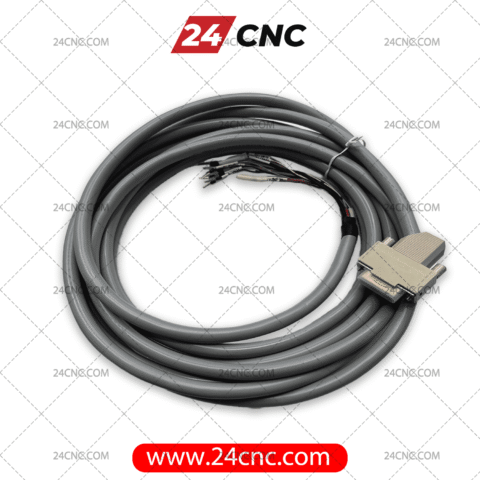
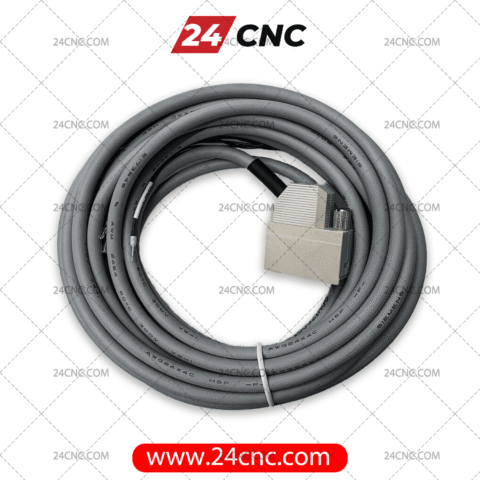
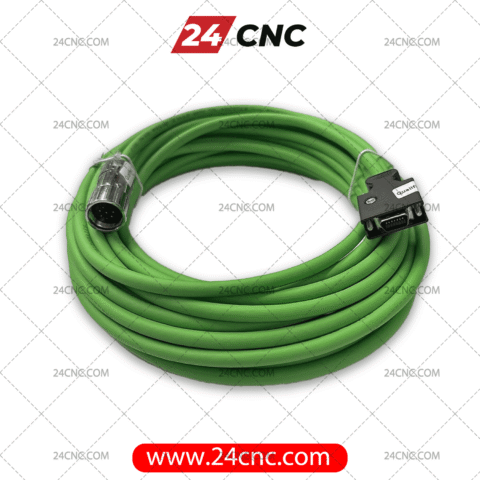


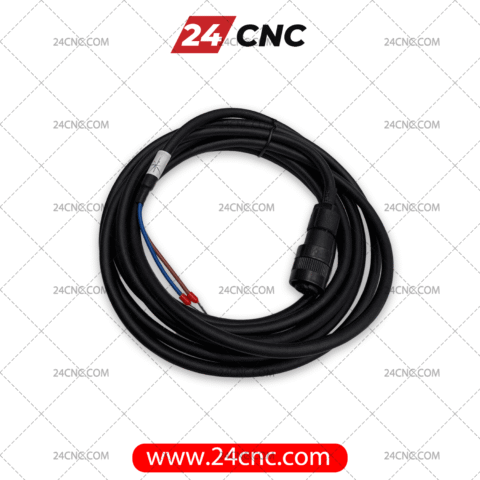



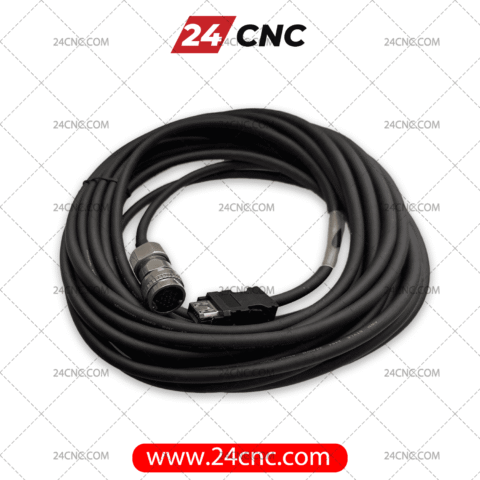


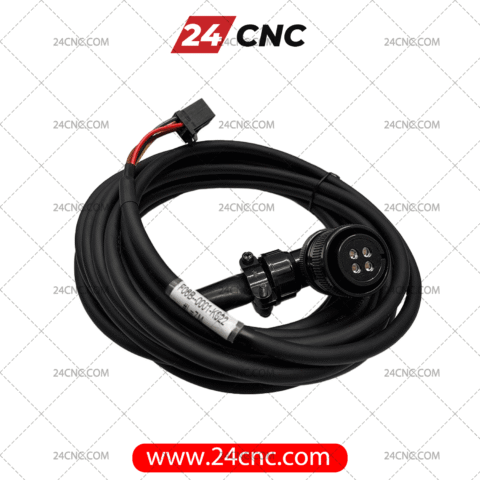
If the CNC controller is the brain of your machine and the servo motors are the muscle, the CNC cables act as the central nervous system. In the harsh, unforgiving environment of a modern industrial workshop—where cables are subjected to millions of continuous flexing cycles inside drag chains, constant exposure to synthetic coolants, and extreme levels of Electromagnetic Interference (EMI)—inferior wiring is a primary catalyst for intermittent machine faults and catastrophic, unpredicted downtime.
Signal degradation in feedback loops can lead to micro-positioning errors, poor surface finishes on machined parts, or immediate hardware alarms that halt production. Whether you require a heavily shielded data line to prevent electrical noise interference from a Variable Frequency Drive (VFD), or a robust, high-flex power conduit to drive a massive spindle, 24CNC provides genuine, OEM-grade replacement cables. Our cables are meticulously engineered to withstand the rigors of heavy industry without succumbing to internal copper fatigue or outer insulation failure.
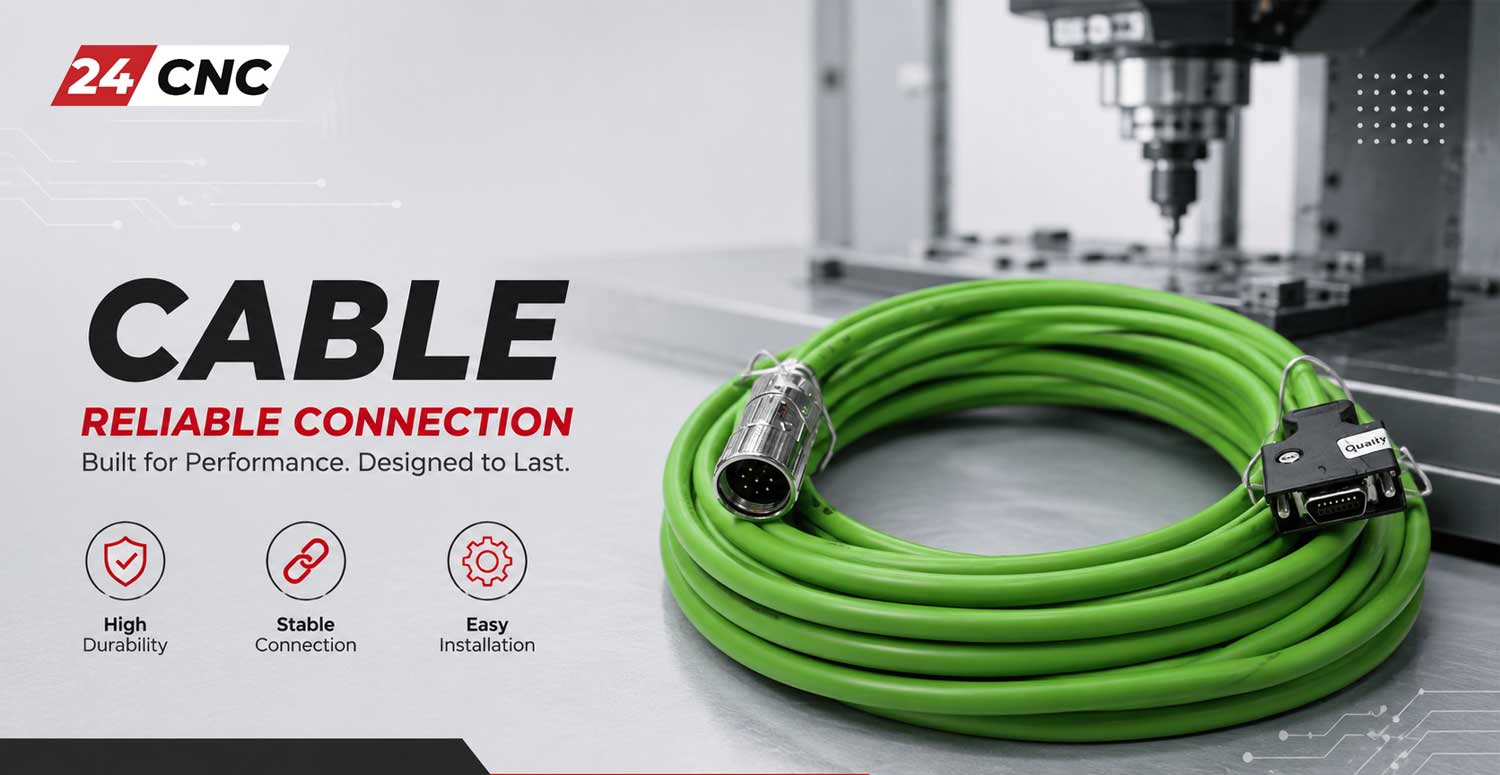
The Anatomy of an Industrial-Grade CNC Cable
Not all cables are created equal. Commercial-grade wiring will fail within weeks when subjected to the dynamic kinematics of a CNC mill or lathe. True industrial-grade cables rely on a complex, multi-layered architecture:
- Finely Stranded Copper Conductors: Unlike solid core wires, dynamic CNC cables use ultra-fine bare copper stranding. This dramatically decreases mechanical stress during bending, preventing wire breakage inside cable tracks.
- Advanced Dielectric Insulation: Conductors are individually wrapped in specialized polymers (like TPE or XLPE) to maintain precise electrical impedance, which is critical for high-speed digital feedback from rotary encoders.
- Tinned Copper Braiding (Shielding): To combat EMI, high-quality cables utilize a tight, tinned copper braided shield covering at least 85% of the internal surface area, acting as a Faraday cage to reject external noise.
- PUR (Polyurethane) Outer Jackets: Standard PVC melts or becomes brittle when exposed to cutting fluids and machine oils. PUR jackets offer superior chemical resistance, abrasion resistance, and flexibility at varying temperatures.
The Physics of Cable Degradation: Thermal and Electrical Dynamics
Understanding why cables fail requires looking at the thermal and electrical realities of the machine tool environment. As high currents pass through power cables feeding heavy axis motors, the inherent electrical resistance of the copper generates heat.
The resistance of a conductor is not static; it increases with temperature according to the linear temperature coefficient of resistivity:
Where $R_T$ is the resistance at operating temperature, $R_{ref}$ is the resistance at a reference temperature, $\alpha$ is the temperature coefficient of the material (copper), and $T$ is the temperature. If a substandard cable with an inadequate wire gauge is installed, the operating temperature $T$ rises drastically. This increases resistance $R_T$, which leads to severe voltage drop at the motor terminals, forcing the servo drive to compensate, often triggering overcurrent or thermal overload alarms.
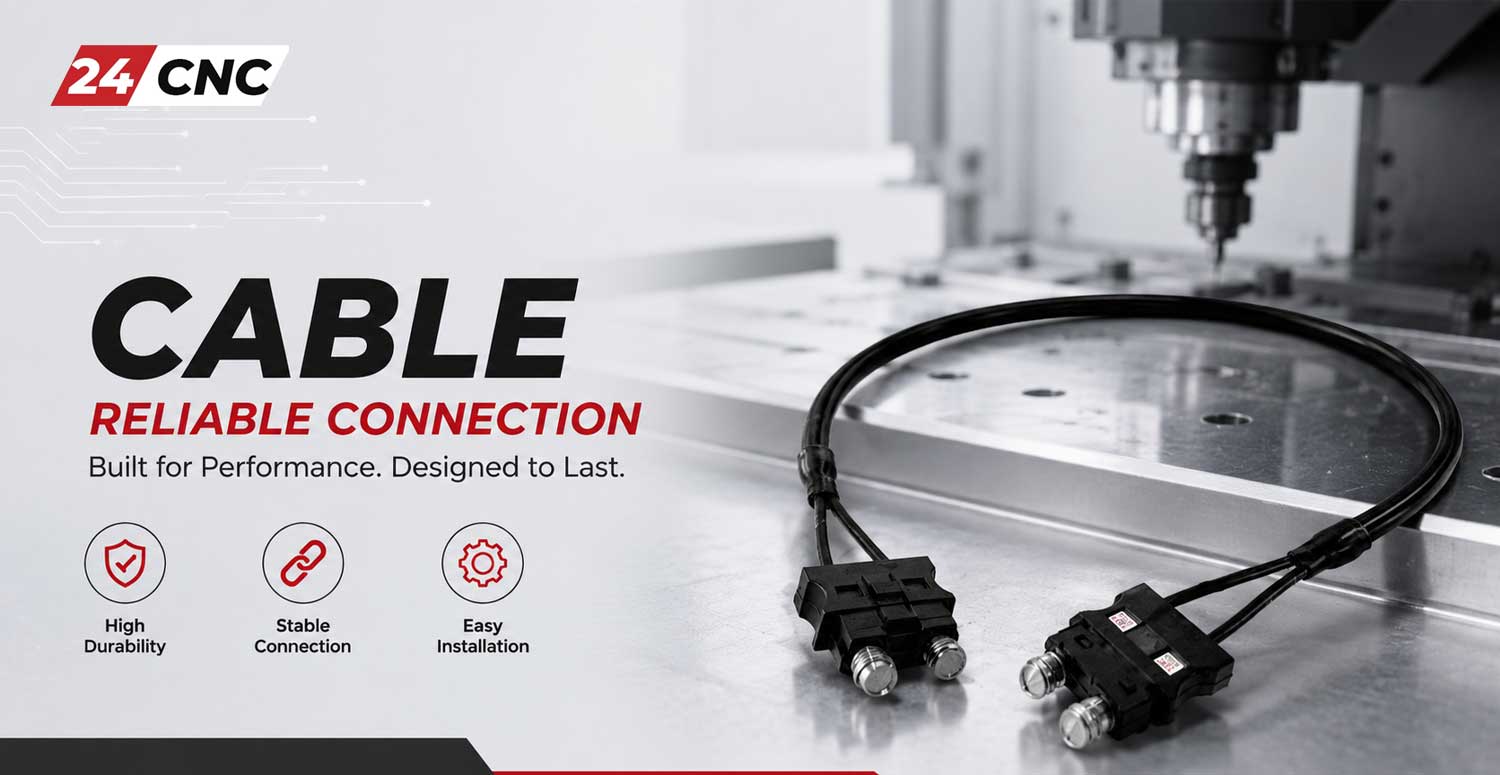
Comprehensive Cable Inventory by Application
1. Encoder & Feedback Cables
Encoder cables are tasked with transmitting low-voltage, high-frequency digital pulse trains or absolute serial data from the motor’s encoder back to the control system. Because these signals operate at millivolt levels, they are highly susceptible to noise. Our OEM-spec encoder cables utilize twisted-pair geometries to cancel out electromagnetic interference, ensuring that your machine never loses its absolute position or suffers from “following error” faults. We stock exact replacements for Fanuc™ Alpha/Beta series and Siemens DRIVE-CLiQ networks.
2. Optical (Fiber Optic) Cables
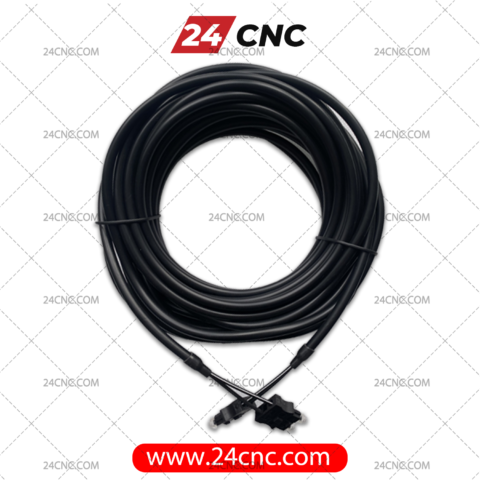
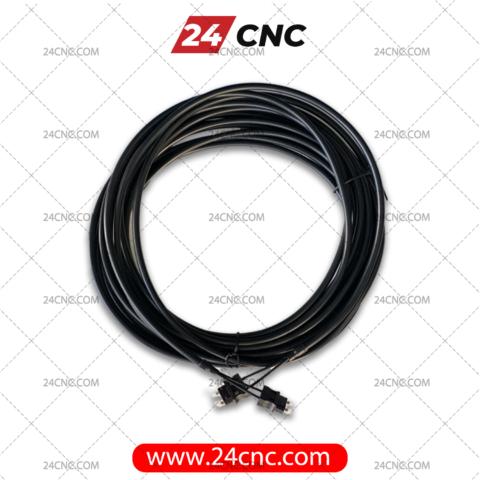
Modern CNC architectures, particularly Fanuc systems utilizing the FSSB (Fanuc Serial Servo Bus), rely on fiber optic cables for blazing-fast, synchronous communication between the CNC controller and the servo amplifiers. Optical cables are 100% immune to electrical noise, but they are fragile. Bending them beyond their minimum bend radius will fracture the internal polymer core, leading to instant systemic communication loss. We provide pre-terminated, heavy-duty jacketed optical cables designed specifically for the rigorous routing requirements of CNC electrical cabinets.
3. Servo & Spindle Power Cables
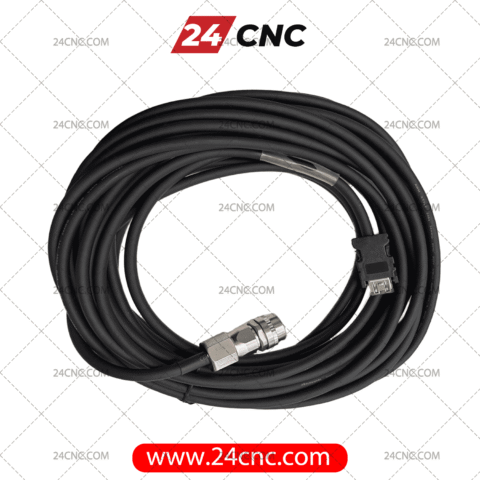
Delivering 3-phase AC voltage with Pulse Width Modulation (PWM) from the drive to the motor requires robust insulation to prevent dielectric breakdown and ground faults. The high switching frequencies of modern IGBTs create voltage spikes that can degrade poor insulation over time. Our power cables feature high-grade shielding to contain this electrical noise and heavy-gauge copper to handle peak acceleration currents without overheating, ensuring maximum torque delivery to your machine’s axes.
4. MPG / Handwheel Cables
The Manual Pulse Generator (MPG) or remote handwheel is handled daily by operators. These coiled cables are constantly stretched, dropped, and exposed to hot chips and cutting fluids. We supply highly resilient, oil-resistant retracting cables that maintain their memory coil shape, preventing them from dragging on the floor or snagging on moving machine parts.
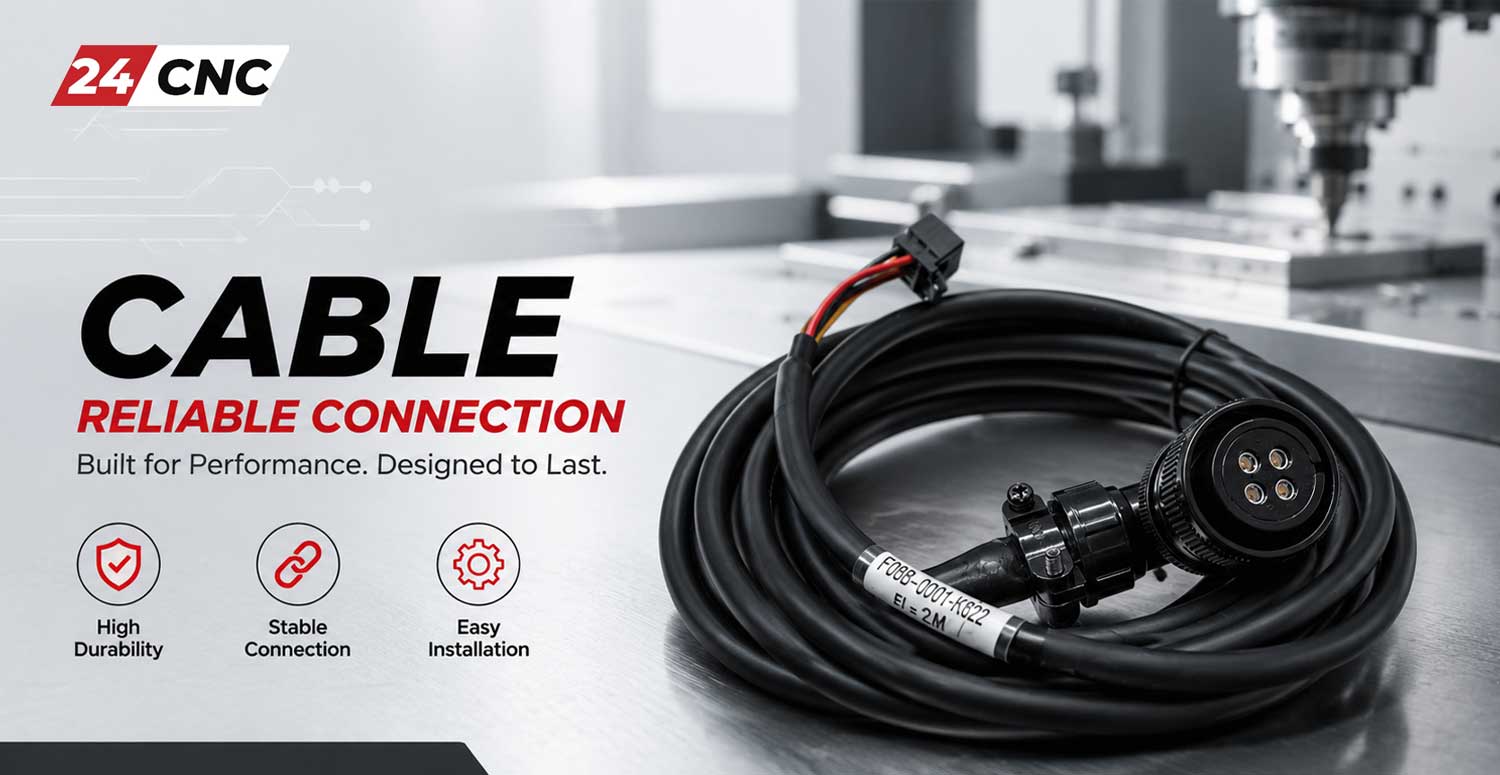
Why Choose 24cnc.com for Procurement?
Procuring replacement wiring from unverified aftermarket electronics suppliers is a massive risk. At 24CNC, we cater specifically to the industrial automation sector, ensuring:
- OEM Authenticity: We stock cables engineered to meet the stringent specifications of brands like Fanuc™, Siemens, and Mitsubishi.
- Premium Connectors: Our assemblies feature genuine Honda connectors and heavy-duty military-spec sockets. We supply both drive-side and engine-side connections with gold-plated pins to prevent oxidization and fretting corrosion.
- Inventory & Speed: When a feedback cable snaps, your machine is dead. We maintain a live, extensive inventory ready for expedited international dispatch to minimize your production losses.
Diagnostic Guide: Is Your Cable Failing?
Before replacing a motor or drive, rule out the cabling. Cables are the leading cause of “ghost” errors in CNC machines. Watch for these symptoms:
- Intermittent Alarms: Alarms that only occur when the machine axis is in a specific physical location along its travel (indicating a break in the wire that opens and closes as the cable track bends).
- High Motor Temperatures: Caused by voltage drops across degraded power cable conductors.
- Megger Testing Failures: Use an insulation resistance tester (Megohmmeter). If the insulation resistance between phases or to ground drops below standard thresholds, the jacket has degraded and a short circuit is imminent.
Technical Matrix: CNC Cable Profiles
| Cable Type | Primary Function | Critical Specification | Common Vulnerability |
|---|---|---|---|
| Encoder / Feedback | Transmits position/velocity data from motor to drive. | High-density braiding, Twisted pairs to reject EMI. | Signal loss causing runaways or positioning drift. |
| Optical (FSSB) | High-speed serial bus communication. | Zero EMI susceptibility, precise minimum bend radius. | Kinking or micro-fractures in the optical core. |
| Servo Power | Carries 3-phase high voltage to the motor windings. | Wire gauge (AWG), thermal resistance, PUR jacket. | Insulation breakdown leading to ground faults/shorts. |
| Handwheel (MPG) | Connects portable pendant to the CNC panel. | Coiled retention, oil-resistant outer jacket. | Over-stretching, crushed by falling workpieces. |
Frequently Asked Questions
Are your replacement cables plug-and-play?
Yes. All our OEM-spec cables come pre-terminated with the exact drive-side and engine-side connectors required for your specific servo package, ensuring a secure, factory-grade fit without the need for dangerous or unreliable manual soldering on the shop floor.
Why am I getting a “Communication Error” after installing a new optical cable?
Optical cables are highly sensitive to microscopic dirt and tight bends. Ensure the protective caps were left on until the exact moment of installation. Verify that the cable was not pinched or bent past its maximum bend radius (often around 30mm-50mm) during routing inside the electrical cabinet, as this will instantly shatter the internal glass or polymer fibers.
What is the difference between static and dynamic cables?
Static cables are meant for stationary routing, like between amplifiers inside an electrical cabinet. Dynamic cables, often referred to as “continuous flex” cables, are engineered for moving cable carriers (drag chains) on the X, Y, or Z axes. Installing a static cable in a dynamic environment will lead to rapid internal conductor snapping.
Do you ship internationally?
Absolutely. We partner with leading global couriers to provide expedited shipping directly to your manufacturing facility, minimizing costly machine downtime regardless of your geographical location.
What is the warranty on your CNC cables?
All our genuine replacement cables undergo rigorous continuity, high-pot, and impedance testing prior to dispatch. They carry a standard industrial warranty against manufacturing defects under normal operating parameters.
Don’t Let a Broken Wire Halt Your Production Schedule
Intermittent alarms, following errors, and positioning deviations are the first signs of cable fatigue. Protect your expensive drives and restore your CNC machine’s precision with our industrial-grade, OEM-certified cables. Browse our sub-categories or contact our engineering team to verify part numbers and check live inventory pricing.