
Showing all 10 results

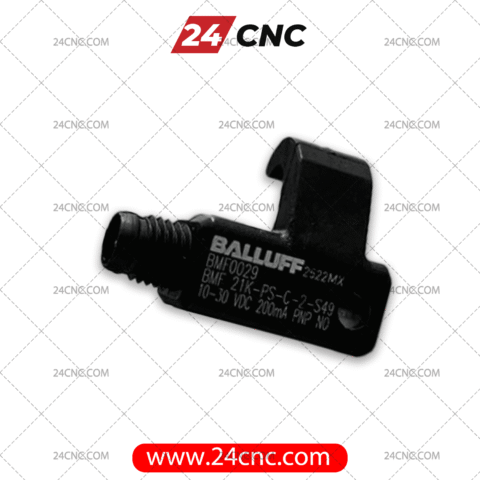


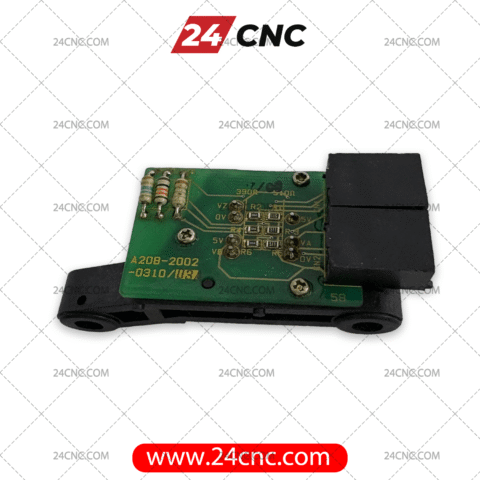


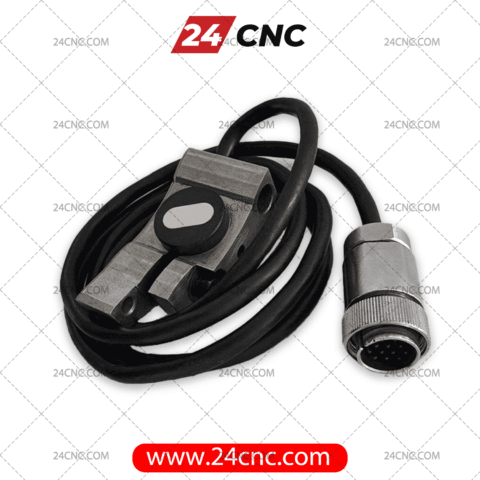
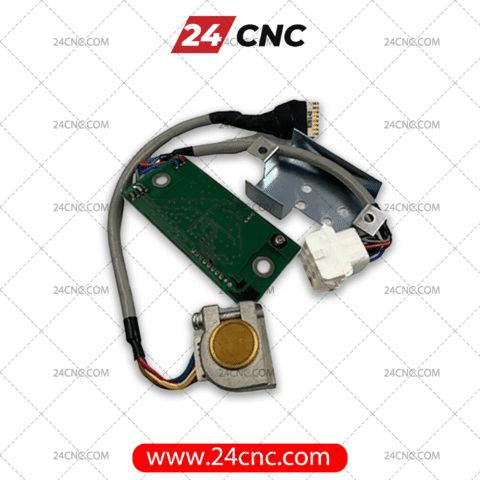
In the high-stakes environment of industrial manufacturing and automation, machine downtime is not just a minor inconvenience—it is a direct and severe hit to your bottom line, production schedule, and client trust. At the very heart of your machine’s precision, safety, and operational efficiency are CNC Sensors. These vital components act as the nervous system of your machinery. Whether they are monitoring high-speed spindle rotations, detecting micro-metric tool positions, confirming the presence of workpieces, or ensuring the strict safety limits of multi-axis travel, reliable sensors are absolutely non-negotiable for maintaining a closed-loop feedback system and optimal machining accuracy.
When a sensor fails, the entire machine halts. A false reading can lead to catastrophic tool crashes, ruined materials, and damaged spindle drives. At 24cnc.com, we understand the critical nature of these components. We supply a comprehensive, heavily vetted range of genuine OEM and premium high-quality replacement sensors designed to withstand the harsh, rigorous environments of modern fabrication workshops. From sophisticated magnetic pickups for rigid tapping to advanced inductive proximity switches for axis referencing, we carry the exact parts you need to restore your machine’s feedback loop, clear those persistent error codes, and get your shop floor back to full production capacity immediately.
Why Buy CNC Sensors from 24cnc.com?
Sourcing replacement electronic components for industrial machinery requires a partner you can trust. Here is why procurement managers and maintenance engineers consistently choose us:
- Guaranteed Authenticity & Compatibility: We specialize in authentic, brand-name components, ensuring seamless, plug-and-play integration with the world’s leading Control Systems. We eliminate the guesswork associated with aftermarket knockoffs.
- Massive In-Stock Inventory: Stop waiting weeks for backordered parts from the manufacturer. Explore our deeply stocked brand categories, such as our specialized and highly sought-after Fanuc™ Sensors inventory, ready for immediate dispatch.
- Expedited Global Shipping: We understand the extreme urgency of AOG (Aircraft on Ground) equivalent situations in manufacturing. Every minute counts. We utilize premium global logistics to dispatch your parts rapidly, effectively minimizing your operational downtime.
- Rigorous Quality Testing: Every refurbished sensor that leaves our facility undergoes strict diagnostic testing to ensure it meets original factory specifications for signal clarity and durability.
- Expert Technical Support & Procurement Assistance: Our seasoned electronics engineers are on standby to help you cross-reference obsolete OEM part numbers, interpret machine alarm codes, and ensure you receive the exact replacement module required for your specific machine tool builder.

Understanding CNC Sensor Applications
Modern CNC lathes, mills, and routers rely on an array of different sensor technologies to function safely and accurately. Understanding what each sensor does is crucial for troubleshooting machine faults.
1. Spindle Speed & Position Sensors (Magnetic)
Often utilizing Hall-effect technology or magnetic geared wheels, these sensors monitor the exact rotational speed and position of the machine spindle. This data is critical for operations like rigid tapping, where the Z-axis feed rate must be perfectly synchronized with the spindle rotation. Failure here results in broken taps and scrapped parts.
2. Inductive Proximity Sensors
These are the workhorses of the CNC machine. They detect the presence of metallic objects without physical contact. You will typically find these acting as “Home” switches (zero return), overtravel limit switches to prevent the machine from crashing into its own castings, and tool changer confirmation sensors (verifying a tool is clamped or unclamped).
3. Photoelectric & Optical Sensors
Using beams of light (often infrared), these sensors are used for precise part detection, tool breakage monitoring systems, and vital safety barriers (light curtains) that immediately halt the machine if an operator enters the hazard zone.
Quick Reference: Common Sensor Specifications
| Sensor Technology | Primary Machine Function | Typical Output Signal | Environmental Tolerance |
|---|---|---|---|
| Magnetic / Hall Effect | Spindle RPM tracking, orientation, rigid tapping | Analog Sine/Cosine ($1 V_{pp}$) or Digital TTL | High (Immune to oil/coolant) |
| Inductive Proximity | Axis referencing, overtravel limits, tool changer status | NPN / PNP (Normally Open/Closed) | Very High (IP67/IP68 rated) |
| Photoelectric (Optical) | Part presence, safety light curtains, tool breakage | Digital (Relay/Solid State Output) | Moderate (Lenses must be kept clean) |

Technical Guide: Selecting and Verifying Your Sensor
Choosing the right replacement sensor requires precise matching of technical specifications. Installing an incompatible sensor—even if it physically fits in the mounting bracket—can lead to logic board damage, erratic machine behavior, or drive faults.
Calculating Sensor Frequency Requirements
When selecting a high-speed sensor, particularly for spindle applications, you must consider the signal frequency logic to ensure the CNC controller can process the data fast enough. If you are calculating the required output frequency for a spindle sensor based on your machine’s top speed, you can use the following fundamental formula:
$f = \frac{RPM \times P}{60}$
Where:
• $f$ is the resulting frequency in Hertz (Hz)
• $RPM$ is the maximum revolutions per minute of the spindle
• $P$ represents the number of pulses per revolution (dictated by the magnetic gear teeth or encoder disk)
For example, a spindle running at $6000$ RPM with a $256$-pulse gear will generate a frequency of $25,600$ Hz ($25.6$ kHz). You must ensure your selected sensor and associated Rotary Encoders are rated to handle this frequency without signal degradation.
Vital Verification Steps Before Purchasing:
- Locate the OEM Part Number: This is the golden rule. Check the metal or plastic casing of the faulty sensor. Fanuc™ sensors, for instance, often start with specific alphanumeric codes (e.g., A660-, A02B-, A860-). If the label is worn off, consult your machine’s electrical manual or parts list.
- Verify Operating Voltage and Logic: Ensure the power requirement matches your machine’s schematic. Most industrial proximity sensors operate perfectly within a standard DC range of $10V \le V_{in} \le 30V$. Furthermore, verify if the CNC controller requires an NPN (sinking) or PNP (sourcing) signal, and whether the logic should be Normally Open (NO) or Normally Closed (NC).
- Environmental Protection (IP Rating): CNC enclosures are flooded with cutting fluids, metal swarf, and oil. Ensure the replacement sensor has an adequate Ingress Protection rating (typically IP67 or IP68) to survive submersion in synthetic coolants.
- Check the Connector Type: A high-quality sensor is useless if you cannot plug it in. Verify if the sensor comes with flying leads, a standard M8/M12 threaded connector, or a proprietary OEM plug. Ensure the pinout matches your existing Cables.

Frequently Asked Questions (FAQ)
Are your CNC sensors brand new or refurbished?
We cater to different budgets and availability requirements by offering both brand-new OEM sensors and rigorously tested, fully functional refurbished units. The condition is always explicitly stated on each specific product page, allowing you to make an informed purchasing decision.
How do I know if my sensor or my cable is the root cause of the error?
This is a very common troubleshooting dilemma. Often, signal loss or intermittent alarms are caused by degraded wiring, broken shielding, or coolant ingress in the connectors rather than the sensor itself. We highly recommend using a multimeter to check the continuity and voltage drops of your Encoder Cables before purchasing a replacement sensor. If the wiring harness tests perfectly, the sensor is likely at fault.
Can I replace a PNP sensor with an NPN sensor?
No, not without modifying the machine’s electrical wiring or adding intermediary relays. PNP sensors switch the positive voltage to the output, while NPN sensors switch the ground (0V). Your CNC input card is specifically designed for one or the other. Supplying the wrong logic type will result in the machine failing to register the sensor state.
Do you ship internationally for urgent breakdowns?
Yes, absolutely. 24cnc.com provides comprehensive expedited global shipping options. We know that replacing a broken sensor is highly time-sensitive, and we partner with premium international couriers to deliver parts to your workshop as swiftly and securely as possible, minimizing your lost revenue.
Need Expert Help Finding the Right Sensor?
Don’t let a faulty, hard-to-find sensor halt your production schedule any longer. Contact our dedicated technical procurement team today for specialized pricing, live stock checks, and guaranteed compatibility verification.