
Showing all 3 results
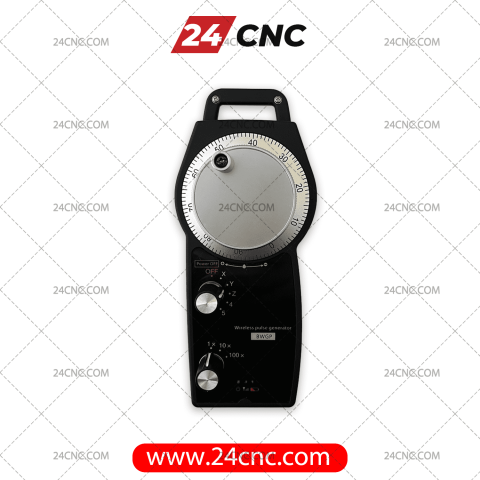
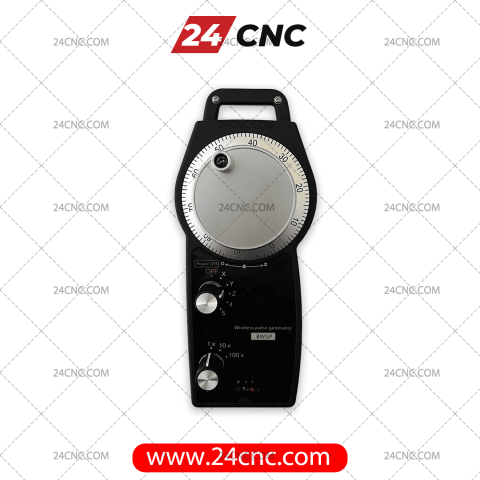
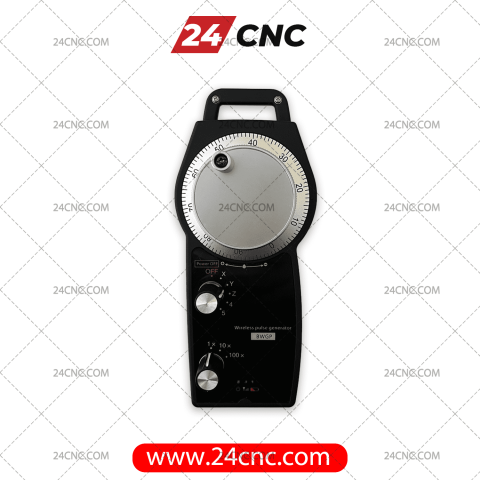
In modern industrial manufacturing and high-precision machining, the setup phase dictates the overall efficiency of your production run. For decades, machinists were tethered to the control panel by restrictive, easily damaged handwheel cables. Today, upgrading to a high-performance wireless CNC handwheel (Manual Pulse Generator or MPG) is the most effective way to eliminate cable drag, enhance operator safety, and dramatically accelerate tool touch-offs and work coordinate setups on large-scale machine tools.
Whether you are retrofitting a massive gantry mill or replacing a damaged OEM pendant on a 5-axis machining center, 24cnc.com is your ultimate authority and supplier for industrial-grade CNC handwheels. Our inventory features robust, zero-latency wireless pendants designed to interface seamlessly with the world’s leading control architectures, offering you unparalleled freedom of movement across the shop floor.
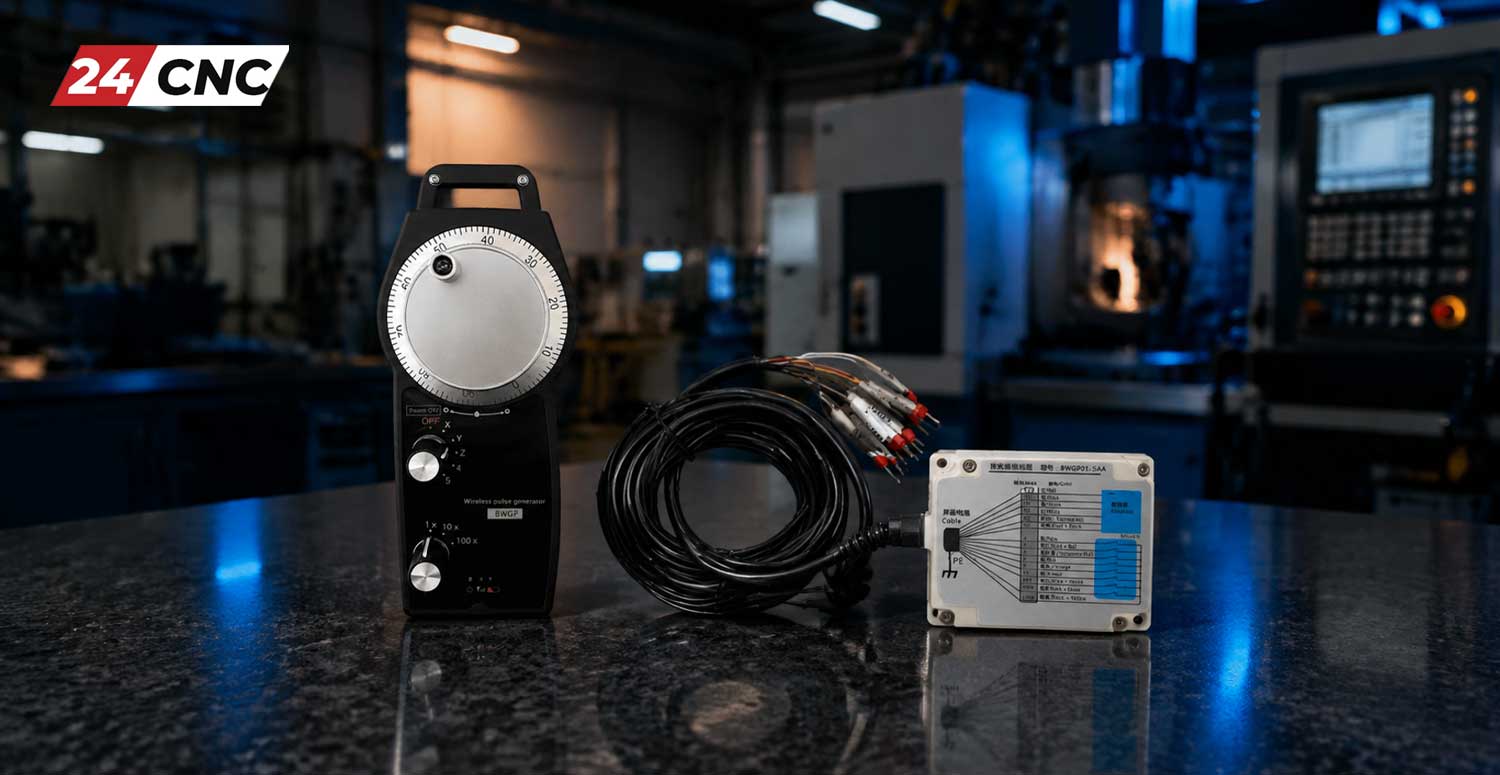
Why Upgrade to a Wireless CNC Remote MPG?
The transition from a traditional wired MPG to a wireless system solves several critical pain points encountered daily by CNC operators and maintenance engineers:
- Elimination of Cable Failure: Coiled cables are notorious for snagging on fixtures, getting crushed by forklifts, or degrading from continuous exposure to synthetic coolants. A wireless pendant completely removes this point of failure, saving you from frequent and costly cable replacements.
- Unhindered Mobility: When dialing in a large workpiece, the operator needs a clear line of sight to the cutting tool. Wireless MPGs allow the machinist to step directly inside the enclosure or walk around a large horizontal boring mill without fighting wire tension.
- Enhanced Safety Features: Industrial wireless handwheels utilize encrypted, low-latency RF technology (often 433MHz or 2.4GHz ISM bands) to ensure that pulse generation is instantaneous. Furthermore, they are equipped with emergency stop (E-Stop) integration that maintains a continuous heartbeat signal with the CNC control system. If the signal drops, the machine halts immediately.
Why Choose 24cnc.com for Your CNC Replacement Parts?
At 24cnc, we understand that every minute of machine downtime costs your business money. Sourcing a reliable, compatible remote handwheel shouldn’t be a gamble. Here is why procurement officers and workshop owners trust us:
- Strict Compatibility Verification: Our technical team ensures that the wireless receivers map perfectly to your specific controller’s I/O structure, whether you are running a legacy system or the latest generation Fanuc™ controller.
- Extensive Ready-to-Ship Inventory: We stock a comprehensive range of industrial electronic components, from basic handwheel selectors to advanced multi-axis wireless pendants.
- Global Logistics: We provide fast, insured global shipping directly to your facility, minimizing costly downtime.
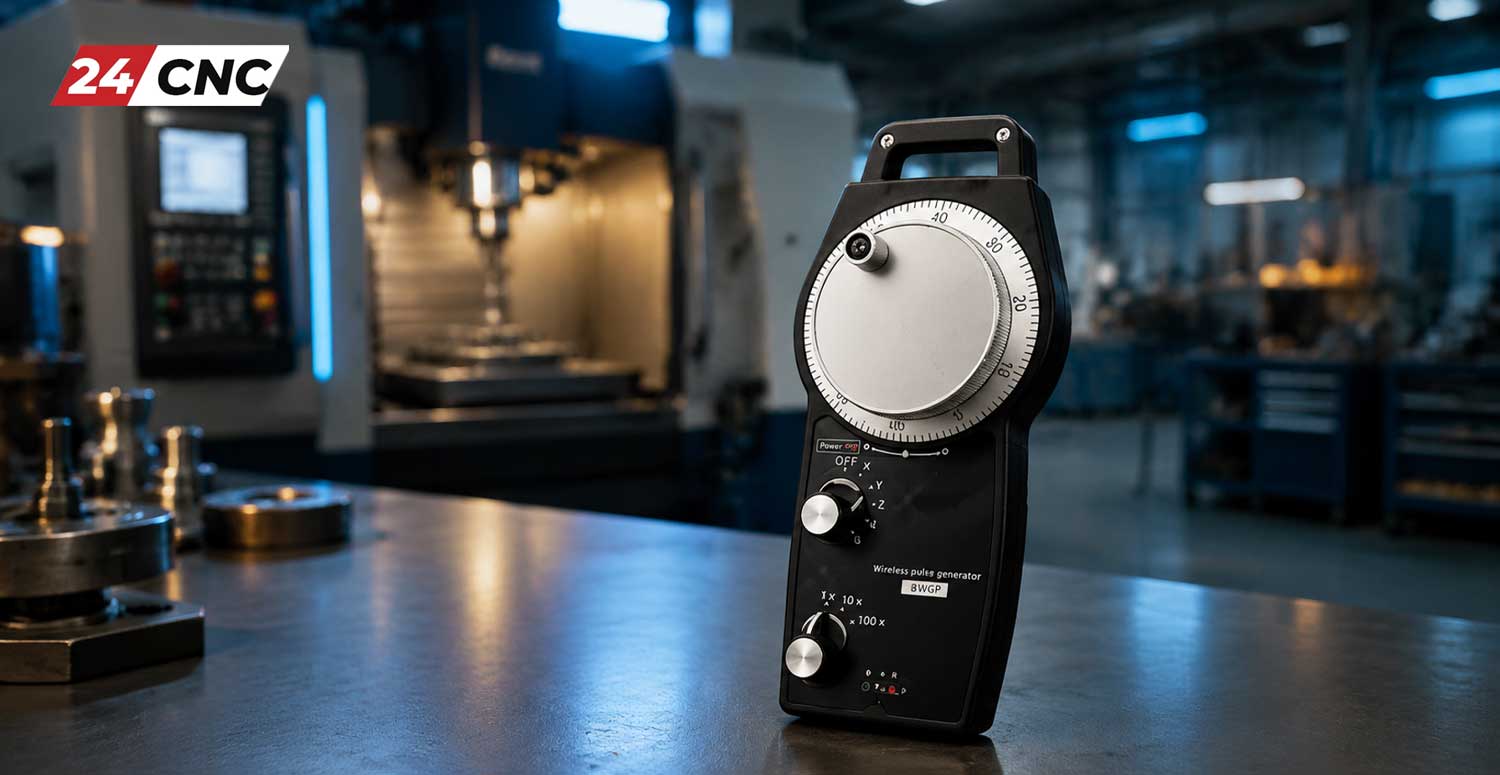
The Professional Buyer’s Selection Guide: Identifying the Correct Wireless MPG
Selecting the correct wireless replacement handwheel involves more than simply matching a brand name. You must verify several critical electrical and communication parameters to ensure a successful integration. Follow this guide to guarantee you purchase the right unit for your machine tool.
1. Determine Your CNC Controller Brand and Series
The most crucial step is identifying your control architecture. While some wireless receivers use generic I/O mapping, many are pre-configured for specific macros and communication protocols. Whether your machine runs on a Siemens controller (like the Sinumerik 840D), a reliable Mitsubishi control, or an industry-standard Fanuc™ series, the receiver must translate the physical wheel clicks (pulses) into the correct digital format.
2. Pulse Output Specification (PPR and Voltage)
Inside the handwheel is a miniature incremental rotary encoder. You must match the Pulses Per Revolution (PPR) of your original unit—typically 100 PPR for Fanuc and Siemens, though some older systems may use 25 PPR. Additionally, check the voltage requirement of the receiver module; it usually requires 5VDC, 12VDC, or 24VDC, sourced directly from the machine’s power supply.
3. Axis and Multiplier Selections
Examine the physical selector switches on your current pendant. Does it support 3, 4, or 5+ axes? A standard wireless MPG will integrate digital replacements for traditional mechanical 6-mode selectors. You must ensure the new wireless unit supports the total number of axes on your machine (X, Y, Z, A, B, C) and standard multiplier resolutions (x1, x10, x100).
4. Receiver Integration
The wireless handwheel relies on a base station receiver mounted inside the electrical cabinet. This receiver wires directly into your machine’s input/output modules. When ordering, consult with our engineers to ensure you have the correct wiring diagrams for a fast, plug-and-play installation.
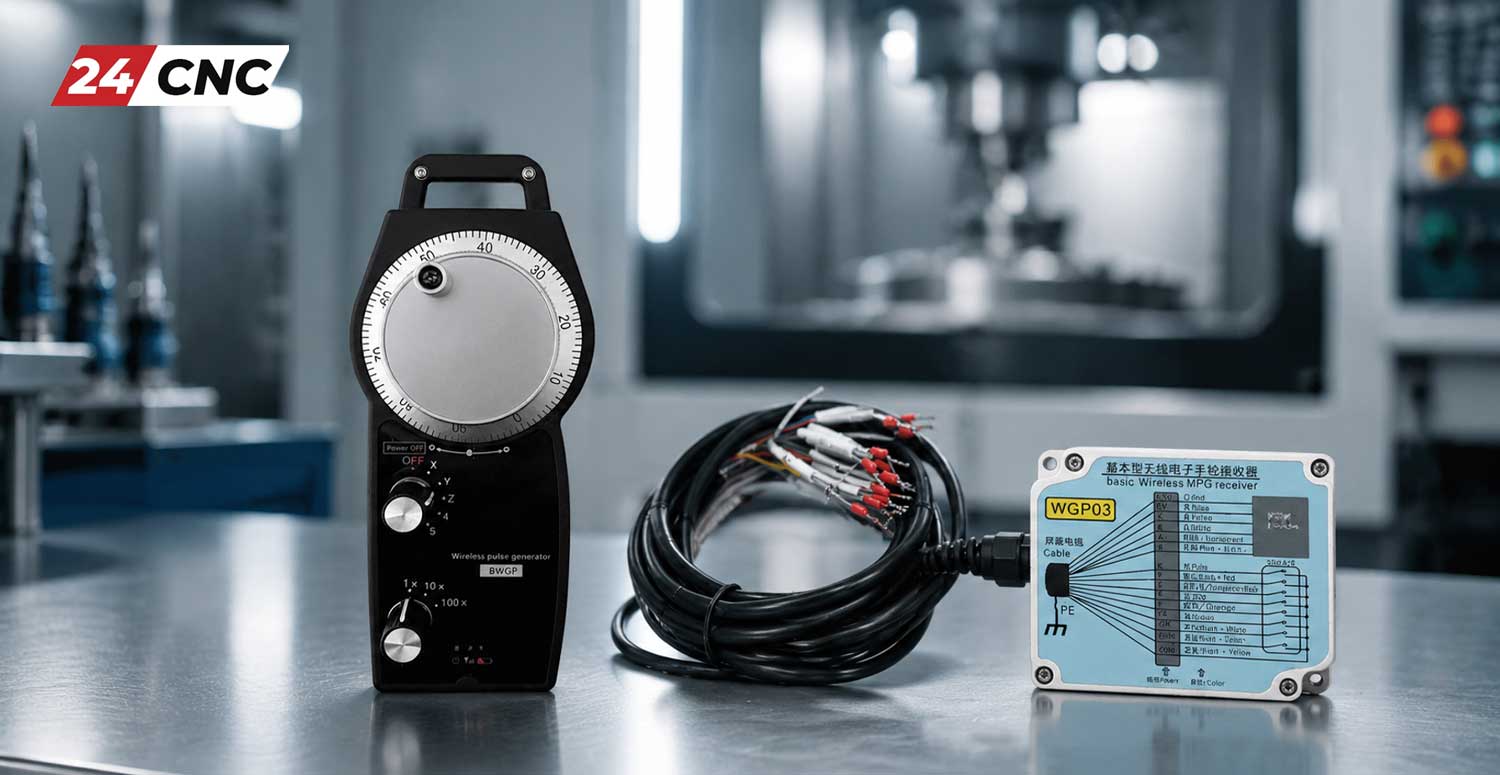
Technical Comparison: Wireless vs. Traditional Wired MPGs
To help you make an informed purchasing decision, review the technical advantages of transitioning to a wireless setup.
| Feature / Specification | Traditional Wired MPG | Industrial Wireless MPG |
|---|---|---|
| Mobility & Range | Limited to cable length (typically 3 to 5 meters). Prone to tangling. | Up to 40 meters (130+ ft) unobstructed range. True 360-degree freedom. |
| Connection Reliability | Physical wire; degrades over time due to bending, coolant, and crushing. | Encrypted RF signals (FHSS) to prevent interference from shop floor noise. |
| E-Stop Integration | Hardwired normally closed (NC) safety circuit. | Continuous heartbeat signal; machine faults instantly if signal is lost. |
| Power Source | Draws power directly from the machine I/O. | AA or Lithium-Ion batteries (typically 30-60 days of continuous operation). |
| Display Interface | Basic mechanical selectors and dial. | High-contrast integrated LCD screens showing live axis coordinates and battery life. |
Frequently Asked Questions (FAQ)
Are wireless handwheels susceptible to interference from other CNC machines or Wi-Fi?
No. High-quality industrial wireless MPGs utilize Frequency Hopping Spread Spectrum (FHSS) technology. This means the transmitter and receiver rapidly switch frequencies in a synchronized pattern. If they encounter noise from a servo drive amplifier or shop Wi-Fi, they instantly jump to a clear channel, guaranteeing a flawless, zero-latency connection.
How long do the batteries last in a wireless MPG?
Battery life depends on usage intensity and the specific model, but most premium units will operate for 30 to 60 days on a single set of industrial AA batteries or a rechargeable lithium pack. An integrated low-battery warning on the pendant’s LCD will alert you well before power is lost.
Is it difficult to install the wireless receiver?
Installation is typically straightforward for a qualified maintenance technician. The base receiver mounts in the electrical cabinet (often on a DIN rail) and wires directly into the exact same I/O terminals that your previous wired pendant used. 24cnc provides technical documentation to assist with the wiring pinout.
Ready to Upgrade Your Machine’s Mobility?
Stop wasting time untangling cables and repairing broken wires. Invest in a premium wireless CNC handwheel today. Contact our technical sales team with your machine’s controller model, and we will provide you with the exact replacement part, competitive pricing, and immediate stock availability.