
Showing all 19 results

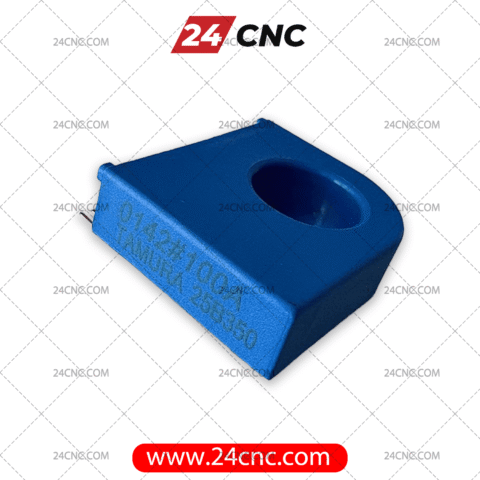


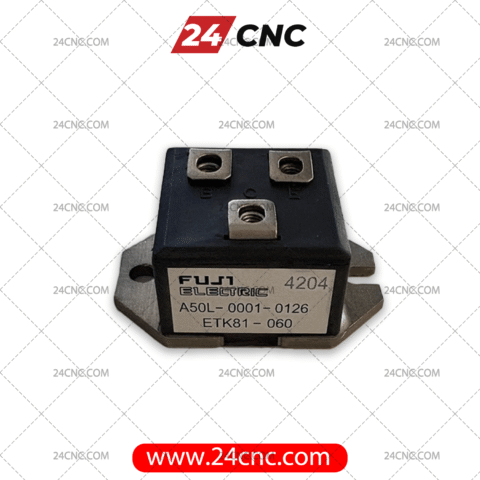
The power supply unit (PSU) is the fundamental backbone of any CNC machining center or lathe. Operating in harsh industrial environments, a CNC power supply is responsible for converting raw facility AC power into clean, highly regulated DC voltages required by the machine’s control logic, servo amplifiers, and spindle drives. Even minor fluctuations or a degrading power module can lead to catastrophic positioning errors, corrupted machine parameters, or complete system failure.
At 24cnc.com, we understand that every minute of machine downtime directly impacts your bottom line. That is why we maintain a comprehensive, globally accessible inventory of premium OEM and rigorously tested aftermarket CNC power supplies. Whether you are a procurement officer hunting for a competitive replacement price, or a maintenance engineer troubleshooting a complex electrical fault, our catalog and technical resources are designed to get your spindles turning again.
Understanding Fanuc™ Power Supply Architectures
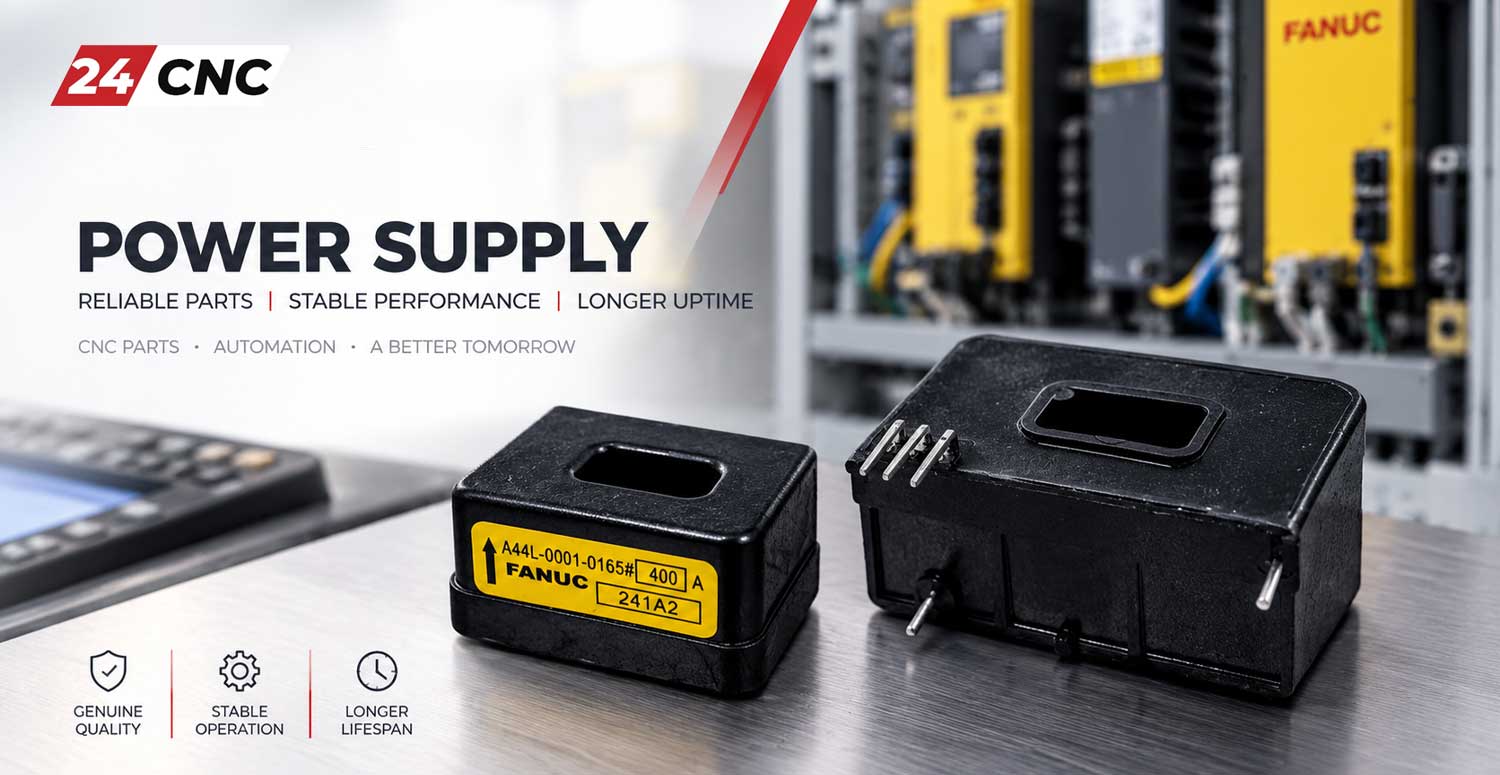
Fanuc is the undisputed global leader in CNC controllers, and their power module architecture is highly specific. When sourcing a Fanuc™ Power Supply, it is critical to distinguish between the various series, as they are rarely cross-compatible.
- Alpha Series (PSM): The older Alpha series Power Supply Modules typically handle 200V AC input and distribute DC power across a shared DC bus to the servo and spindle amplifiers.
- Alpha i Series (aiPS): The modern Alpha i series introduced enhanced efficiency and more compact form factors. These units often feature regenerative discharge capabilities, feeding excess braking energy back into the power grid rather than burning it off as heat.
- Beta Series: Often used in cost-effective or auxiliary axis applications, integrating the power supply and amplifier into a single, compact BiSVSP unit.
Solutions for Siemens, Mitsubishi, and Custom Platforms
Beyond Fanuc, many workshops rely on diverse platforms. Our Other Power Supply category caters to the broader spectrum of industrial automation:
- Siemens Sinumerik / Simodrive: Sourcing replacement Infeed/Regenerative modules (e.g., 6SN1145 series) requires exact firmware matching. These units power the robust 840D and 828D controllers.
- Mitsubishi Meldas: Known for their MDS series power supplies (MDS-A-CV, MDS-B-CV), which utilize advanced converter technology for high-speed machining centers.
- Switch-Mode Logic Supplies: Standard 24VDC DIN-rail power supplies (like Mean Well or Omron) used to power auxiliary relays, sensors, and the main Control System I/O racks.
Technical Analysis: Common Failure Modes & Diagnostics
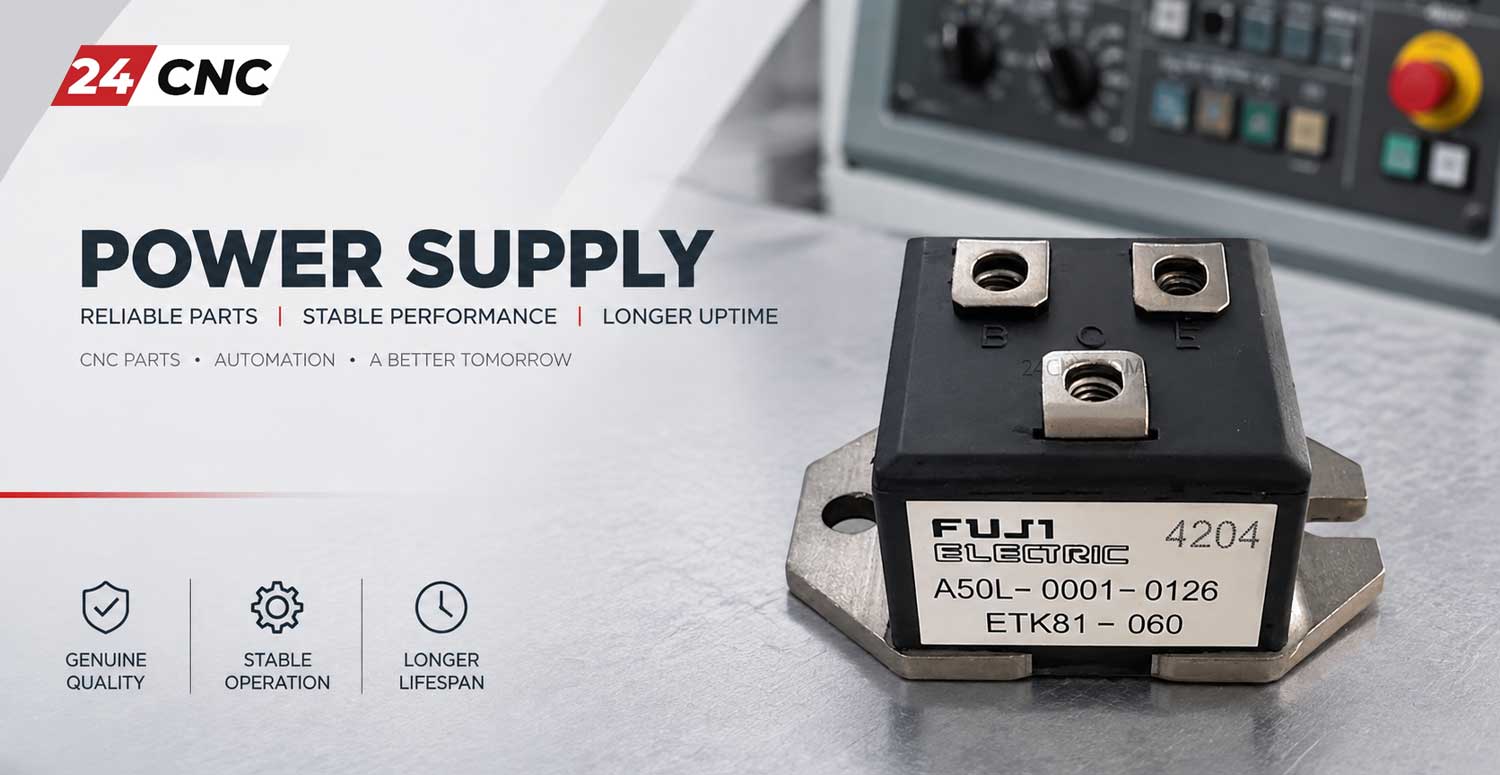
CNC power supplies degrade over time due to thermal stress and electrical fatigue. The most common point of failure lies within the electrolytic capacitors on the DC bus. Over years of use, the electrolyte dries out, causing the Equivalent Series Resistance (ESR) to rise and the capacitance to drop.
When evaluating DC bus stability, engineers often look at the ripple voltage. The theoretical peak-to-peak ripple voltage V_{ripple} for a full-wave rectifier can be approximated by:
V_{ripple} \approx \frac{I_{load}}{2 f C}
Where I_{load} is the load current, f is the AC line frequency, and C is the smoothing capacitance. As C decreases due to aging, V_{ripple} increases, which can trigger undervoltage alarms (e.g., Fanuc Alarm 5136 or Alarm 04) or permanently damage the connected Amplifiers and Inverters.
Other frequent failure causes include:
- Contamination from conductive coolant mist or graphite dust.
- Voltage spikes from the incoming facility power supply grid.
- Failure of internal cooling fans, leading to thermal runaway of the IGBT modules.
The Economics of Replacement vs. Repair
When a unit fails, maintenance managers face a choice: wait weeks for a board-level repair or purchase a direct replacement. From a purely economic standpoint, the Return on Investment (ROI) of purchasing an immediate replacement is easily calculated when factoring in the cost of machine downtime:
Total\_Loss = (Hourly\_Machine\_Rate \times Hours\_Down) + Operator\_Idle\_Wages
For a machine generating 150 per hour, a two-week delay for a specialized repair costs upwards of 12,000 in lost revenue. Sourcing a tested, in-stock module from 24cnc.com often pays for itself within the first 24 hours of restored production. Furthermore, when replacing the PSU, it is highly recommended to replace aging auxiliary components simultaneously, such as main line Fuses and heavy-duty Power Cables, to prevent recurring electrical faults.
Installation & Commissioning Best Practices
To maximize the Mean Time Between Failures (MTBF) of your newly purchased unit, adhere to these technical best practices during installation:
- Verify Phase Balance: Before powering on, ensure the incoming 3-phase AC voltage is balanced. A phase imbalance greater than 3% drastically reduces the lifespan of the input rectifier bridge.
- Check the DC Link: The DC bus connecting the power supply to the servo amplifiers must be properly torqued. Loose bus bars create high-resistance joints, leading to extreme localized heating.
- Thermal Management: Ensure cabinet heat exchangers are functioning. Ambient temperatures inside the electrical cabinet should ideally remain below 40^{\circ}C (104^{\circ}F).
- Grounding: A robust grounding system (less than 100 ohms) is crucial to dissipate electrical noise and protect the delicate low-voltage logic circuits.

Comprehensive FAQ for Procurement & Maintenance
How do I accurately identify the part number of my Fanuc power supply?
The definitive part number is located on the yellow or black plastic faceplate, usually beginning with A06B-. Do not rely solely on the printed circuit board (PCB) number (which often starts with A16B- or A20B-), as multiple configurations can share the same base PCB.
What does “Regenerative Discharge” mean in CNC power supplies?
When heavy CNC axes decelerate, the servo motors act as generators, creating kinetic energy that turns into electrical current. Regenerative power supplies capture this reverse power and push it back into the facility’s electrical grid, saving energy and reducing ambient heat compared to older systems that dissipated this energy via large resistor banks.
Are your replacement parts tested under load?
Yes. Our refurbished and tested-good units undergo rigorous dynamic load testing on dedicated test rigs. We simulate high-torque machining cycles to ensure the DC bus voltage remains stable under rapid acceleration and deceleration conditions.
Do I need to backup my machine parameters before replacing the main power supply?
While replacing the primary heavy-current power supply generally does not erase parameters (which are held by a separate battery on the main control board), it is an absolute industry best practice to maintain a current SRAM backup of your CNC before performing any major electrical maintenance.
Secure Your Machine’s Uptime Today
Don’t let a failing power supply dictate your production schedule. Our technical procurement team at 24cnc.com is standing by to cross-reference your part numbers, provide immediate stock availability, and offer the most competitive pricing in the market.
Get a Quote & Check Live Inventory
Worldwide Express Shipping | Dedicated Technical Support | Guaranteed Authenticity