
Showing all 11 results
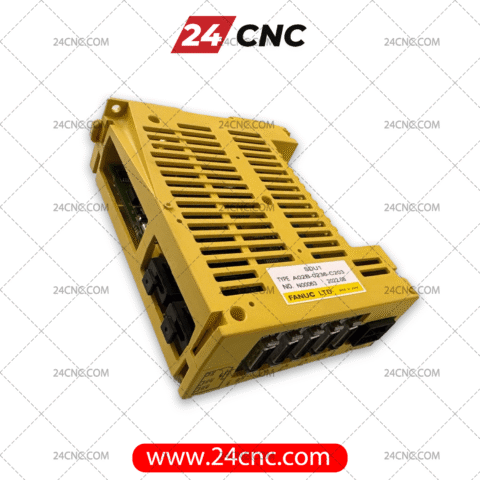
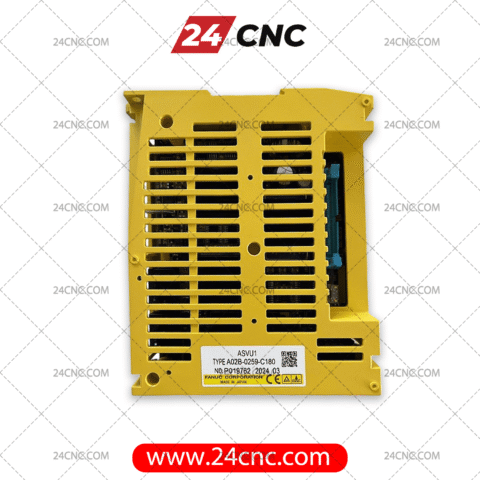


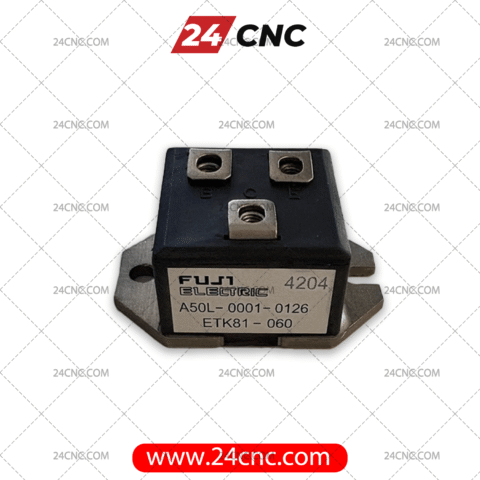
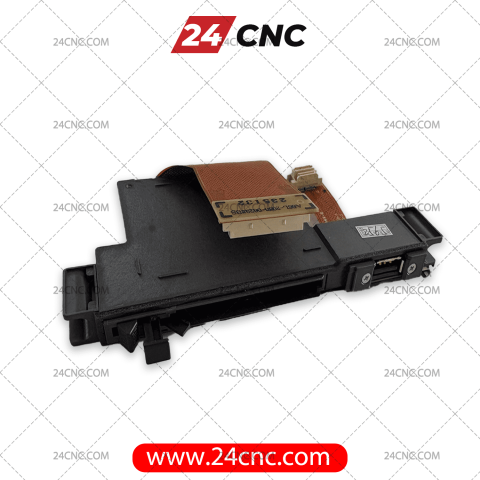


In the high-stakes, fast-paced world of industrial automation and precision machining, the communication network of your CNC machine acts exactly like a human nervous system. At the absolute core of this network is the Module Input Output (I/O Module). This highly critical component serves as the vital bridge between the brain of the operation—the CNC Control System—and the physical hardware on the shop floor, including sensors, limit switches, relays, solenoids, and actuators. Without a fully functioning I/O module, your advanced controller is essentially blind and paralyzed, unable to interact with or command the machine tool.
For production managers, engineers, and workshop owners, machine downtime is the ultimate enemy. Every hour a machine sits idle waiting for a part translates directly to lost revenue and delayed deliveries. When an I/O module burns out, faults, or starts behaving erratically, the entire production line grinds to a halt. At 24cnc.com, we understand this urgency. That is exactly why we maintain one of the largest global inventories of authentic OEM (Original Equipment Manufacturer), meticulously refurbished, and premium replacement I/O modules to get your spindles turning again as quickly as possible.
Technical Deep Dive: How Do CNC I/O Modules Work?
To truly appreciate the necessity of these components, we need to look under the hood. I/O modules are responsible for translating real-world physical signals into binary data that the CNC processor can understand, and vice versa. These signals generally fall into two primary categories that dictate the type of module you need:
- Digital Input/Output (DI / DO): Also known as discrete I/O, these modules deal exclusively with binary, on/off states (zeros and ones). For example, when a physical limit switch is triggered on the X-axis, a 24VDC signal (or 0V depending on Sink/Source configuration) is sent to the module. The module translates this and tells the controller, “The axis has reached its limit.” Conversely, digital outputs are used to command relays, fire contactors, and open solenoid valves for coolant or hydraulics.
- Analog Input/Output (AI / AO): Analog modules handle continuous, variable signals rather than simple on/off states. These typically operate on standard industry ranges such as 0 to 10 Volts (DC) or 4 to 20 milliamps (mA). Analog signals are vital for reading variable data, such as real-time spindle motor temperature sensors, hydraulic pressure transducers, or load cells, feeding precise, fluctuating data back to the control board.
Diagnostics: 4 Warning Signs Your I/O Module is Failing
Maintenance engineers and procurement officers must stay vigilant. An I/O module doesn’t always fail catastrophically all at once; often, the degradation is a slow burn characterized by intermittent faults. Here are the top signs that it is time to source a replacement:
- Erratic Machine Behavior: The G-code program is running flawlessly on the screen, but physical actions are missed. For example, the automatic tool changer (ATC) hangs mid-cycle, or the flood coolant fails to activate despite the M08 command being active.
- Persistent PLC Alarms: The most common symptom is the sudden appearance of communication errors on the HMI display. Look for I/O Link Communication Errors on Fanuc™ controllers, or Profibus/Profinet Bus Faults on Siemens panels.
- Dead or Unresponsive Sensors: You have physically verified that the proximity sensors are working, and you have continuity tested the wiring harness, yet no signal registers on the CNC’s Main Board diagnostic screen. This isolates the fault directly to the input gateway of the module.
- Physical and Electrical Damage: Sometimes the damage is obvious. A visual inspection of the electrical cabinet might reveal burnt pins on the module’s header, a distinct smell of blown capacitors, or internal fuses that instantly pop as soon as the machine is powered on.
Authority Support: Leading I/O Module Brands in the Market
Installing counterfeit, third-party, or mismatched electronic components can cause catastrophic, cascading failures that fry expensive servo drives and mainboards. At 24cnc, we specialize strictly in authentic, OEM-grade hardware. Let’s look at the specific architectures of the big three:
A) Fanuc™ I/O Modules
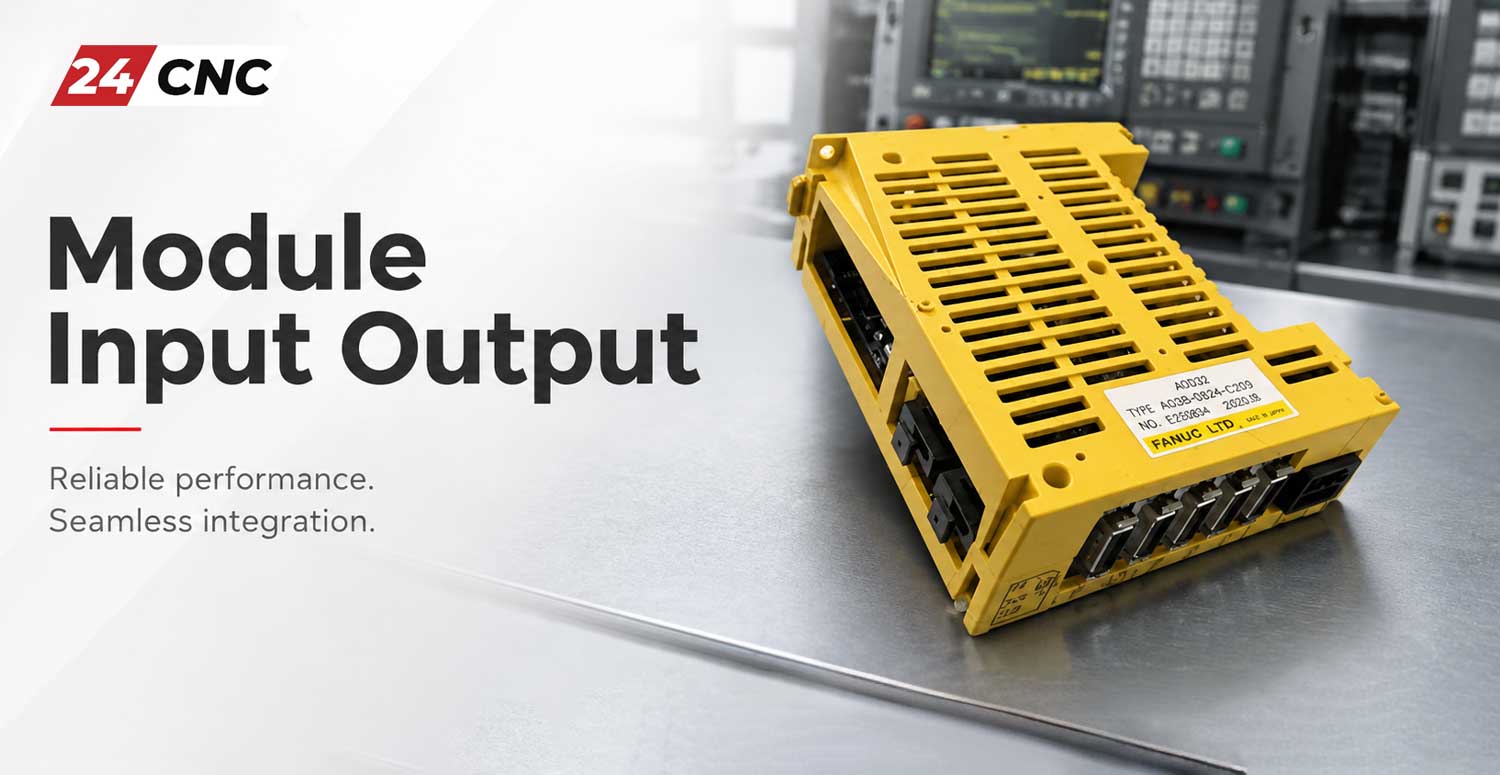
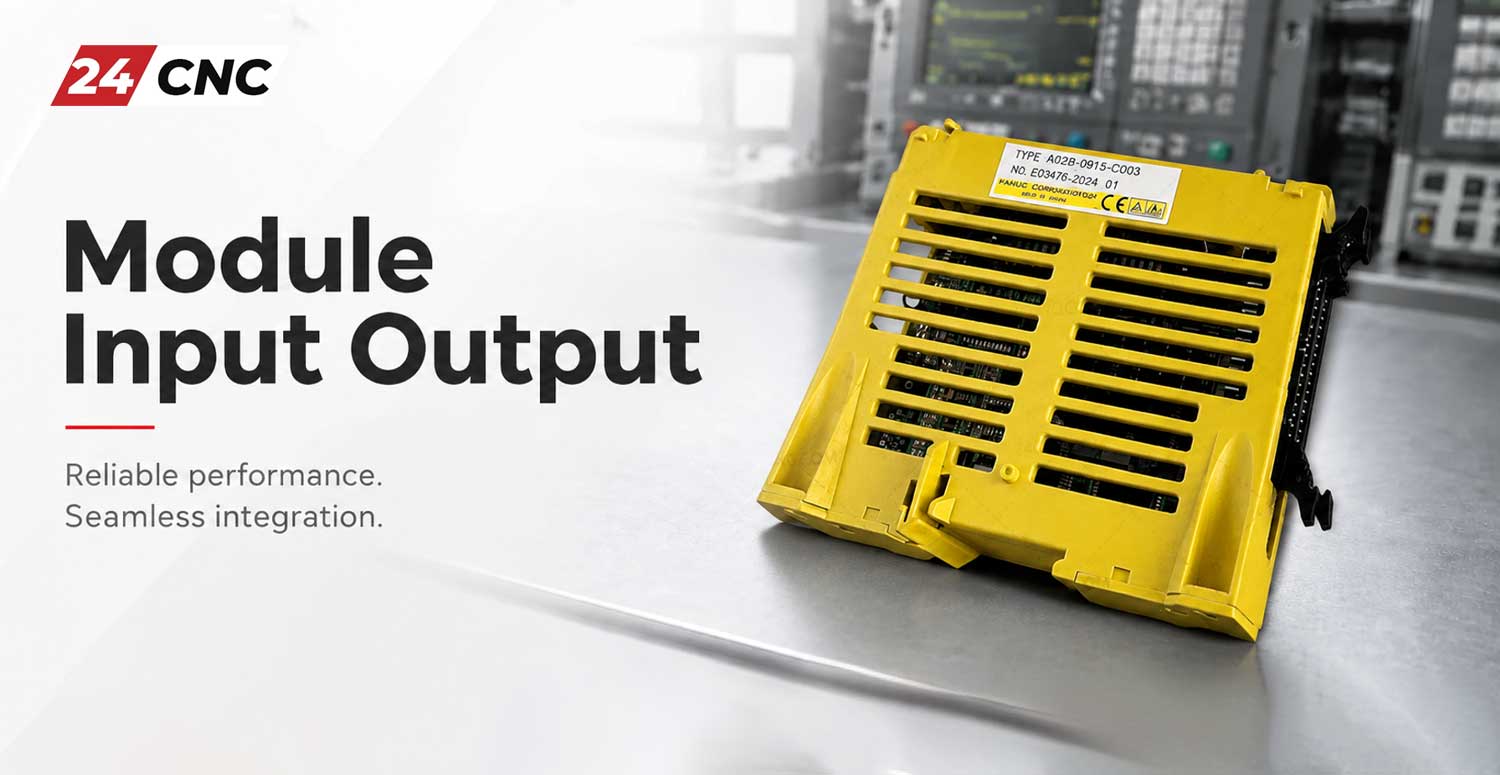
Fanuc remains the undisputed heavyweight champion of CNC automation. Their modules, particularly within the Alpha i series and legacy Series 0i/18i/21i controls, are industry standards. Fanuc components primarily utilize the proprietary Fanuc I/O Link protocol to daisy-chain communication back to the main CPU. When sourcing these iconic yellow units, the OEM part numbers almost exclusively begin with the prefix A03B (e.g., A03B-0819-C011). Explore our dedicated inventory in the Fanuc Module section.
B) Siemens (Simatic ET200 & Sinumerik)
Siemens dominates the European machine tool market with the highly acclaimed Sinumerik 840D and 828D controllers, backed by the Simatic ET200 distributed I/O architecture. Siemens takes a highly modular, “slice-based” approach, allowing machine builders to snap together narrow terminal modules on a DIN rail exactly as needed. These systems leverage ultra-high-speed industrial networks like Profibus and the Ethernet-based Profinet to ensure zero latency during high-speed machining.
C) Mitsubishi Electric (Meldas & FCU Series)
Found extensively on premium Japanese and Taiwanese machine tools (such as Mazak or Citizen), Mitsubishi’s controls—ranging from legacy Meldas to modern M70/M80 series—rely on highly robust I/O systems. Mitsubishi often utilizes compact cassette-style designs or remote terminal blocks that interface flawlessly with their servo drives via the CC-Link or Opt-Link (optical fiber) communication protocols, ensuring incredible resistance to electrical noise and interference.
The Buyer’s Guide: 4-Step Selection Protocol
Procuring automation parts requires precision. A single misplaced digit in a part number can result in purchasing an incompatible module, costing you days of extra downtime. Follow this 4-step protocol before submitting a Request for Quote (RFQ):
- Identify the Exact OEM Part Number: Locate the manufacturer’s specification tag (often a silver, white, or yellow sticker on the plastic casing). Record the full alphanumeric code. Do not rely solely on the machine manual, as field modifications may have occurred.
- Verify Channel Count and Signal Type: Confirm the I/O density. Is it a 16-input / 16-output module? A 32-channel high-density unit? Ensure you know whether you are replacing a Digital (DI/DO) or Analog (AI/AO) specific slice.
- Determine NPN (Sink) vs. PNP (Source): This is an absolutely critical engineering detail. Sink logic (NPN) switches the negative side of the circuit (0V), while Source logic (PNP) switches the positive side (24V). Installing a Sink module in a Source circuit will instantly fail to operate and may cause a dead short.
- Inspect Ancillary Hardware: A faulty module can sometimes take the connecting cables down with it. Always inspect your CNC cables, Honda connectors, and ribbon cables for short circuits or wire chafing before plugging in a brand new module.
Architectural Comparison Matrix
To assist procurement teams and engineers in understanding the varying topographies of these systems, we have provided a technical breakdown of the three leading brands available in our inventory:
| Specification / Brand | Fanuc (A03B Series) | Siemens (ET200 Series) | Mitsubishi (FCU Series) |
|---|---|---|---|
| Target Control Systems | Series 0i, 16i, 18i, 31i, Alpha i | Sinumerik 840D sl, 828D | M70, M80, Legacy Meldas |
| Core Comm. Protocol | Fanuc I/O Link | Profinet / Profibus DP | CC-Link / Opt-Link Fiber |
| Physical Modularity | Base Unit + Expansion Cards | Highly Modular (DIN Slice) | Compact Block / Cassette |
Why Source Your CNC Parts from 24cnc.com?
We are not just a digital storefront; we are a dedicated team of industrial automation experts focused entirely on resolving your machine downtime. Partnering with 24cnc guarantees:
- Unrivaled Inventory Depth: We warehouse thousands of rare, obsolete, and brand-new components. Stop waiting weeks for overseas manufacturer lead times.
- Rigorous Quality Control (QC): Every refurbished module passes through our testing laboratory. They are bench-tested under real-world load conditions by veteran CNC technicians before they ever go into a shipping box.
- Expert Technical Consultation: If you are struggling to identify a faded part number or decode a complex PLC alarm, our engineering staff is available to cross-reference parts and recommend the exact plug-and-play solution.
- Expedited Global Shipping: Because we understand the financial impact of a downed machine, in-stock orders are processed and shipped via express courier networks immediately to get your factory back online.
Frequently Asked Questions (FAQ)
Are your I/O modules New In Box (NIB) or refurbished?
We carry both. Our inventory includes Factory New (Brand New OEM) components as well as professionally refurbished, tested, and overhauled surplus units. The exact condition and price tier will be completely transparent during your quotation process, allowing you to choose based on your budget.
Do your CNC parts come with a warranty?
Absolutely. All parts supplied by 24cnc are backed by a physical integrity guarantee and a comprehensive functional warranty. The specific duration of the warranty depends on whether the part is procured as New or Refurbished. Our sales team will outline the warranty terms clearly on your quote.
How fast can you ship a replacement module?
For in-stock components, if your order is confirmed and processed before our daily cutoff time, the part ships the very same day. We leverage top-tier expedited logistics to ensure overnight or priority delivery to minimize your production losses.
Don’t Let a Failed I/O Module Paralyze Your Production Line!
Our engineering and sales teams are standing by right now to cross-reference your required part number and provide the most competitive pricing for authentic OEM CNC modules. Take a picture of your faulty unit’s data tag and send it to us today.