
Showing all 6 results


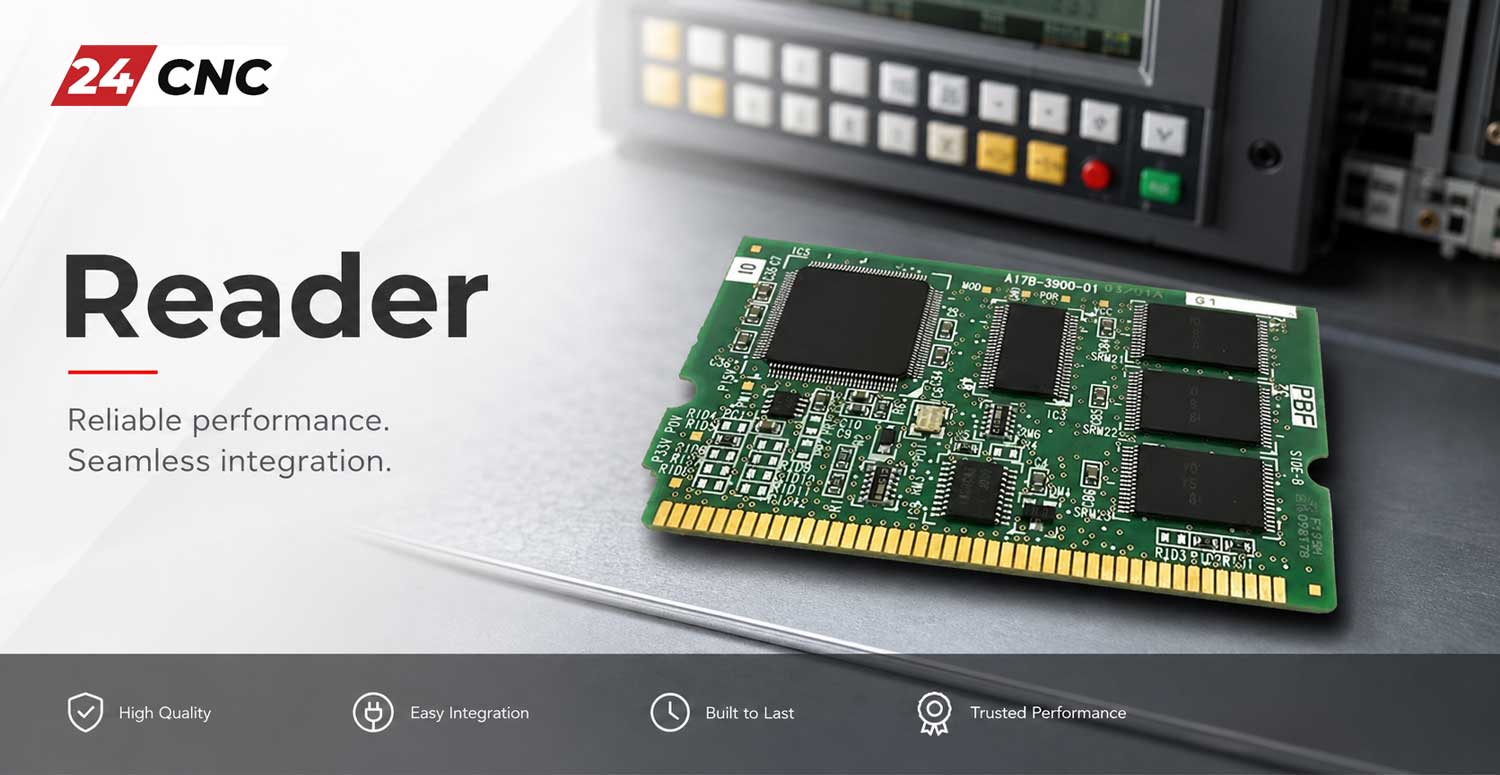
In modern computer numerical control manufacturing, the seamless transfer of complex machining programs (G-code) from CAM software to the machine’s memory is a non-negotiable requirement. A faulty or incompatible memory reader can lead to corrupted data, sudden machine alarms, and catastrophic production downtime. At 24CNC, we supply a comprehensive range of industrial-grade CNC readers, including PCMCIA adapters, CompactFlash (CF) card interfaces, and dedicated memory modules designed specifically for harsh workshop environments. Whether you are upgrading a legacy control system or replacing a damaged I/O interface, our inventory ensures your machine resumes profitable operation immediately.
Even the most advanced multi-axis milling center is effectively paralyzed without a reliable method to input part programs. As part files grow larger due to complex 3D surfacing and high-speed machining toolpaths, the reliance on robust data transfer hardware has never been higher. A standard commercial-grade reader often fails on the shop floor due to ingress of coolant mist, fine metallic dust, and intense electrical noise. This is why investing in an OEM-equivalent or genuine industrial Reader is essential for continuous manufacturing.
The Critical Function of the CNC Reader
A CNC reader acts as the primary data gateway between an external storage device and the machine’s internal control system. In older systems, this was accomplished via RS-232 serial drip-feeding or punched tape readers. Today, the industry standard relies on solid-state memory technologies.
When a machinist inserts a memory card, the reader must instantly interface with the machine’s mainboard, translating the stored file system (typically FAT16 or FAT32) into a format the controller’s microprocessor can execute. If the reader’s pins are bent, if the internal logic board is failing, or if the interface protocol mismatches, the operator will experience read/write errors. In mathematical terms, if a CAM file is $S$ megabytes and the read speed is $R$ MB/s, the transfer time $T$ is calculated as $T = \frac{S}{R}$. An aging or degraded reader drastically reduces $R$, causing costly delays during setup times.
Types of CNC Readers and Memory Interfaces
Understanding the exact type of hardware required for your specific machine brand is the first step in the procurement process. We stock various categories of data transfer equipment to cover generations of CNC technology.
PCMCIA Card Adapters
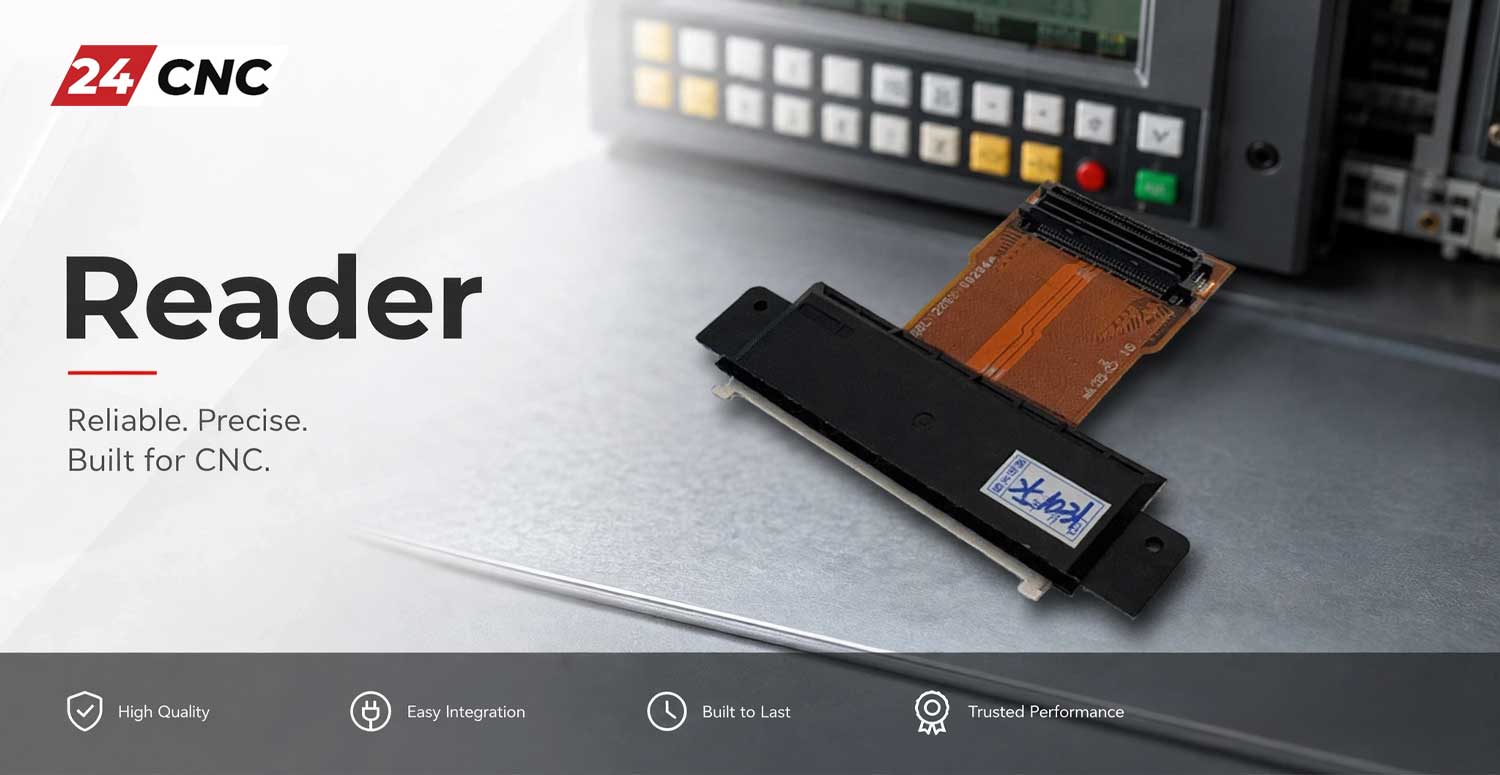
The PCMCIA (Personal Computer Memory Card International Association) slot is ubiquitous on thousands of Fanuc™ controllers (such as the Series 16i, 18i, 21i, and 0i). Because modern computers no longer use PCMCIA cards, machinists utilize a PCMCIA adapter sleeve. You insert a smaller memory card into this sleeve, which then slides directly into the port located next to the machine’s LCD screen. These adapters must be ruggedized to withstand thousands of insertion cycles without pin failure.
CompactFlash (CF) Readers
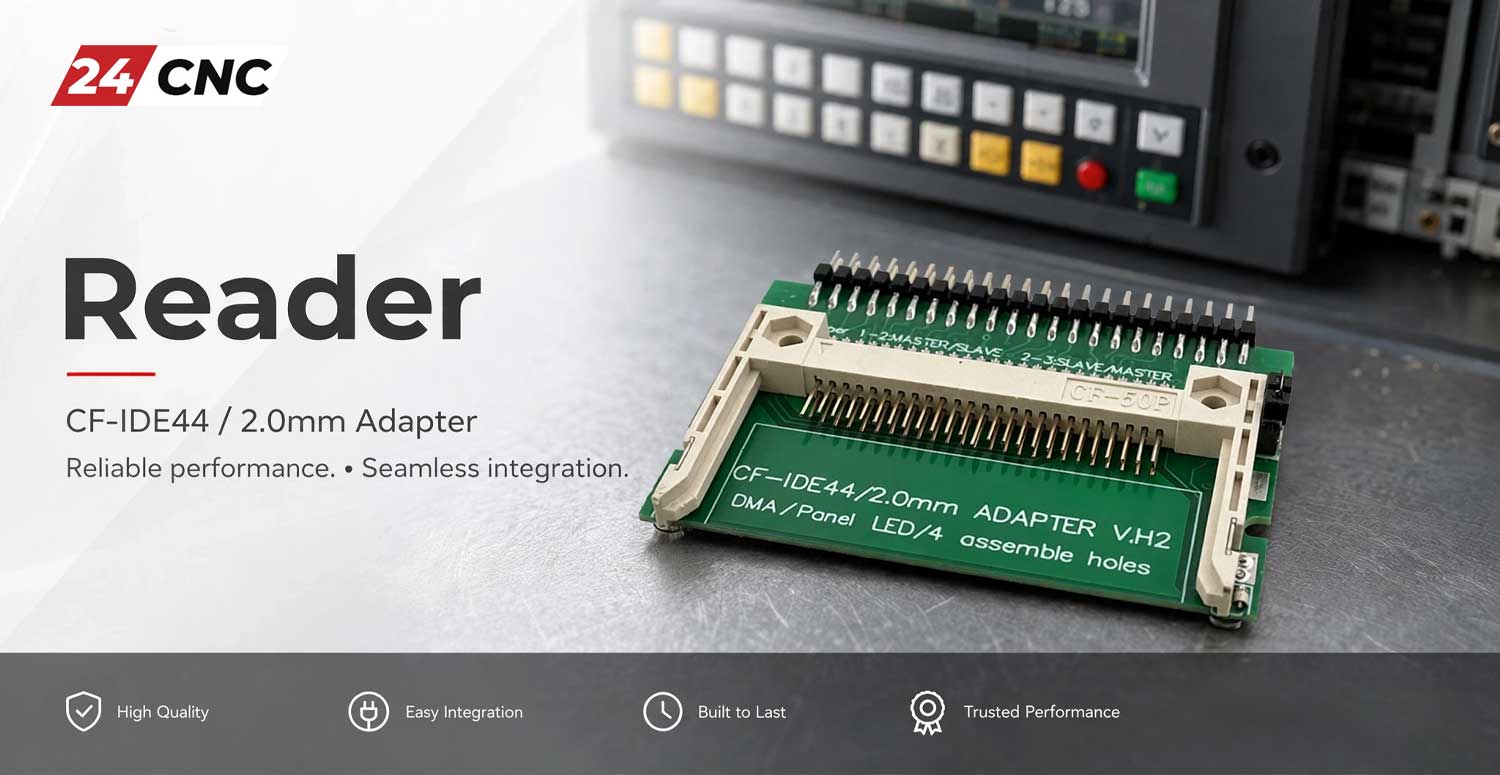
CompactFlash remains the gold standard for industrial CNC memory due to its durability and native IDE interface support. CF cards are inserted into the aforementioned adapters or directly into dedicated CF readers integrated into the machine’s operator panel. Brands like SanDisk are highly recommended for their proven compatibility with older controller architectures that strictly require FAT formatting and smaller storage capacities (typically 256MB to 2GB).
USB and Network DNC Readers
Many modern Siemens and Mitsubishi controllers utilize USB interfaces for program transfer. For older machines lacking native USB support, retrofit USB-to-Serial readers or portable DNC (Direct Numerical Control) devices serve as modern reader upgrades, allowing operators to bypass obsolete floppy drives or tape readers entirely.
Selection Guide: How to Buy the Right Replacement Reader
Purchasing the incorrect memory interface will result in “Memory Card Error” or “Format Error” alarms. Follow these guidelines when selecting a replacement part from our inventory:
- Identify the Controller Brand and Series: A Fanuc controller from the late 1990s has vastly different memory addressing limits compared to a contemporary Siemens Sinumerik 840D. Verify your exact model.
- Check the Physical Slot: Inspect the front of your operator panel. Does it have a wide 68-pin PCMCIA slot, a narrow CF slot, or a USB port?
- Storage Capacity Limits: Older CNC systems cannot read modern 32GB or 64GB cards. They are structurally limited to identifying memory blocks under 2GB (and sometimes as low as 512MB). Purchasing a high-capacity reader/card combo for a legacy machine will result in a failure to boot the card.
- OEM vs. Aftermarket: While aftermarket options exist, purchasing genuine OEM cards and readers ensures precise voltage regulation and prevents short circuits that could damage the expensive motherboard.
Technical Comparison: CNC Data Transfer Devices
Below is a comparative breakdown of common data interface components utilized in industrial machining centers.
| Interface Type | Primary Compatibility | Typical Capacity Limit | Durability / Shop Floor Suitability |
|---|---|---|---|
| PCMCIA Card Adapter | Fanuc™ 16i/18i/21i/0i Series | Dictated by inserted CF card (Usually < 2GB) | High. Protects the delicate pins of the internal CF card. |
| CompactFlash (CF) Card | Fanuc, Mitsubishi (via adapter) | 128MB – 2GB (Legacy formatting) | Very High. Solid-state, no moving parts, resists vibration. |
| USB Flash Drive | Haas, Modern Siemens / Fanuc 0i-F | 8GB – 32GB+ | Medium. USB ports can suffer from coolant ingress if unsealed. |
Why Choose 24CNC.com for Your Replacement Parts?
Procuring automation spares requires a vendor you can trust. At 24CNC, we specialize strictly in industrial electronics and machine tool components. When you purchase a replacement reader from us, you benefit from:
- Extensive Inventory: We stock a vast array of hard-to-find and discontinued parts, ensuring you don’t have to wait weeks for OEM backorders.
- Quality Assurance: Every electronic component is visually inspected and, where applicable, bench-tested to ensure it meets factory specifications.
- Global Shipping: Machine downtime costs thousands of dollars an hour. We offer expedited shipping options to get your part to your facility immediately.
- Technical Support: Unsure if you need an SRAM card, a CF card, or a specific PCMCIA adapter? Our technical team is available to assist you in cross-referencing part numbers.
Frequently Asked Questions (FAQ)
Why does my CNC machine reject my new memory card reader?
The most common issue is formatting. Most industrial control systems prior to 2010 require FAT16 or FAT (not FAT32 or exFAT) formatting. Additionally, if the card capacity exceeds the machine’s addressing limit (often 2GB), the reader will not be able to mount the volume. Always format the card directly inside the CNC machine if the option is available.
Are your PCMCIA adapters compatible with standard SanDisk CF cards?
Yes, our industrial PCMCIA adapters are designed to interface seamlessly with standard Type I CompactFlash cards, including reliable brands like SanDisk, provided the storage capacity aligns with your controller’s specifications.
Do you offer international shipping for urgent breakdowns?
Absolutely. We understand the critical nature of machine tool spares. We utilize premium international couriers to deliver parts worldwide as rapidly as possible.
Need to Verify Compatibility or Request a Quote?
Don’t let a faulty data transfer device halt your production. Contact our technical sales team with your machine model and controller series, and we will ensure you get the exact genuine reader you need.