
Showing all 3 results

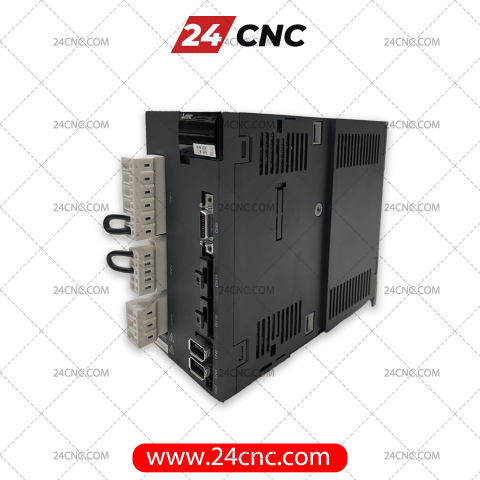

In the high-stakes, precision-driven world of industrial manufacturing and automated machining, Mitsubishi Electric servo and spindle drives are recognized globally as the gold standard for exceptional accuracy, rapid response times, and robust operational reliability. These sophisticated amplifiers and inverters act as the muscular and nervous system of your CNC machinery. They are responsible for translating digital low-voltage commands from the CNC controller into precisely modulated high-power electrical currents that drive heavy mechanical motion.
When a drive unit fails, production grinds to a halt. In modern lean manufacturing, the financial impact of machine downtime is exponential. The total cost of a failure event can be mathematically modeled as C_{total} = \int_{0}^{t} (C_{downtime} + C_{lost\_production}) dt + C_{replacement}, making the rapid sourcing of reliable, genuine replacement parts an absolute operational necessity.
At 24CNC, we specialize in supplying genuine, fully tested, and certified replacement Mitsubishi CNC drives to facilities worldwide. Whether you are upgrading an aging multi-axis milling center, urgently searching for a hard-to-find legacy MDS series amplifier, or outfitting a newly acquired CNC lathe, we offer competitive pricing, expansive inventory, and immediate availability to restore your machines to peak operational performance.

The Critical Engineering Role of Mitsubishi Amplifiers in CNC Machining
To understand why selecting the correct drive is paramount, one must understand the underlying physics and electronic engineering of CNC motion control. Mitsubishi drives operate utilizing advanced Pulse Width Modulation (PWM) technology. By rapidly switching DC voltage on and off using heavy-duty power transistors (typically IGBT modules), the drive synthesizes a highly controlled three-phase AC waveform. The synchronous speed of the connected motor is dictated by the equation N_s = \frac{120 \times f}{P} where N_s is the synchronous speed in RPM, f is the frequency of the synthesized AC power in Hertz, and P is the number of motor poles.
Furthermore, Mitsubishi servo drives operate within a closed-loop feedback system. They constantly read positional and velocity data fed back from Mitsubishi rotary encoders mounted on the motors. The drive’s internal microprocessors calculate the precise microsecond adjustments required in current and voltage to maintain exact tool positioning, compensating for mechanical friction, cutting resistance, and load inertia in real-time.
Why Procurement Officers & Workshop Owners Choose 24cnc.com
- Extensive OEM Inventory Spanning Generations: CNC machines have long operational lifespans. We bridge the gap between legacy technology and modern innovation. From the older MDS-A and MDS-B series to the highly advanced optical MDS-D and MR-J4 lineups, our warehouses stock a vast array of authentic Mitsubishi components.
- Rigorous Component-Level Testing: Every drive that leaves our facility—whether brand new in box (NIB) or expertly refurbished—undergoes strict quality control. We perform dynamic load testing to ensure that the continuous output voltage (V_{out}) and output current (I_{out}) perfectly match OEM specifications under thermal stress.
- A Complete Sourcing Ecosystem: We streamline your supply chain. We don’t just sell the drives; we stock the complementary Mitsubishi servo motors, feedback modules, cooling fans, and proprietary communication cables required for a seamless plug-and-play installation.
- Expedited Global Shipping & Engineering Support: A downed machine is an active financial emergency. We partner with top-tier global logistics networks for express worldwide shipping. Furthermore, our dedicated technical support team is available to assist with critical parameter backup, restoration, and complex alarm troubleshooting.
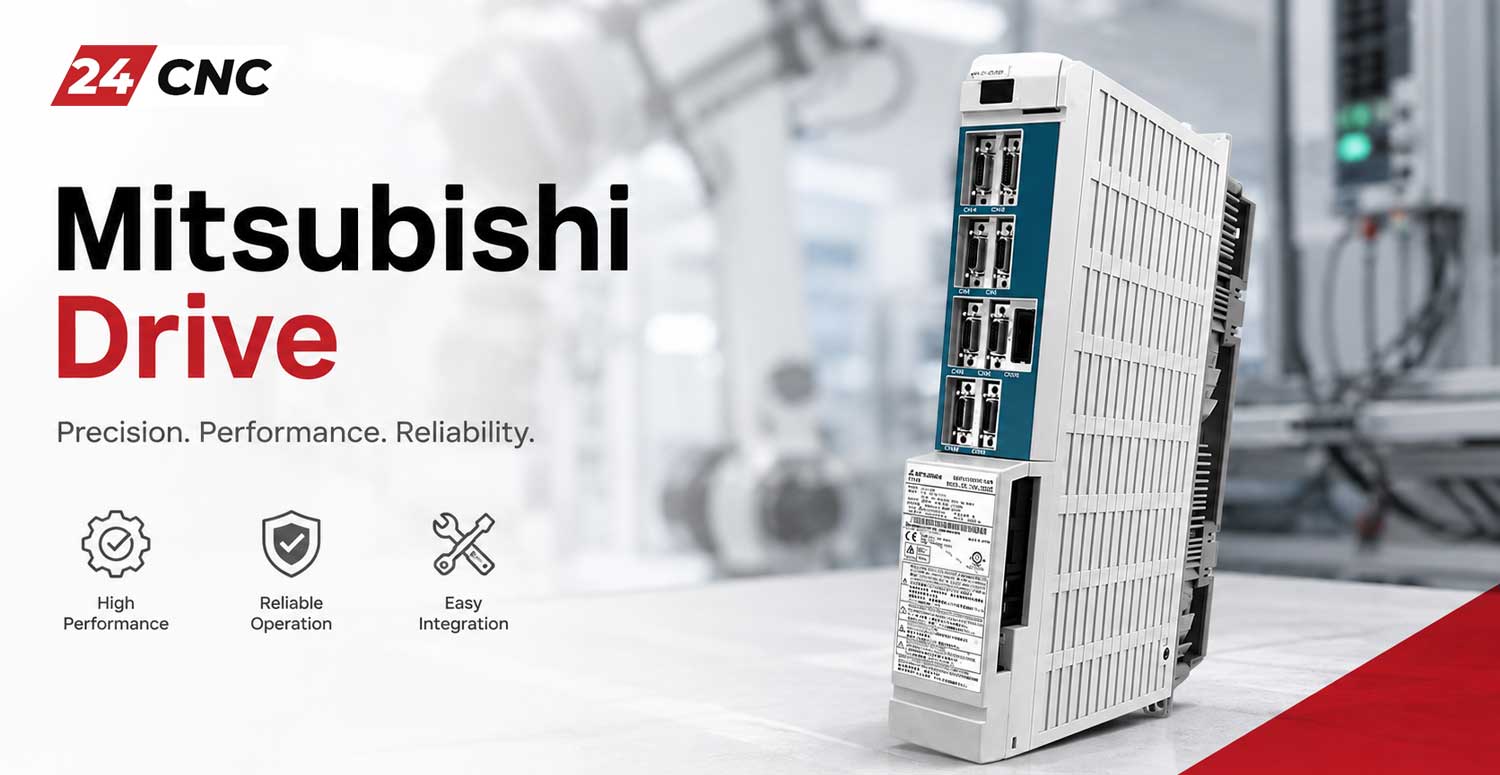
Comprehensive Selection Guide: Identifying the Right Mitsubishi Drive
Procuring the incorrect replacement drive can result in immediate hardware failure, motor burnout, or catastrophic damage to the machine tool. When requesting a quote or placing an order, precision is key. Always reference the stamped OEM metallic nameplate located on the side or front chassis of your existing drive unit.
- Identify the Base Series and Protocol: Look for primary prefixes such as MDS-A, MDS-B, MDS-C1, or MR-J2. This alphanumeric code dictates the fundamental communication protocol (e.g., serial vs. optical) and the physical mounting footprint of the drive.
- Determine the Power Capacity & Load Matching: The trailing part number indicates the kilowatt (kW) or peak amperage rating. For instance, in a drive model like MDS-B-SVJ2-10, the “10” typically designates a 1.0kW power capacity. Ensure the replacement drive matches the required mechanical power output, which is calculated as P_{mech} = \tau \times \omega (where \tau is torque and \omega is angular velocity). Furthermore, the drive must be capable of handling the load inertia, maintaining a safe inertia ratio of J_{load} / J_{motor} \le 10 for standard servo applications.
- Distinguish Between Spindle and Servo Architectures: This is a critical distinction. Spindle drives (often denoted with “SP”) and servo drives (denoted with “SV”) are fundamentally engineered for different tasks. Spindle drives are optimized for generating massive rotational speeds and continuous high horsepower. Conversely, servo drives are engineered for zero-speed holding torque, aggressive acceleration/deceleration, and extreme micro-positioning accuracy. They cannot be interchanged.
Technical Comparison: Mitsubishi Drive Series Evolution
Mitsubishi Electric has continuously evolved its drive architectures to meet the increasing demands of modern CNC machining. Below is a breakdown of the most common generations found in industrial workshops.
| Drive Series Generation | Typical Machine Application | Communication Protocol | Key Engineering Features & Repair Notes |
|---|---|---|---|
| MDS-A / MDS-B Series | Legacy CNC Machines (1990s-2000s) | High-Speed Serial Bus | Extremely robust workhorses commonly paired with older Meldas controls. Due to their age, repairs often require specialized replacement of degraded internal hybrid ICs and electrolytic capacitors. |
| MDS-C1 / MDS-CH Series | Mid-Generation CNC Centers | Early Optical Communication | Introduced significant improvements in microprocessor speed and onboard diagnostic capabilities. Vulnerable to signal loss if the connecting optical cables are sharply bent or contaminated. |
| MDS-D / MDS-DH Series | Modern High-Precision CNC | SSCNET III (High-Speed Optical) | Features ultra-fast optical networking for nanometer-level precision, reduced wiring complexity, and a highly compact physical footprint for modern control cabinets. |
| MR-J2 / MR-J3 / MR-J4 | General Automation & CNC Aux Axes | Pulse Train / SSCNET III/H | Highly versatile standalone servo amplifiers. Often utilized for auxiliary CNC axes (like tool changers or rotary tables) or standalone robotic automation cells. |
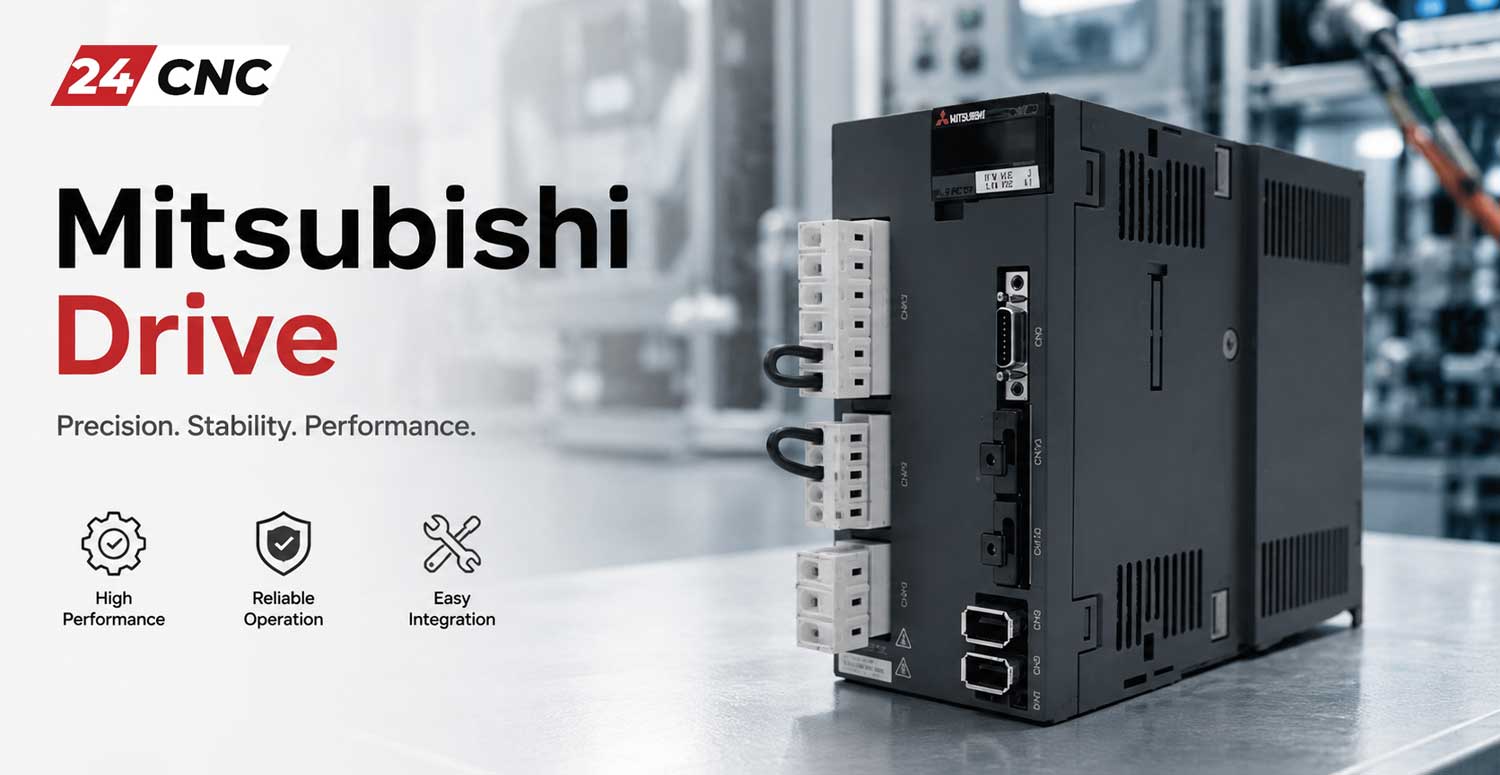
Understanding Common Mitsubishi Drive Failure Modes
Despite their rugged construction, CNC drives operate in harsh electrical and physical environments. Understanding how they fail can aid in rapid troubleshooting and preventative maintenance:
- Overvoltage Faults (DC Bus Issues): During heavy deceleration, the motor acts as a generator, pushing energy back into the drive. The regenerative energy E_{reg} = \frac{1}{2} J (\omega_1^2 – \omega_2^2) must be dissipated by a braking resistor. If the resistor fails, the internal DC bus voltage spikes, triggering an overvoltage alarm (often AL.33) to protect the drive’s capacitors.
- IGBT Thermal Breakdown: The Insulated-Gate Bipolar Transistors are the heavy lifters of the drive. Over time, poor cabinet ventilation or dried-out thermal paste can cause these modules to overheat and short circuit, resulting in instantaneous overcurrent alarms (AL.32) and requiring a complete drive rebuild or replacement.
- Capacitor Aging: The large electrolytic capacitors responsible for smoothing the DC bus voltage degrade over time, especially in high-heat environments. As their capacitance drops, voltage ripple increases, leading to erratic motor behavior and eventual drive failure.
Frequently Asked Questions (FAQ)
Are the replacement Mitsubishi drives sold by 24CNC new or refurbished?
We maintain a comprehensive inventory that includes both brand new OEM drives (in original factory packaging) and expertly refurbished units. Our refurbished drives are not merely “repaired”; they undergo proactive preventative maintenance. We replace common wear items, such as aging capacitors and high-stress semiconductor modules, ensuring they meet or exceed original factory reliability standards.
How do I diagnose an “Overcurrent” alarm on my Mitsubishi CNC monitor?
An overcurrent alarm (typically AL.32 or similar) indicates an excessive draw of amperage. Before condemning the drive, megger test the power cables and the servo motor to ensure there is no short to ground. If the external hardware tests fine, the fault likely lies within the drive’s inverter section (blown IGBTs). You can verify incoming power stability mathematically; your DC bus voltage should roughly equal V_{DC} = V_{AC} \times \sqrt{2}. If the internal drive components are compromised, replacement is required.
Do I need to back up my drive parameters before replacing a unit?
In most modern Mitsubishi CNC architectures (like the MDS-D series), the drive parameters are stored on the main CNC controller (NC) and are automatically downloaded to the drive upon power-up via the optical network. However, on older standalone drives or MR-J series units, parameters may reside on the drive itself. We highly recommend maintaining current parameter backups for all machine axes to ensure a swift, trouble-free swap.
What is your shipping policy for critical replacement parts?
We recognize that machine-down situations cost thousands of dollars per hour. We offer immediate dispatch and utilize premium global express couriers (DHL, FedEx, UPS) to minimize transit times, regardless of your facility’s global location.
Secure Your Machine’s Uptime Today
Do not let a malfunctioning amplifier compromise your production schedule. Partner with 24CNC for reliable, high-quality OEM replacements.
Contact our specialized engineering and sales team with your exact Mitsubishi part number for immediate pricing, live inventory verification, and expert technical guidance.