
When we look at a modern CNC machine, it is easy to be captivated by the high-speed spindle, the rapid tool changes, and the glowing interface of the control panel. However, the true foundation of precision machining lies hidden beneath the surface: the linear motion systems. Linear rails and ball screws are the arteries of precision. If they fail, the entire machine fails. Understanding how way wipers and bellows protect linear rails is absolutely critical for anyone involved in CNC machining, maintenance, or machine design.
Every time a tool cuts metal, it generates a hazardous mixture of sharp chips, abrasive metallic dust, and highly penetrative synthetic coolants. Without robust physical barriers, these contaminants would rapidly destroy the highly polished bearing surfaces of the linear guides. In this comprehensive guide, we will explore the engineering behind way wipers and bellow covers, how they function as the ultimate defense mechanism for your machine’s axes, and why neglecting them can lead to catastrophic financial losses.

The Hidden Threats: What Are Linear Rails Defending Against?
To appreciate the value of wipers and bellows, we must first understand the hostile environment inside a CNC machining envelope. Linear guideways—whether they are utilizing roller or ball linear guides—operate on microscopic tolerances. The steel balls or rollers recirculate within a bearing block, making contact with the rail. This contact area is heavily dependent on a thin film of lubricating oil or grease.
The primary threats to this delicate ecosystem include:
- Metal Chips and Swarf: The most obvious threat. A large, hot metal chip can easily bridge the gap between the rail and the bearing block. If drawn inside the block, it will physically score the steel rail, creating deep grooves that permanently destroy the machine’s accuracy.
- Abrasive Dust (Cast Iron and Graphite): Machining materials like cast iron, composites, or graphite produces a fine, abrasive dust. This dust can mix with the way lubrication, turning it into a grinding paste that rapidly accelerates wear on the bearing tracks.
- High-Pressure Coolant: Modern CNC machines use high-pressure coolant systems to evacuate chips and cool the cutting zone. This fluid can wash away necessary lubrication. Furthermore, if coolant penetrates the bearing block, it can cause internal corrosion and degrade the grease.
- Tramp Oil and Sludge: Over time, the mixture of old coolant, fine particulates, and degraded lubricants forms a sticky sludge. This sludge can harden, blocking lubrication ports and causing the bearings to run dry.
What Are Way Wipers and How Do They Work?
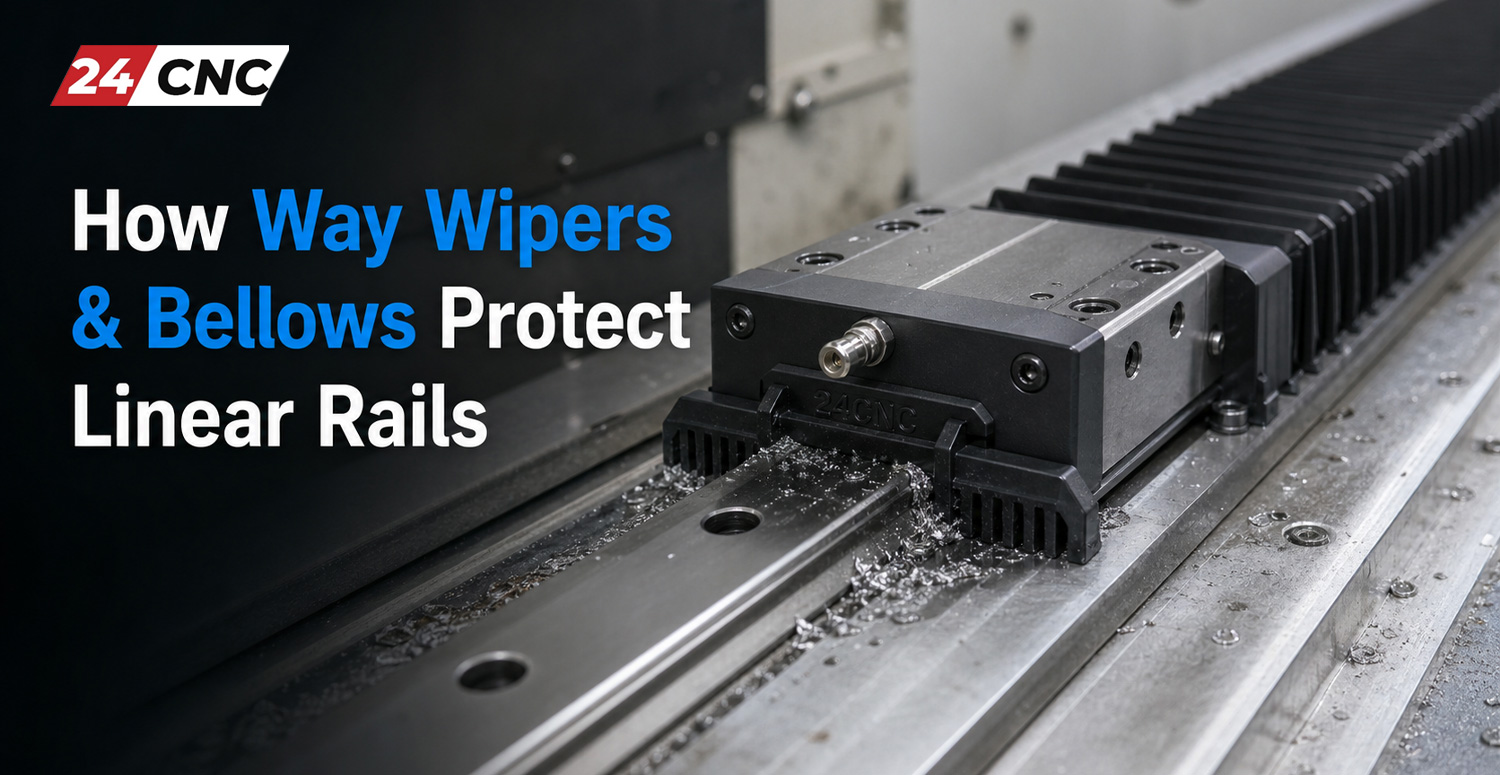
Way wipers are the frontline infantry in the battle against contamination. These are precision-molded strips, typically made from specialized elastomers like polyurethane, nitrile rubber (NBR), or Viton. They are mounted directly onto the ends of the linear bearing blocks (often called carriages) and are designed to maintain constant, firm contact with the profile of the linear rail as the block moves.
The Mechanics of Wiping
A high-quality way wiper is not just a flat piece of rubber; it is an engineered profile. The lip of the wiper is designed with a specific angle and tension. As the linear block travels along the rail, the wiper acts like a microscopic squeegee. It pushes chips, dust, and pooled coolant away from the path of the recirculating bearings.
Furthermore, wipers often work in a double-lip or triple-lip configuration. The outer lip handles the heavy debris (large chips), while the inner lips scrape away fine dust and prevent coolant ingress. Simultaneously, the innermost lip prevents the internal lubrication (grease or oil) from escaping the bearing block, ensuring the rolling elements remain properly coated.
Common Wiper Materials
- Polyurethane (PU): Highly resistant to abrasion and tearing. Excellent for general-purpose CNC milling and turning where large chips are present.
- Nitrile Rubber (NBR): Offers excellent resistance to petroleum-based oils and most standard CNC coolants. A standard choice for many OEM linear guide manufacturers like THK and HIWIN.
- Viton (FKM): Used in high-temperature environments or when aggressive synthetic coolants and chemicals are utilized. Viton provides superior chemical stability.
- Metal Scrapers: Often used in conjunction with rubber wipers. A thin brass or stainless steel plate sits just ahead of the rubber wiper. Its job is to knock away large, hot, or sharp chips that might otherwise melt or cut the rubber wiper lip.
Proper wiper function is intrinsically tied to the machine’s lubrication system. If your wipers are failing and letting contamination in, it can clog the lubrication lines, leading to a situation where you might need to perform extensive central lubrication pump troubleshooting just to clear the blockages.
What Are Way Bellows (Accordion Covers)?
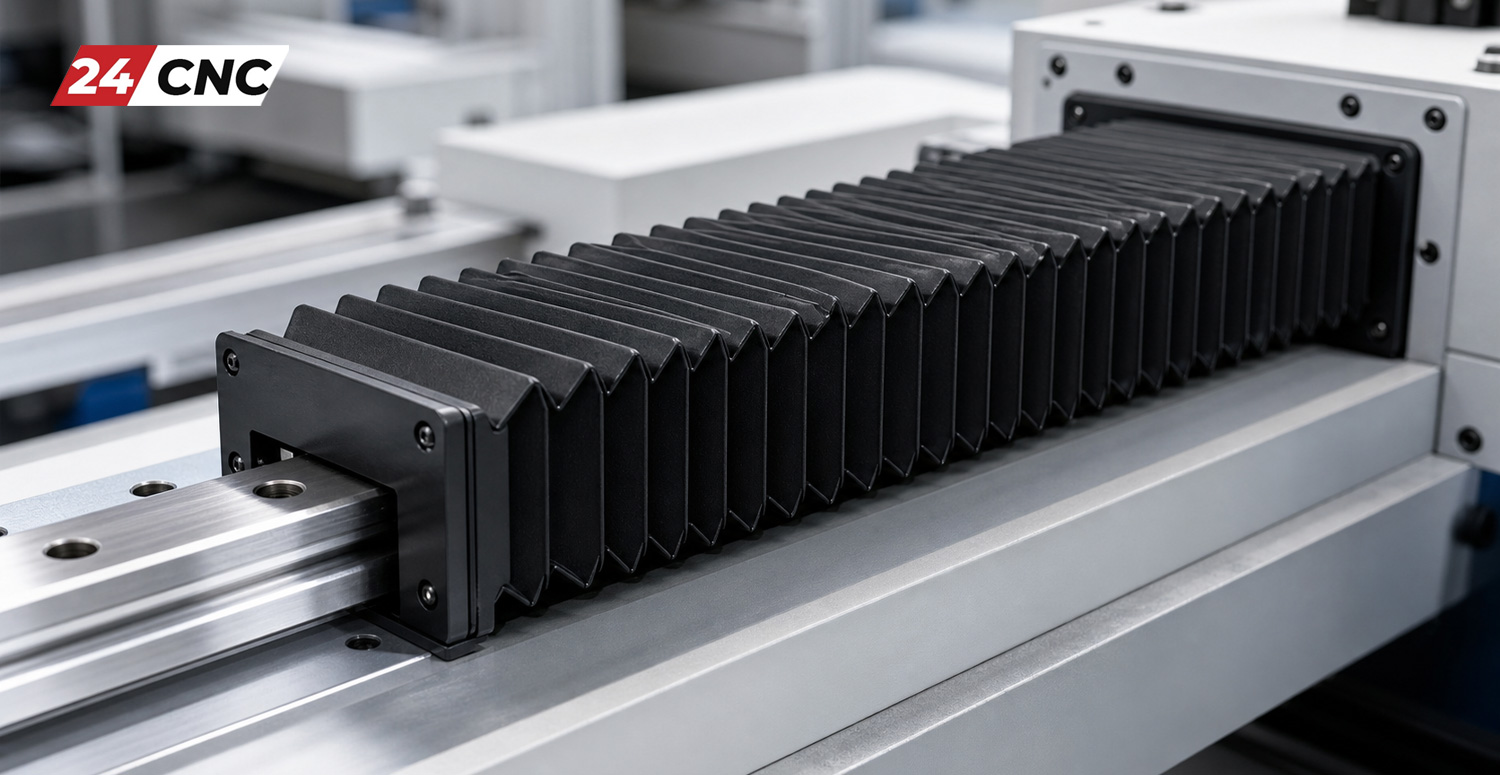
While way wipers protect the internal components of the bearing block, way bellows (also known as accordion covers) protect the entire length of the linear rail and the accompanying ball screw. If wipers are the frontline infantry, bellows are the impenetrable fortress walls.
Bellows are flexible, collapsible covers that stretch and compress as the machine axis moves. They completely encapsulate the rail, preventing debris from ever resting on the rail surface in the first place.
Design and Construction of Bellows
Bellows must be incredibly durable yet flexible enough to handle the rapid traverse rates of modern CNC machines. They are typically constructed using a composite approach:
- The Core Structure: Rigid PVC or aluminum frames are inserted into every fold (or alternating folds) to provide shape and prevent the bellow from sagging onto the rail or ball screw.
- The Outer Fabric: The exterior is made from heavy-duty industrial fabrics. Common materials include Polyurethane-coated nylon (for general dust and light coolant), Teflon-coated fiberglass (for extreme heat and hot chips), and Kevlar blends (for maximum abrasion resistance).
- Mounting Flanges: Bellows are secured to the stationary part of the machine and the moving axis saddle using custom-cut steel or aluminum flanges, ensuring a tight, gap-free seal.
When to Use Bellows over Telescopic Covers
In heavy-duty machining centers, you will often see steel telescopic covers. However, bellows are preferred in specific applications. Bellows are significantly lighter than steel covers, allowing for faster axis acceleration and deceleration without inducing massive inertial loads on the servo motors. They are heavily utilized on laser cutting machines, waterjets, plasma cutters, and precision grinders where the primary threat is fine dust and abrasive slurry rather than massive, heavy steel chips.
Technical Comparison: Way Wipers vs. Bellow Covers
To fully grasp how these components complement each other, it is vital to see how their functions differ. They are rarely an “either/or” choice; in high-quality linear guide setups (like THK, HIWIN, or NSK), they work in tandem.
| Feature | Way Wipers | Bellow Covers |
|---|---|---|
| Primary Function | Clears debris directly off the rail surface; seals lubrication inside the block. | Encapsulates the entire rail/screw to prevent debris from landing on them. |
| Location | Attached directly to the ends of the linear bearing block. | Spans the distance between the moving saddle and the end of the axis stroke. |
| Material Composition | Polyurethane, NBR Rubber, Viton, Brass/Steel scrapers. | Coated nylon, Kevlar, fiberglass fabrics with rigid PVC/metal inserts. |
| Wear & Tear Factor | High. Constantly rubbing against the rail. Requires frequent inspection. | Moderate. Can be punctured by hot chips or torn by tool crashes. |
| Impact on Machine Speed | Negligible (slight increase in friction). | Low. Much lighter than steel telescopic covers, allowing high rapid rates. |

The Financial Impact of Neglecting Rail Protection
Many machine shops view wipers and bellows as afterthoughts—annoying maintenance items that are ignored until they fall apart. This is a massive financial mistake. Let’s break down the cascading effects of failed rail protection:
Once a wiper lip degrades (often becoming brittle from coolant exposure), it stops making a perfect seal. Micro-chips and abrasive grit enter the bearing block. These particles begin to score the recirculating ball bearings and the steel rail tracks. As the tracks wear down, the preload on the linear guide is lost. This introduces physical play (backlash) into the axis.
When an axis has play, the machine can no longer hold tight tolerances. Circular interpolation becomes oval. Surface finishes degrade, showing chatter marks. Parts fail quality control inspections. At this point, tweaking parameters in the CNC controller won’t fix the mechanical reality.
The repair cost is astronomical. You cannot simply replace the bearing block; you must replace the entire linear rail and block assembly, and often the associated high-precision ball screw as well, since they usually suffer the same contamination fate. This requires days of machine downtime, highly skilled alignment technicians, and thousands of dollars in replacement parts. All of this could have been prevented by a $50 set of replacement way wipers or a patched bellow cover.
Maintenance and Inspection Best Practices
To maximize the lifespan of your linear rails, proactive maintenance of your protection systems is mandatory. Incorporate these checks into your standard CNC machine maintenance checklist:
- Daily Visual Inspection: Before firing up the spindle, glance at the bellows. Are there any tears, holes from hot chips, or heavy accumulation of swarf? Clear away chip nests manually; do not rely on the bellow to crush massive piles of chips.
- Monthly Wiper Check: Wipe down a section of the linear rail so it is perfectly clean. Jog the axis so the bearing block passes over the clean section. The rail behind the block should have a very thin, perfectly even film of oil/grease. If you see lines of dry rail, streaks of thick dirty grease, or if the rail remains completely dry, your wipers have failed or your lube system is clogged.
- Clean Without Harsh Chemicals: When cleaning bellows during a deep maintenance cycle, avoid blasting them with high-pressure air (which can drive chips into the fabric) or washing them with highly caustic degreasers that strip the protective coatings off the fabric. Use mild detergents and a soft brush.
- Scheduled Replacement: Treat rubber way wipers as consumable items. Depending on the machine usage (e.g., heavy cast iron milling vs. light aluminum turning), plan to replace the wipers every 1 to 2 years, regardless of how they look externally. The internal lips wear out invisibly.
Frequently Asked Questions (FAQ)
1. Can I repair a torn bellow cover instead of replacing it?
For very small punctures or tiny tears, yes. There are specialized industrial bellow repair tapes and flexible polyurethane adhesives designed for this exact purpose. However, if the tear spans an entire fold, or if the internal rigid PVC frame is broken, the bellow will not compress correctly and will likely jam the machine. In that case, full replacement is necessary.
2. How do I know which way wiper material to choose for my machine?
It depends on your primary machining environment. If you run a high-volume production shop utilizing aggressive, high-pressure synthetic coolants, Viton (FKM) wipers are highly recommended due to their chemical resistance. For general-purpose milling where heavy metal chips are the main concern, standard NBR or Polyurethane with a metal scraper attachment is the standard.
3. Will adding heavier bellows slow down my CNC machine’s rapid movements?
Fabric bellows are incredibly lightweight compared to steel telescopic covers. The addition of bellows to a bare rail will not noticeably impact the rapid speeds or acceleration of modern servo-driven machines. The only time they cause issues is if they become packed with heavy chips or if they bind due to physical damage.
4. Should I lubricate the outside of my way bellows?
No. You should never apply oil or grease to the exterior fabric of the bellows. Lubricants will attract and hold onto abrasive dust, creating a heavy, sticky mess that degrades the fabric and ruins the bellow’s ability to fold and unfold smoothly. Keep the exterior clean and dry.
Protect Your Precision Investment
Don’t let a $50 worn wiper cause thousands of dollars in damage to your linear guides and ball screws. Ensure your CNC machine continues to produce accurate parts with high-quality replacement components.
Find High-Quality CNC Parts Today
Explore our extensive catalog for top-tier automation and maintenance components.
Leave a comment
Your email address will not be published. Required fields are marked *