
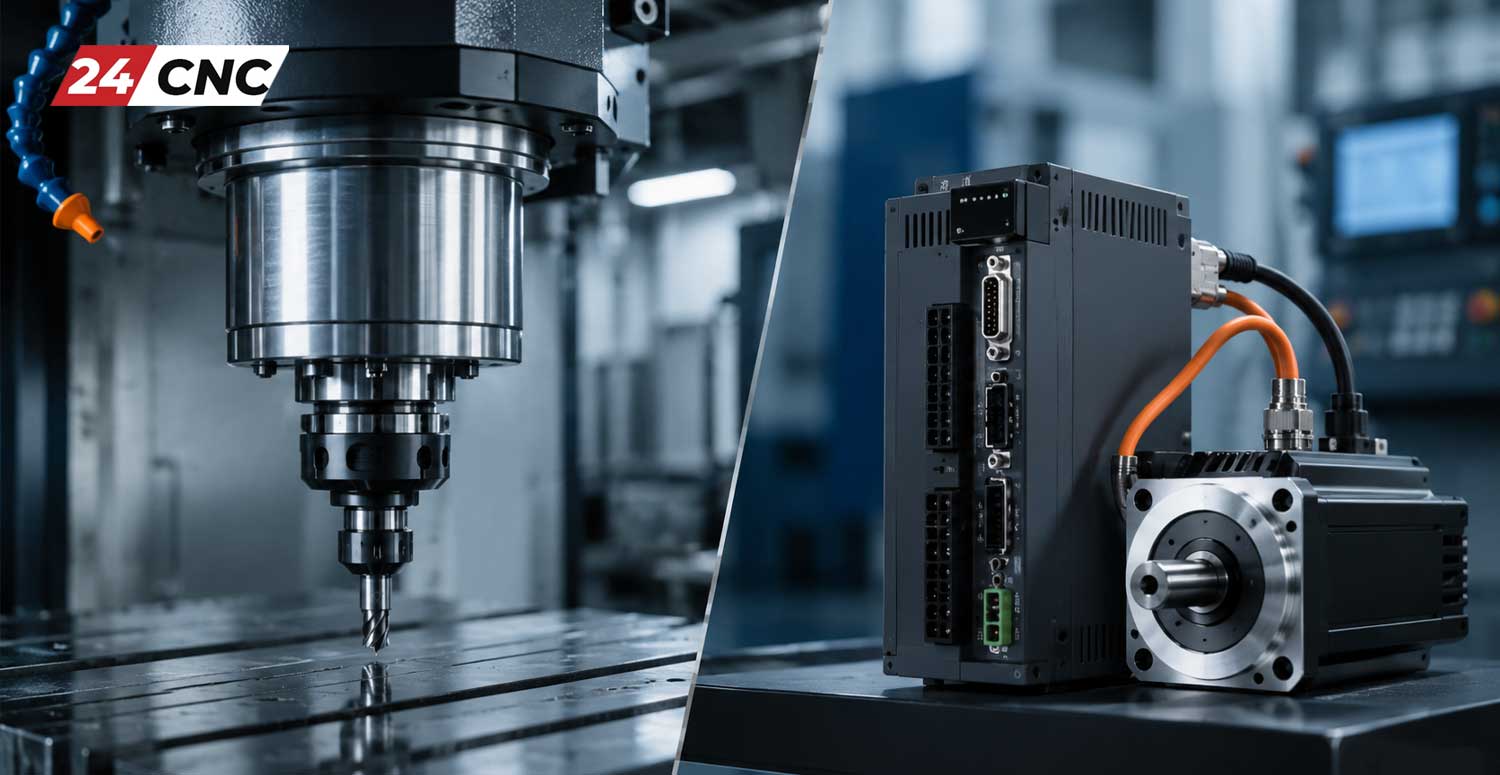
In the complex and highly precise world of industrial automation and CNC (Computer Numerical Control) machining, motion control is everything. The ability to manipulate heavy metal, shape intricate parts, and maintain microscopic tolerances relies heavily on the electrical components driving the mechanical systems. If you are examining the essential components of a CNC machine, two of the most critical elements you will encounter are the spindle drive and the servo drive. While they may look similar in an electrical cabinet and both fundamentally control motors, their purposes, performance characteristics, and internal engineering are vastly different.
Whether you are a maintenance engineer diagnosing a machine fault, a procurement specialist sourcing replacement parts, or a workshop owner looking to upgrade your equipment, understanding the debate of spindle drive vs. servo drive is crucial. This comprehensive guide will break down the engineering principles behind each drive, compare their technical specifications, and help you understand how they work together to achieve flawless CNC machining.
Understanding CNC Motion Control: The Basics
Before diving into the specific differences, it is important to understand what a “drive” (often referred to as an amplifier or inverter) actually does. In simple terms, a CNC controller acts as the “brain,” calculating the necessary movements based on G-code. However, the controller cannot generate the high electrical power required to move heavy machine components. This is where amplifiers and inverters come in.
The drive receives a low-voltage command signal from the CNC controller and translates it into the high-voltage, high-current electrical power needed to turn a motor. It also continuously reads feedback from the motor (such as speed and position) to adjust the power output in real-time, creating a closed-loop system. While this basic premise applies to both spindle and servo systems, the way they manage that power—and what they prioritize—is where the differences emerge.
What is a Spindle Drive?
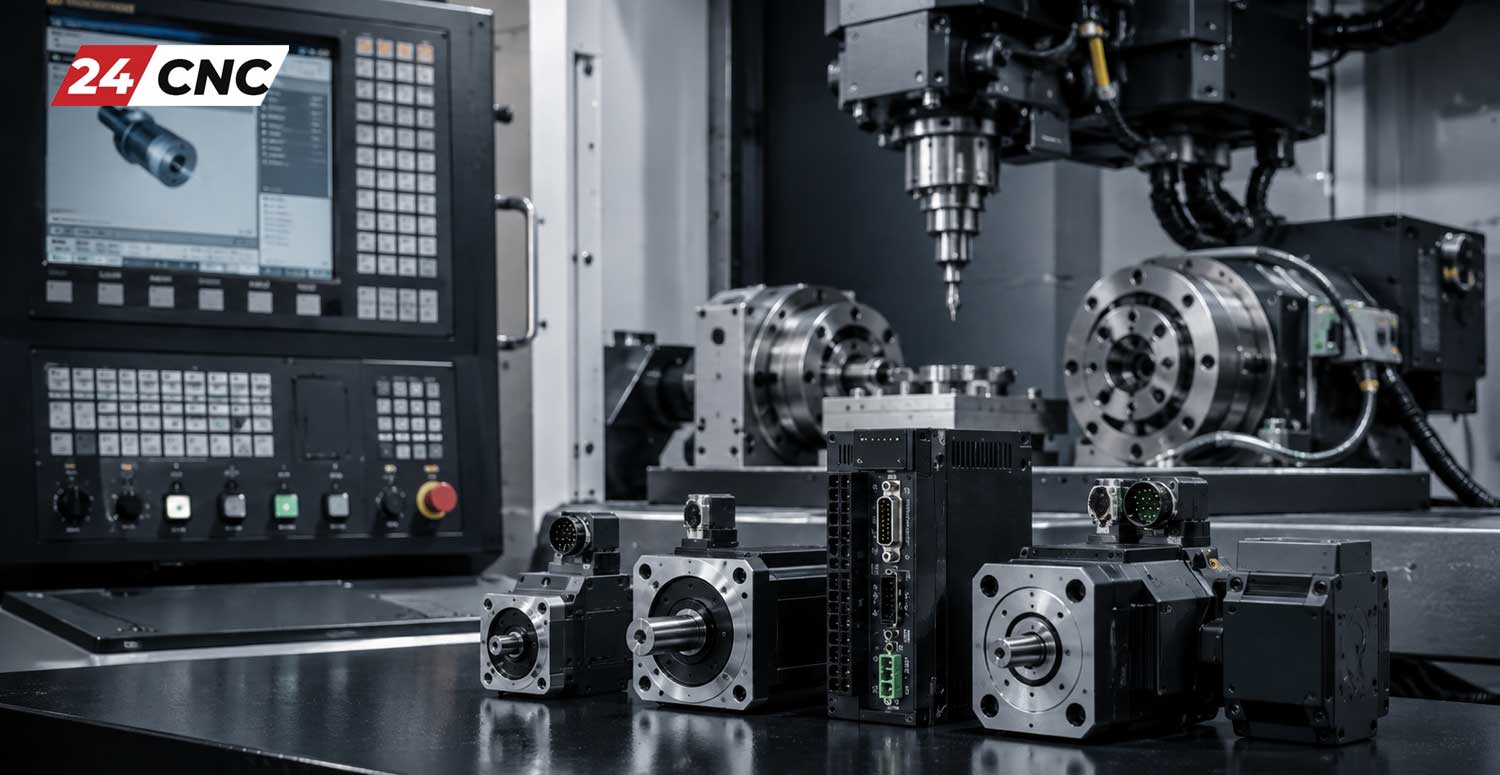
A spindle drive (often associated with a Variable Frequency Drive, or VFD, in simpler applications, though CNC spindle drives are much more advanced) is specifically designed to control the main spindle motor of a machine tool. The spindle is the axis that holds and rotates the cutting tool (in a milling machine) or the workpiece itself (in a lathe).
Key Characteristics of Spindle Drives
The primary job of a spindle drive is to maintain consistent rotational speed (RPM) and deliver massive cutting power under varying mechanical loads. When a tool engages a block of steel, the mechanical resistance tries to slow the motor down. The spindle drive must instantly detect this drop in speed and deliver more current to maintain the programmed RPM.
- High Speed and Continuous Rotation: Spindle drives are built to sustain high speeds (often ranging from 4,000 to over 30,000 RPM) for extended periods. They prioritize continuous velocity over exact angular positioning.
- Power and Torque Delivery: They manage significant horsepower. In milling and turning, the mechanical power requirement is defined by the physical relationship: $Power = Torque \times Angular Velocity$. The drive must ensure that sufficient torque is available across a wide speed range.
- Induction Motor Control: Spindle drives typically control AC induction motors. These motors are rugged, reliable, and capable of generating the high horsepower required for metal removal.
- Field Oriented Control (FOC): Advanced CNC spindle drives use FOC (also known as vector control) to independently control the magnetic flux and torque-producing currents, allowing for excellent low-speed torque and stable high-speed operation.
Common Applications
Spindle drives are used exclusively for rotating the cutting tool or the workpiece. Operations like drilling, facing, boring, and threading rely entirely on the spindle drive’s ability to maintain a stable speed while enduring heavy cutting forces. Even during operations like rigid tapping, where the spindle must synchronize with the Z-axis, the spindle drive manages the rapid deceleration, reversal, and acceleration required.
What is a Servo Drive?
While the spindle provides the cutting power, the servo drives provide the precision. A servo drive is responsible for controlling the machine’s axes (X, Y, Z, and any rotary A/B/C axes). These drives maneuver the cutting tool or the table into the exact position required to execute the part program.
Key Characteristics of Servo Drives
Unlike spindle drives that focus on continuous speed, CNC servo amplifiers and drives are obsessed with position, rapid acceleration, and holding torque.
- Precise Positioning: A servo drive uses high-resolution feedback to know exactly where the motor shaft is at any given microsecond. It can move a motor a fraction of a degree and stop exactly on a target coordinate with micrometer accuracy.
- High Dynamic Response: Servo drives must accelerate and decelerate their motors incredibly fast. When cutting complex 3D contours, the axis directions and speeds change constantly. The servo drive must respond to these changes instantly without overshooting the target position.
- Permanent Magnet Synchronous Motors (PMSM): Servo drives typically control servo motors, which utilize powerful rare-earth magnets on their rotors. This design results in low inertia and massive torque capabilities at zero speed.
- Holding Torque: A unique characteristic of a servo drive is its ability to generate maximum torque while the motor is completely stationary. This is known as “holding torque” and is essential for keeping a heavy machine table perfectly still against the pushing forces of the cutting tool.
Common Applications
Servo drives dictate the movement of the linear guideways and ball screws. Any time the tool moves from point A to point B, interpolates a circle, or feeds into the material, the servo drives are doing the work. They are the defining factor in a machine’s surface finish capabilities, volumetric accuracy, and rapid traverse speeds.
Technical Comparison: Spindle Drive vs. Servo Drive
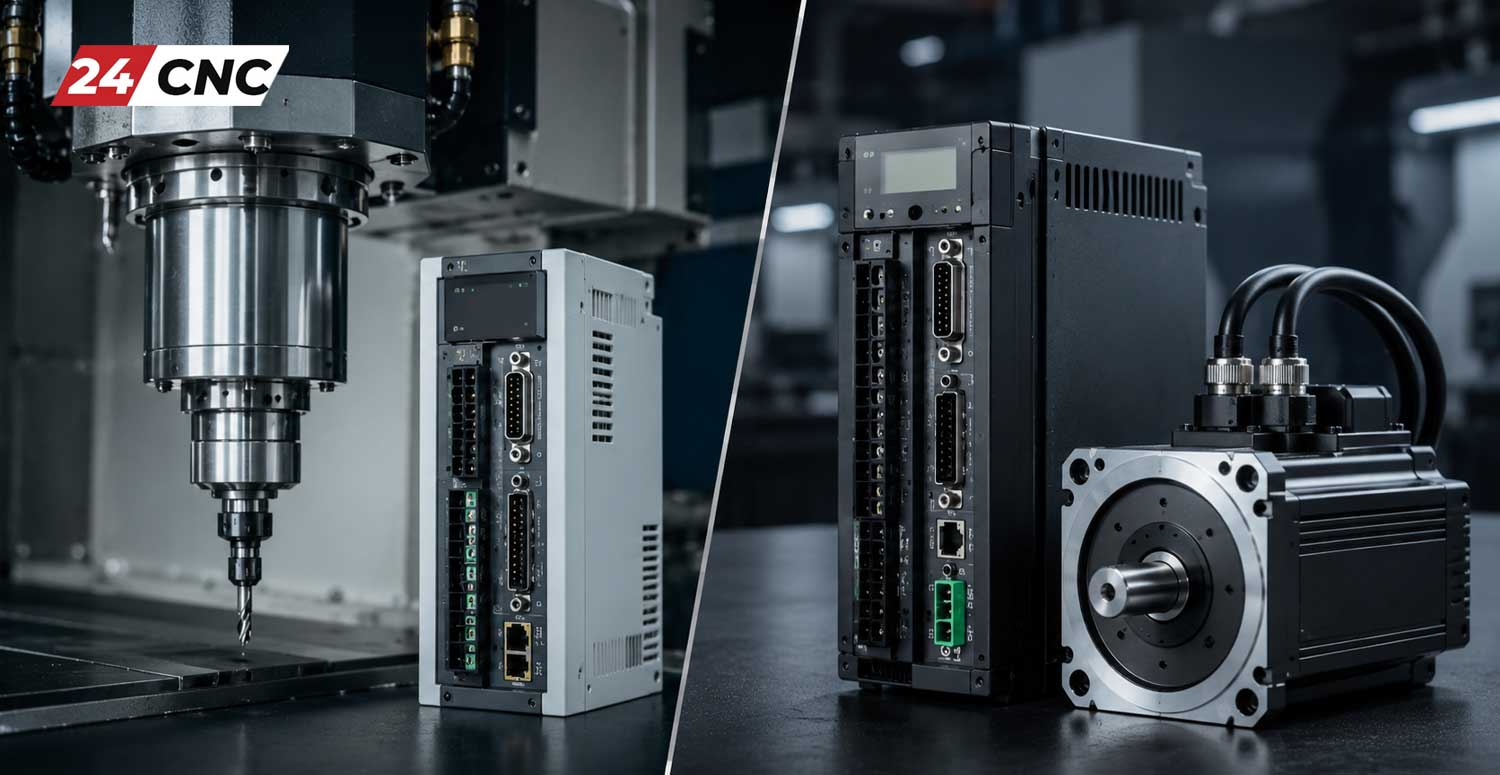
To summarize the core differences between these two critical automation components, review the technical comparison table below.
| Feature / Characteristic | Spindle Drive | Servo Drive |
|---|---|---|
| Primary Function | Controls continuous rotational speed for cutting. | Controls exact physical positioning and feed rate. |
| Motor Type Controlled | Asynchronous AC Induction motors (usually). | Synchronous AC Permanent Magnet motors. |
| Key Performance Metric | RPM stability under varying load; overall horsepower. | Dynamic response, acceleration/deceleration, positioning accuracy. |
| Holding Torque (at 0 RPM) | Very low to non-existent. | Maximum holding torque available at zero speed. |
| Feedback Mechanism | Often uses magnetic sensors or moderate-resolution encoders. | Requires ultra-high resolution rotary encoders (optical or high-end magnetic) for exact micro-positioning. |
| Control Loop Priority | Velocity loop -> Current loop. | Position loop -> Velocity loop -> Current loop. |
Deep Dive: Control Mechanisms and Feedback
The mathematical models and algorithms running inside the digital signal processors (DSPs) of these drives are highly complex. To maintain absolute control, these drives rely heavily on closed-loop feedback systems.
The Importance of Encoders
Both systems use feedback, but the requirements differ. A servo drive cannot function without precise data regarding its current position. This is why servo motors are equipped with high-precision absolute or incremental encoders. These encoders send millions of pulses per revolution back to the drive. The drive calculates the error between the commanded position and the actual position, adjusting the current output in milliseconds to eliminate that error. A failure in this feedback loop will instantly trigger an alarm and halt the machine to prevent a crash.
Spindle drives also use feedback to regulate speed. If the spindle encounters a hard spot in a casting, the RPM drops slightly. The drive’s velocity loop registers this via the feedback sensor and pumps more current into the stator windings to restore the RPM. For specialized operations like rigid tapping or C-axis contouring on a lathe, a spindle drive must utilize higher-resolution feedback to perform positional tasks, effectively bridging the gap between spindle and servo behavior.
Troubleshooting Common Drive Issues in CNC Machines
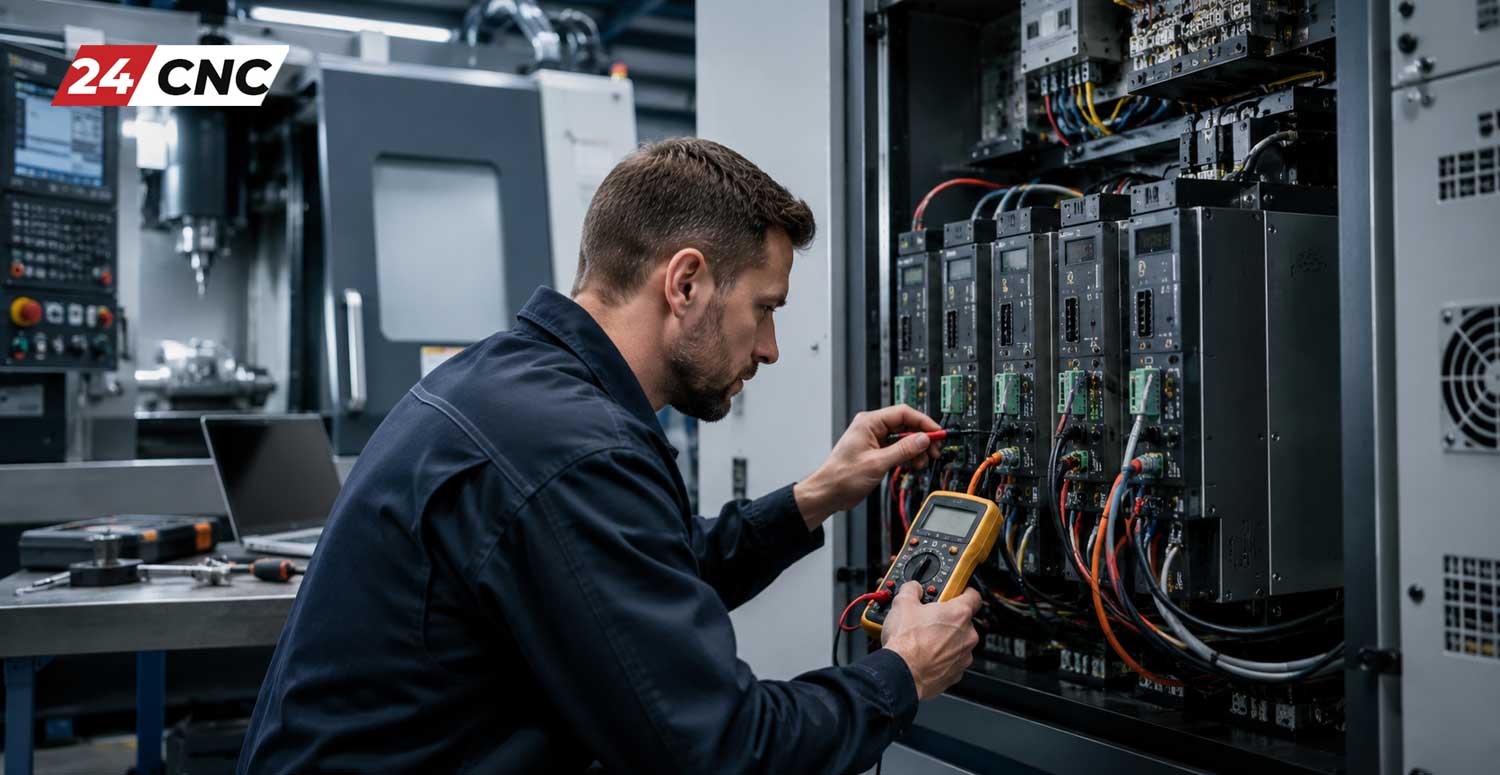
In an industrial environment, drives are subjected to heat, vibration, and electrical noise. When a CNC machine goes down, drives are frequently the culprit. Knowing whether you are dealing with a spindle or servo issue dictates your troubleshooting path.
Servo drives often suffer from overcurrent or following error alarms. A following error occurs when the drive cannot move the motor to the commanded position fast enough. This can be caused by a mechanical bind (like a damaged ball screw), a faulty encoder cable, or degradation within the drive’s internal IGBTs (Insulated-Gate Bipolar Transistors). If you are facing these issues, learning how to diagnose and troubleshoot CNC servo amplifier alarms is a vital skill for minimizing downtime.
Spindle drives, on the other hand, often face regenerative faults, overheating, or failure to reach commanded speeds. Because spindle motors act as generators when they decelerate, the drive must bleed off this excess energy (usually via a braking resistor or by regenerating it back to the power grid). If the braking circuit fails, the drive will trigger an overvoltage alarm.
Top Brands in the Industry
The CNC market is dominated by a few key players known for their reliability, advanced control algorithms, and integration capabilities. When dealing with drives, brand ecosystem matters, as proprietary communication protocols often mean you must pair a specific drive with its matching controller.
- Fanuc: Unarguably one of the largest players in the industry, Fanuc drives (alpha and beta series) are renowned for their bulletproof reliability and are found in thousands of machine tool brands globally.
- Siemens: Known for the Sinumerik platform, Siemens drives (like the SINAMICS series) offer incredibly advanced tuning capabilities and deep integration with Industry 4.0 IoT platforms.
- Mitsubishi: Commonly found in machines built in Asia, Mitsubishi drives (MDS series) provide excellent dynamic response and high-speed processing capabilities, particularly favored in high-production environments.
Frequently Asked Questions (FAQ)
Can a servo drive be used as a spindle drive?
Yes, in some specialized applications. When a machine requires extreme precision on the spindle—such as in certain gear cutting or complex multi-tasking lathes (C-axis)—a servo motor and drive may be utilized as the main spindle to allow for exact angular positioning alongside continuous rotation. However, for sheer high-speed metal removal, traditional spindle systems are more cost-effective and powerful.
Why are servo drives more expensive than simple VFDs?
Servo drives possess significantly more processing power to handle high-speed positional calculations. Furthermore, they are paired with synchronous permanent magnet motors and ultra-high-resolution encoders, both of which are much more expensive to manufacture than standard induction motors.
What causes a spindle drive to burn out?
Spindle drives typically fail due to poor cooling (blocked fans), excessive vibration causing solder joint fatigue, or repeated high-load crashes that overstress the internal power components (IGBTs). Input power fluctuations and voltage spikes can also severely damage a spindle drive’s rectifier section.
How do I know if my servo drive or my servo motor is the problem?
This requires a process of elimination. You can perform a “megger” test on the motor to check for insulation breakdown. You can also swap the drive’s cables to another identical axis drive in the electrical cabinet (if available and safe to do so). If the alarm follows the drive, the drive is faulty; if the alarm stays on the same axis, the issue lies with the motor, cables, or mechanics.
Need High-Quality CNC Drives and Components?
Downtime costs money. Whether you need a replacement Fanuc servo amplifier, a new Mitsubishi spindle drive, or just need to stock up on reliable automation components, 24CNC has you covered. Explore our vast inventory of authentic, tested CNC parts today.
Leave a comment
Your email address will not be published. Required fields are marked *