
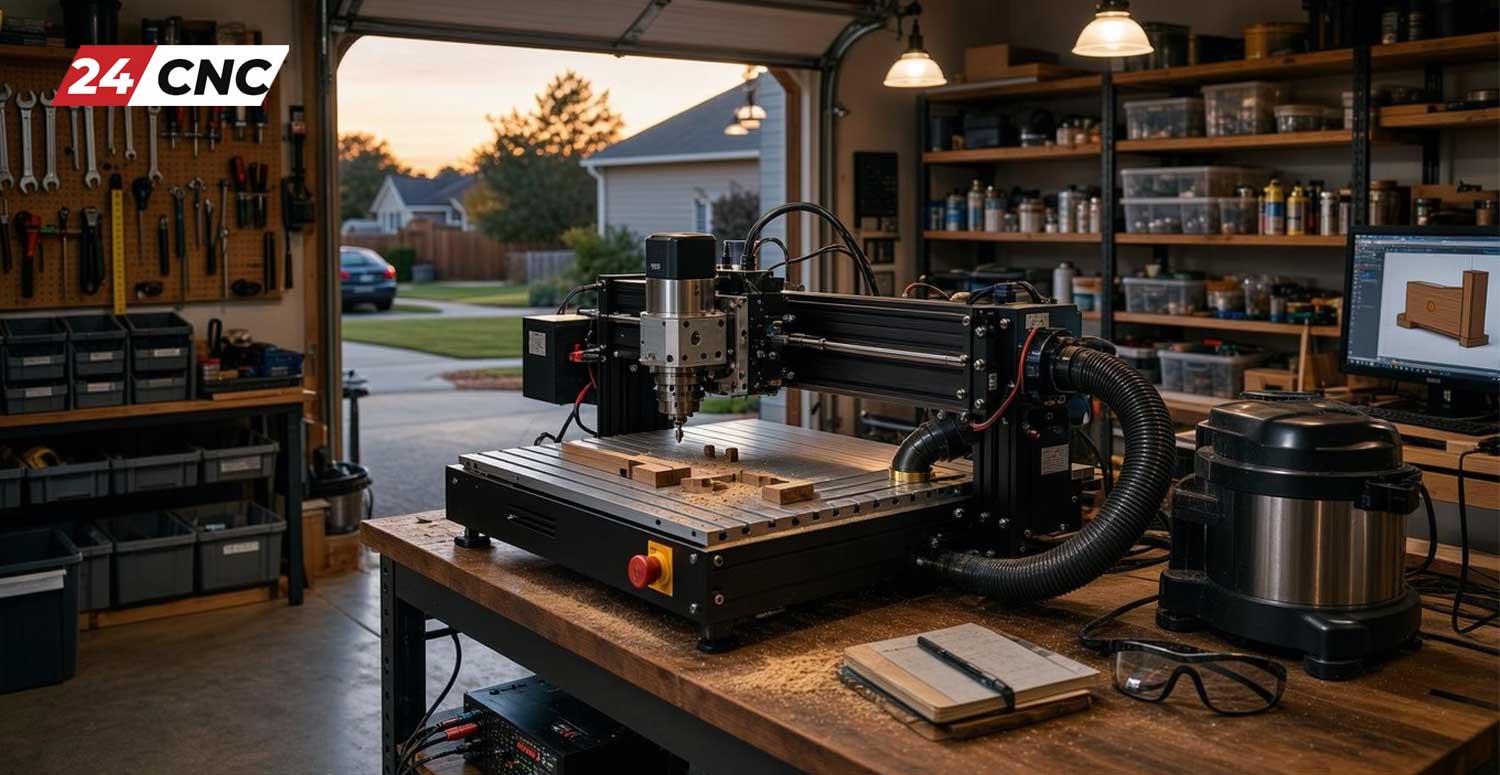
The modern manufacturing landscape has shifted dramatically. Decades ago, launching a machining business required massive capital, thousands of square feet of industrial floor space, and heavy-duty 3-phase electrical grids. Today, the democratization of technology means that learning how to start a small CNC business from your garage is not just a pipe dream—it is a highly viable, scalable, and profitable reality.
Whether you are an experienced machinist tired of the corporate grind, or a passionate hobbyist looking to monetize your workshop, a garage-based CNC (Computer Numerical Control) business offers an incredible entry point. With the right machine, a solid understanding of CNC machining principles, and a strategic approach to finding your niche, you can turn raw aluminum, wood, or plastics into high-margin products.
However, scaling from a hobbyist tinkering on weekends to a reliable production shop requires careful planning. You need to consider power requirements, tooling, software, and most importantly, machine reliability. In this comprehensive guide, we will walk you through the exact steps to launch your garage CNC business, upgrade your equipment, and secure your first paying customers.

Crafting Your Business Plan: Finding Your Profitable Niche
The biggest mistake new garage CNC owners make is trying to be a “job shop” for everyone. When you are operating out of a 400-square-foot residential garage, you cannot compete on volume with massive overseas factories or large local industrial machine shops. Instead, your competitive advantage is specialization, customizability, and speed.
Before you buy a machine, you must identify what you want to make. Making money selling CNC machined parts requires targeting specific industries:
- The Automotive/Motorsports Niche: Custom brackets, dashboard panels, shift knobs, and specialized engine components machined from 6061 aluminum. Enthusiasts pay a premium for custom, low-volume billet parts.
- Woodworking & Signage: Using a CNC router to create custom topographical maps, engraved wooden signs for local businesses, or bespoke furniture components.
- Prototyping for Local Inventors: Many product designers need rapid prototypes in Delrin (acetal) or aluminum before committing to expensive injection molds. Offering fast turnaround prototyping is highly lucrative.
- EDC (Everyday Carry) Gear: Custom knives, multi-tools, titanium keychains, and fidget toys have a massive online market and require very little raw material space.
Choosing the Right Machine and Prepping Your Garage
Your business model dictates your machine. A 4×8 foot CNC router is excellent for cabinetry but useless for high-tolerance titanium parts. Conversely, a rigid vertical machining center (VMC) will slice through steel but has a tiny work envelope.
A. Understanding Axis Configuration
For most garage startups, a standard 3-axis machine (X, Y, and Z) is the standard. It is affordable and easy to learn. However, if you plan to machine complex aerospace or medical parts, you might need to look into 4-axis or 5-axis capabilities. Understanding CNC machine axes (3-axis vs 5-axis) early on will prevent you from outgrowing your machine within the first year.
B. Power, Noise, and Air Supply
Residential garages are not built for industrial manufacturing. You must address the “Big Three” infrastructure hurdles:
- Electrical Power: Most industrial CNC machines require 3-phase, 220V power. Houses only have single-phase power. You will likely need to purchase a Rotary Phase Converter (RPC) or choose a “prosumer” CNC designed to run on single-phase 220V.
- Air Compressors: CNC mills require constant, clean, dry compressed air for tool changers and spindle clearing. Buy the quietest, highest-capacity rotary screw or scroll compressor you can afford. Noise complaints from neighbors will shut your business down faster than anything else.
- Climate Control: Extreme temperature fluctuations in a garage will expand and contract your machine’s cast iron frame, destroying your precision. Insulate your garage doors and install a mini-split AC system.
Upgrading Your Machine for Reliability: Essential Parts
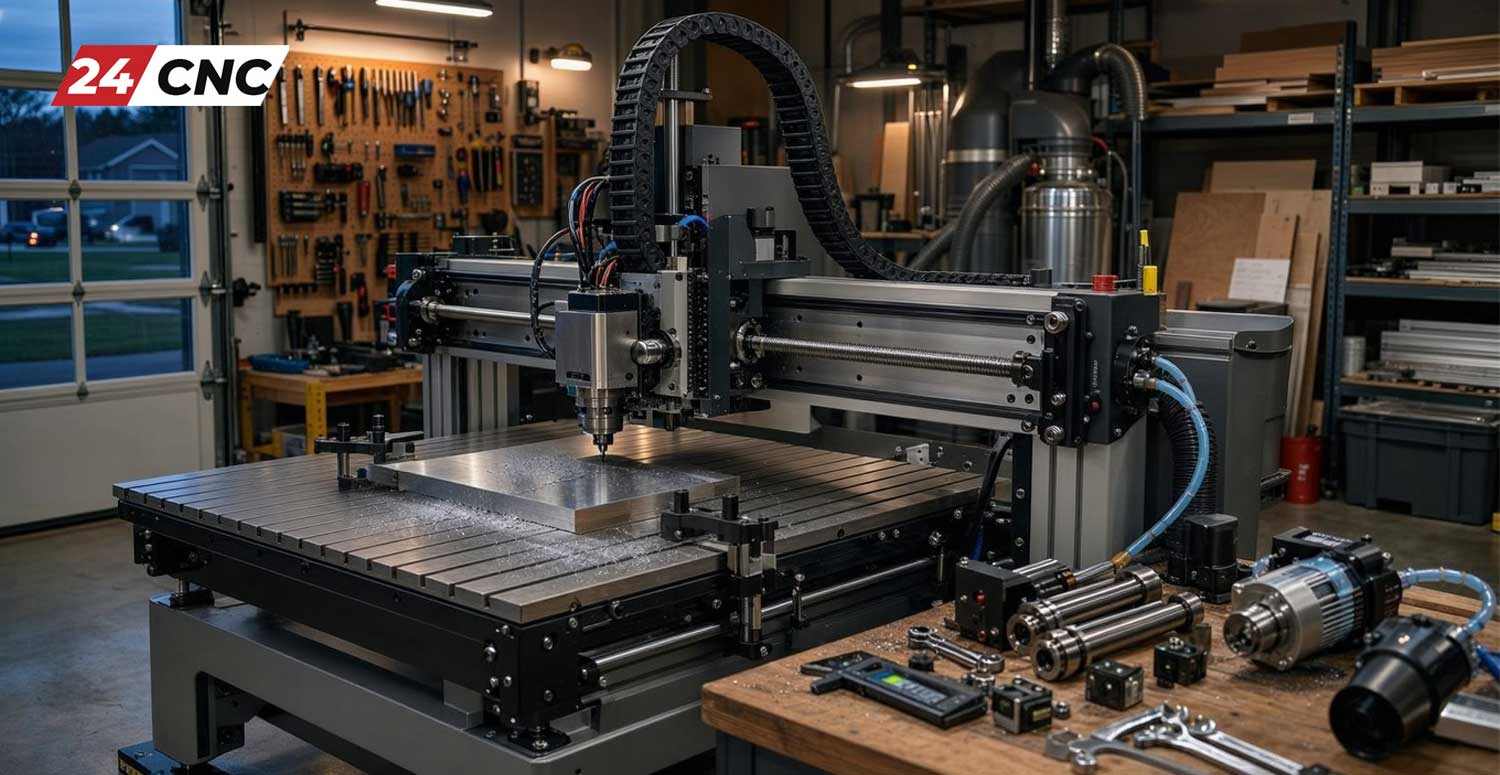
Many garage entrepreneurs start by purchasing used, older CNC machines (like legacy Haas, Fadal, or Fanuc™-controlled mills) to save money. While the cast iron on these older machines is excellent, the electronics are often failing. To ensure you don’t miss customer deadlines due to machine downtime, you must be prepared to retrofit and replace key electrical components.
The Control System & Servos
The brain of your machine is its Control System. Older controllers can be painfully slow when processing complex 3D toolpaths. Upgrading to a modern controller or ensuring your current one has healthy boards is crucial. Furthermore, replacing old, lost-step prone stepper motors with closed-loop Servo Motors will vastly improve your surface finishes and part accuracy.
Manual Pulse Generators (MPG Handwheels)
In a garage shop where you do a lot of custom, one-off prototyping, you will spend significant time manually jogging the machine to set work offsets. A high-quality MPG Handwheel is an absolute necessity for safe, precise setup without having to lean over your machine to reach the main panel.
Knowing where to buy high-quality CNC parts online is vital. When a power supply fails or an encoder breaks on a Friday night, having a reliable supplier like 24cnc.com ensures you are back up and running by Monday.
The Software Stack: CAD, CAM, and G-Code
Your machine is only as smart as the instructions you give it. To run a modern CNC business, you need to master the digital workflow:
- CAD (Computer-Aided Design): This is where you design your parts. Learning how to design parts for CNC machining is the first step. Software like Fusion 360, SolidWorks, or FreeCAD allows you to create precise 3D models. Always keep tool clearance and internal radii in mind when designing.
- CAM (Computer-Aided Manufacturing): CAM software translates your 3D CAD model into toolpaths. You will define the tools (endmills, drills, chamfer tools), speeds, feeds, and the order of operations.
- G-Code: The CAM software outputs a language called G-Code. Understanding what G-code is is mandatory. While the software writes the bulk of it, as a machinist, you need to be able to read the raw code at the machine to verify feed rates, fix small errors, and prevent catastrophic crashes.
Garage CNC Machine Tiers: A Comparison
Not sure what machine category fits your budget and garage limitations? Review our breakdown below:
| Machine Tier | Avg. Investment | Power Requirement | Ideal Materials | Best Business Niche |
|---|---|---|---|---|
| Desktop / Hobby Router | $1,500 – $4,000 | Standard 110V | Wood, Plastics, Foam | Etsy signs, simple wood crafts |
| Prosumer CNC Mill (e.g., Tormach/Syil) | $10,000 – $25,000 | Single-Phase 220V | Aluminum, Brass, Light Steel | Auto parts, EDC gear, prototyping |
| Used Industrial VMC (e.g., Haas Mini Mill) | $15,000 – $40,000 | 3-Phase 220V (Needs Converter) | Stainless Steel, Titanium, Aluminum | Production runs, aerospace, medical |
Preventative Maintenance: Keeping the Spindle Turning
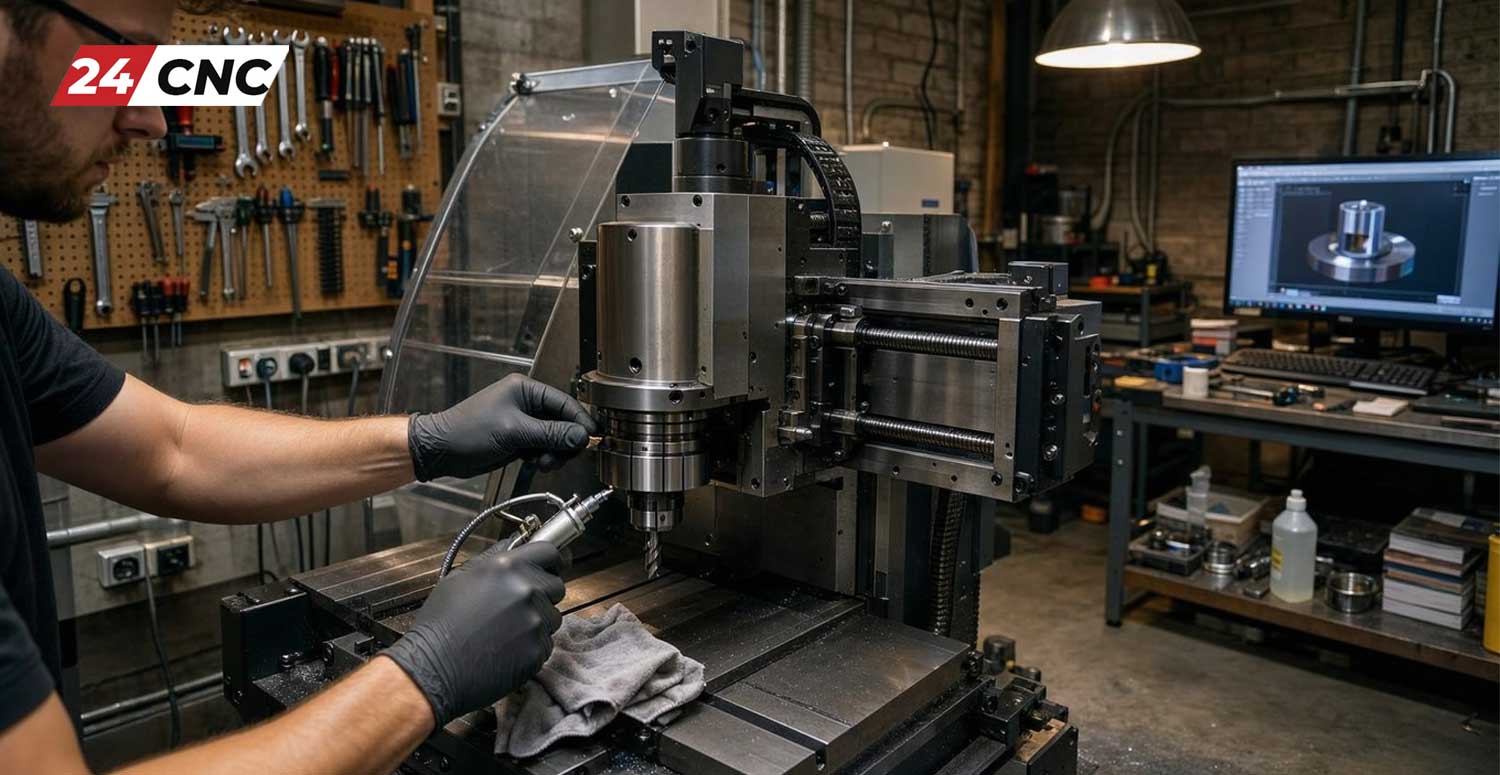
If your spindle isn’t turning, you aren’t making money. In a one-person garage shop, you are the CEO, the janitor, and the lead maintenance technician. Establishing a strict CNC machine maintenance checklist from day one is non-negotiable.
Check your way lube levels daily. Clean the coolant tank monthly to prevent bacteria buildup (which causes horrible smells in your garage and rusts your machine). Keep a stockpile of critical replacement parts on hand—fuses, limit switches, and standard sensors—so a minor electrical hiccup doesn’t ruin your production week.
Frequently Asked Questions (FAQ)
Is starting a CNC business actually profitable?
Yes, highly profitable, provided you find a niche. The profit margins on raw materials (like billet aluminum) compared to the finished machined product can easily exceed 300% to 500%. However, your true cost is time and tooling, which is why optimizing your CAD/CAM programs for faster cycle times is crucial for profitability.
Do I need to be a machinist to start?
No, but a steep learning curve exists. Many successful modern garage shop owners started as graphic designers, engineers, or hobbyists. Modern conversational controls and highly intuitive CAM software have lowered the barrier to entry significantly. Be prepared to ruin some parts and break tools while you learn.
Can I run an industrial CNC on standard residential power?
Generally, no. Industrial CNC machines require 3-phase power. You will need to wire a dedicated 220V 50A or 100A sub-panel in your garage and install a Phase Perfect (digital) or Rotary Phase Converter to generate the 3rd leg of power required by the machine’s spindle and servos.
What is the most common reason garage CNC businesses fail?
Failing to market properly and attempting to compete on price rather than quality. You cannot out-price large overseas factories. Garage shops fail when they take low-paying, high-volume jobs instead of focusing on high-margin, specialized, low-volume orders where communication and quality control justify higher prices.
Keep Your Garage Shop Running at Peak Performance
Starting a CNC business is just the beginning. As you take on paying clients, machine downtime becomes your biggest enemy. From replacement servomotors and control boards to essential MPGs and cables, 24cnc.com is your trusted partner for high-quality CNC spare parts.
Leave a comment
Your email address will not be published. Required fields are marked *