
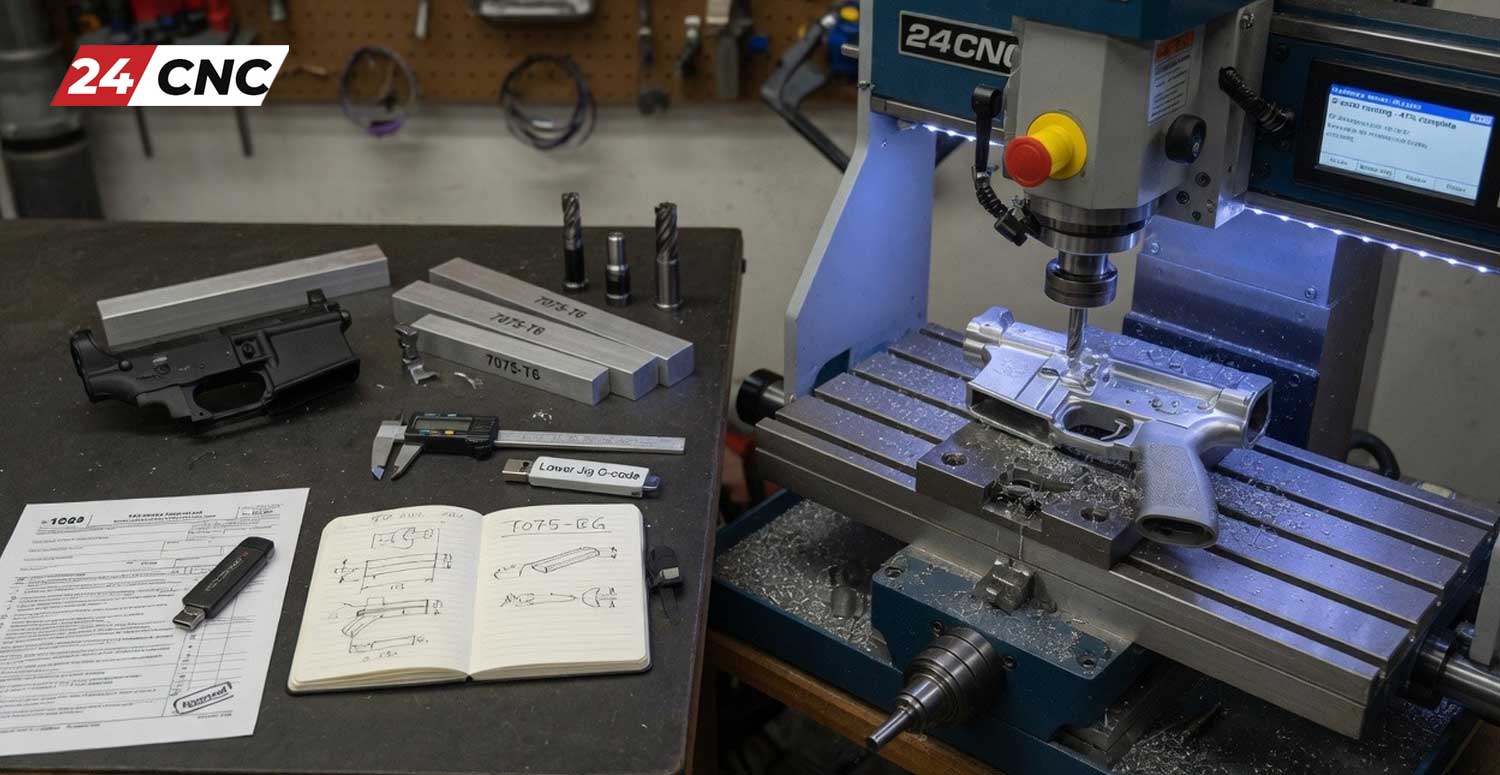
The intersection of Computer Numerical Control (CNC) technology and firearm manufacturing is one of the most heavily discussed topics in modern machining. With a high-precision CNC mill or lathe, creating complex metal components to exact tolerances is fully achievable. However, because firearms are strictly regulated items, manufacturing gun components at home or in a commercial shop involves a complex matrix of federal laws, state statutes, technical tolerances, and hardware requirements.
Whether you are a hobbyist considering personal projects or a machine shop owner evaluating commercial opportunities, understanding both the legal framework and technical demands is crucial before cutting your first piece of billet aluminum or steel. This comprehensive guide covers the legal parameters, technical requirements, essential machinery setups, and production considerations for manufacturing firearm components with CNC equipment.
The Legal Framework: Personal Use vs. Commercial Manufacturing
Before examining speeds, feeds, or tooling paths, it is imperative to address the legal boundaries surrounding firearm production. In the United States, federal firearm laws distinguish heavily between individual hobbyists manufacturing for personal use and commercial entities producing items for distribution or sale.
Federal Gun Control Act (GCA) and ATF Regulations
Under federal law—specifically the Gun Control Act of 1968—an unlicensed individual is generally permitted to manufacture a firearm for their own personal use. However, several vital stipulations apply:
- Intent to Distribute: You cannot legally manufacture a firearm with the intent to sell, transfer, or distribute it without holding a Federal Firearms License (FFL). Doing so constitutes operating as an unlicensed manufacturer, which is a federal felony.
- The “Receiver” Definition: Under ATF rules, the frame or receiver is legally considered the firearm itself. Components such as handguards, triggers, stocks, and barrels are generally regulated differently than the primary receiver, though specific state laws may vary.
- Prohibited Persons: Anyone legally barred from owning firearms (such as convicted felons or individuals under specific restraining orders) is strictly prohibited from manufacturing them.

The Difference Between Parts and Controlled Components
In standard firearm architecture, components fall into two main categories: non-serialized accessories and regulated receivers. Non-regulated components include items like scope mounts, muzzle brakes, tactical rails, and charging handles. These parts can typically be machined without FFL licensing. Conversely, machining a receiver from a blank billet or finishing an 80% receiver turns that piece of metal into a legally defined firearm the moment it crosses the threshold of functional completion.
Commercial Licensing: FFL Type 07 and SOT
If your goal is to manufacture gun parts or complete firearms for sale, commercial compliance is required:
- FFL Type 07: Title 1 Manufacturer of Firearms. This license allows a business to legally manufacture small arms and ammunition for commercial sale.
- Class 2 SOT (Special Occupational Tax): Required alongside a Type 07 FFL if the facility intends to manufacture NFA (National Firearms Act) items, such as suppressors, short-barreled rifles, or fully automatic components.
- ITAR (International Traffic in Arms Regulations): Manufacturers of defense-related articles—including many firearm components—must register under ITAR with the U.S. State Department, paying annual registration fees and maintaining strict data security measures.
Technical Feasibility: What It Takes to Machine Gun Parts
From an engineering perspective, firearms are compact internal combustion devices capable of containing pressure spikes exceeding 50,000 PSI. Consequently, manufacturing these parts demands strict geometric dimensioning and tolerancing (GD&T), precise heat treating, and high-quality materials.
Material Selection
Selecting appropriate raw materials is essential for structural integrity and longevity under high cycle rates and high thermal stress:
- 7075-T6 Aluminum: The standard alloy for AR-style upper and lower receivers. It offers high strength-to-weight ratio, excellent yield strength, and superior machinability.
- 6061-T6 Aluminum: Common for less critical components such as handguards, buffer tubes, and scope rings.
- 4140 & 416R Stainless Steel: Widely used for rifle barrels, bolt carriers, and pistol slides due to their high tensile strength and resistance to fatigue and erosion.
- Titanium (Grade 5 / Ti-6Al-4V): Favored for lightweight suppressor baffles, custom receiver components, and high-end fasteners.

Tolerances and Precision
Firearm mechanisms rely on tight, repeatable interlocks. Critical dimensions—such as pin hole locations, sear engagement faces, and bolt lockup lugs—often require tolerances within ±0.0005 inches (±0.0127 mm). Achieving this level of accuracy requires stable machinery, rigid workholding, accurate tool offsets, and precise closed-loop feedback provided by high-resolution rotary encoders and reliable feedback devices.
Required CNC Equipment and Machine Setup
While basic components can be cut on small benchtop equipment, producing professional-grade firearm parts efficiently requires industrial-grade machinery equipped with robust motion control components.
| Machine Type | Suitable Gun Parts | Key Advantages | Primary Limitations |
|---|---|---|---|
| 3-Axis CNC Mill | Flat receivers, scope mounts, rails, trigger guards | Cost-effective, simple programming, widely available | Requires multiple setups and repositioning fixtures |
| 4/5-Axis CNC Mill | Complex receivers, contoured slides, bolt carriers | Single-setup completion, superior surface finish, high precision | Higher initial cost, complex CAM programming requirements |
| CNC Lathe / Turning Center | Barrels, muzzle brakes, suppressors, firing pins | Ideal for cylindrical symmetry and precise thread cutting | Limited to rotational profiles unless equipped with live tooling |
| Swiss-Type Lathe | Pins, small screws, gas pistons, firing pins | Extreme speed and precision for micro-diameter long parts | High setup complexity, restricted to small bar stock diameters |
To maintain high accuracy across continuous production cycles, the motion control architecture must perform flawlessly. Industrial machining centers utilizing reliable control platforms like a Fanuc™ controller or Siemens controller ensure that complex toolpaths generated in CAM software are translated precisely into mechanical motion without path drift or servo error.
Furthermore, maintaining constant axis torque during heavy roughing passes in tough alloy steels requires fully functional drive systems. Monitoring and maintaining system stability—such as checking a Fanuc drive or Mitsubishi drive—prevents position errors, chatter marks, or thermal drift during critical machining operations.
Workflow: From CAD Design to Finished Component
Manufacturing firearm parts using CNC machinery follows a structured engineering pipeline. Skipping steps or failing to validate toolpaths can lead to broken tooling, damaged workpieces, or unsafe components.
- 3D CAD Modeling: The part is designed in CAD software (e.g., SolidWorks, Fusion 360). Critical clearances and material allowances for post-processing treatments (such as hard-coat anodizing or Cerakote) must be factored in.
- CAM Programming & Simulation: Toolpaths are created to clear stock efficiently. To understand how code translates to physical machine axis movements, check out our guide on how a CNC controller interprets G-code and M-code. Always run full machine simulations to prevent crashes.
- Material Setup & Workholding: The raw stock is clamped using soft jaws, modular vices, or custom fixtures. High precision starts with reliable positioning using manual controls like a responsive MPG handwheel during initial setup and origin zeroing.
- Machining Phase: The G-code program executes. High-speed roughing routines remove bulk material, followed by fine finishing passes with ball-nose or flat end mills. Proper coolant flow and thermal management are crucial to prevent dimensional drift.
- Quality Assurance & Deburring: Parts are measured using CMM (Coordinate Measuring Machines), optical comparators, or plug gauges. Edge breaks, chamfers, and hand deburring ensure smooth function.
- Heat Treatment & Surface Finishing: Steel parts undergo hardening and tempering to achieve proper Rockwell hardness (HRC). Aluminum parts undergo Type III Hardcoat Anodizing for corrosion resistance and wear protection.
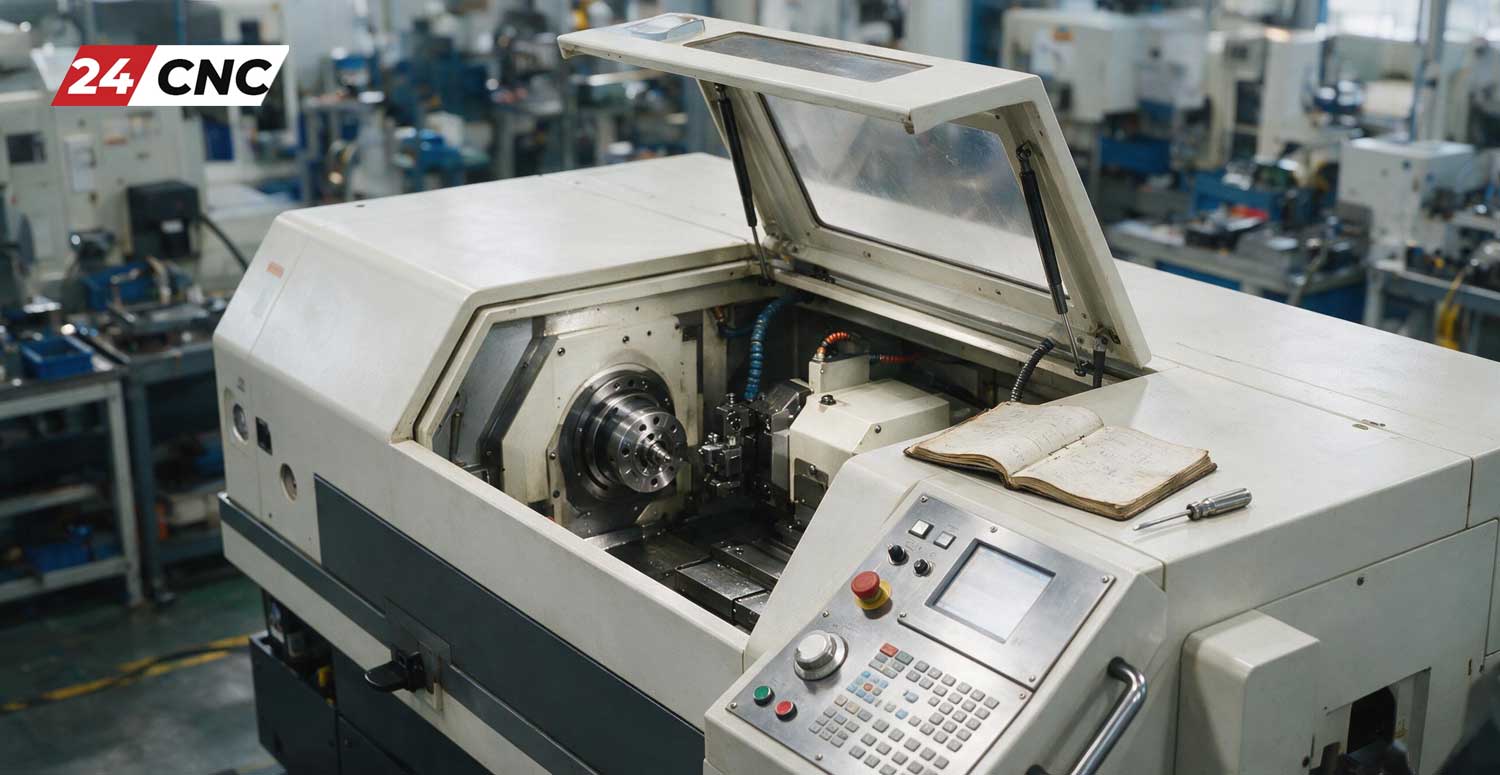
Crucial Machine Maintenance for High-Precision Manufacturing
Because gun components demand minimal variance, machine tool health directly dictates part quality. An unmaintained CNC mill can introduce backlash, poor surface finishes, or out-of-tolerance bore centers.
To avoid costly scrap, machine operators should maintain a strict maintenance schedule. Regularly inspect wear components, clean optical sensors, and maintain axis fans and heat sinks. When electrical faults or drive alarms occur during long machining cycles, knowing how to diagnose and troubleshoot CNC servo amplifier alarms keeps downtime to a minimum and protects workpieces in progress.
Replacing worn internal components, such as checking electrical protection devices like CNC fuses, replacing faulty control cooling cooling fans, or upgrading worn power components like IGBT modules, ensures stable power delivery to high-torque spindle motors during heavy cuts in alloy steel.
Frequently Asked Questions (FAQ)
Is it legal to use a 3D printer or CNC machine to make a gun at home?
In the United States, federal law generally permits an individual to make a firearm at home for personal use, provided they are not legally prohibited from possessing firearms and the firearm complies with local laws (e.g., undetectable firearm rules, state assault weapon bans). However, making a firearm with the intent to sell or give away without an FFL is illegal.
Can I sell non-serialized gun parts made on a CNC machine?
Components that are not legally defined as receivers or frames (such as handguards, scope mounts, rails, trigger shoes, and stocks) can generally be produced and sold commercially without a Federal Firearms License. However, state laws vary, and ITAR compliance may still apply if exporting components.
What is the best CNC machine for making gun parts at home?
For small-scale hobbyist projects involving aluminum components (like lower receivers), desktop or benchtop CNC mills with rigid frames and high-torque spindles are popular. For commercial steel parts or complex slides, industrial 3-axis or 5-axis vertical machining centers (VMCs) are required.
What aluminum alloy should be used for machining lower receivers?
7075-T6 aluminum is the industry standard for AR-style receivers due to its high yield strength (approx. 73,000 psi) and excellent fatigue resistance. 6061-T6 aluminum is easier to machine and cheaper, but offers lower overall tensile strength.
Keep Your CNC Machinery Running with High-Precision Parts
Precision manufacturing demands uninterrupted machine performance. Whether you need replacement servo drives, rotary encoders, or replacement CNC control components, 24CNC provides high-quality parts to keep your shop productive.
Leave a comment
Your email address will not be published. Required fields are marked *