

In the expansive world of automated industrial production, writing flawless G-code and selecting the perfect end-mills are only pieces of the puzzle. CNC machining is celebrated for its incredible versatility, allowing operators to carve highly complex, precision parts from solid blocks of virtually any rigid material. Whether you are manufacturing aerospace engine turbines that must withstand immense thermal loads or creating lightweight, aesthetic enclosures for consumer electronics, understanding the most common materials used in CNC machining is the foundation of mechanical engineering.
This exhaustive guide explores the top metals, alloys, and plastics utilized in modern CNC milling and turning centers. We will dissect their mechanical properties, explore their ideal industrial applications, and discuss how different raw materials interact with your machine’s essential components. By the conclusion of this article, you will possess a master-level understanding of material science as it applies to subtractive manufacturing.
Key Factors When Choosing CNC Machining Materials
Before analyzing specific alloys and polymers, it is absolutely vital to comprehend the underlying engineering criteria that dictate material selection. Selecting inappropriate stock can lead to catastrophic tool breakage, poor surface finishes, dimensional inaccuracies, and rapid wear on machine kinematics. When designing parts for CNC machining, engineers must rigorously evaluate the following parameters:
- Machinability: This metric dictates how easily and rapidly a material can be cut by a cutting tool. Materials with high machinability ratings (like aluminum and brass) require less spindle power, can be machined at higher feed rates, and generate less tool wear. Conversely, tough materials demand rigid setups and put severe strain on the machine’s mechanical axes and servo motors.
- Mechanical Strength and Hardness: Engineers must calculate the required tensile strength, yield strength, and shear strength based on the part’s end-use application. Material hardness often dictates the cutting speeds and feeds required.
- Operating Environment and Thermal Limits: Will the component be exposed to highly corrosive chemicals, marine saltwater, or extreme temperatures? Some plastics degrade rapidly above 150^\circ C, while certain aerospace alloys maintain structural integrity even at 800^\circ C.
- Dimensional Stability and Tolerances: Certain materials warp or release internal stresses during machining. If a part requires strict geometric tolerances (e.g., \pm 0.005 mm), selecting a dimensionally stable material is critical.
- Weight Restrictions: The aerospace, automotive, and robotics industries heavily prioritize the strength-to-weight ratio. Lighter materials reduce energy consumption in moving assemblies.
- Cost Feasibility: The final cost is a combination of the raw billet price and the machine time required to shape it. A cheaper raw metal might end up costing more if it takes three times as long to machine and destroys multiple carbide end-mills in the process.
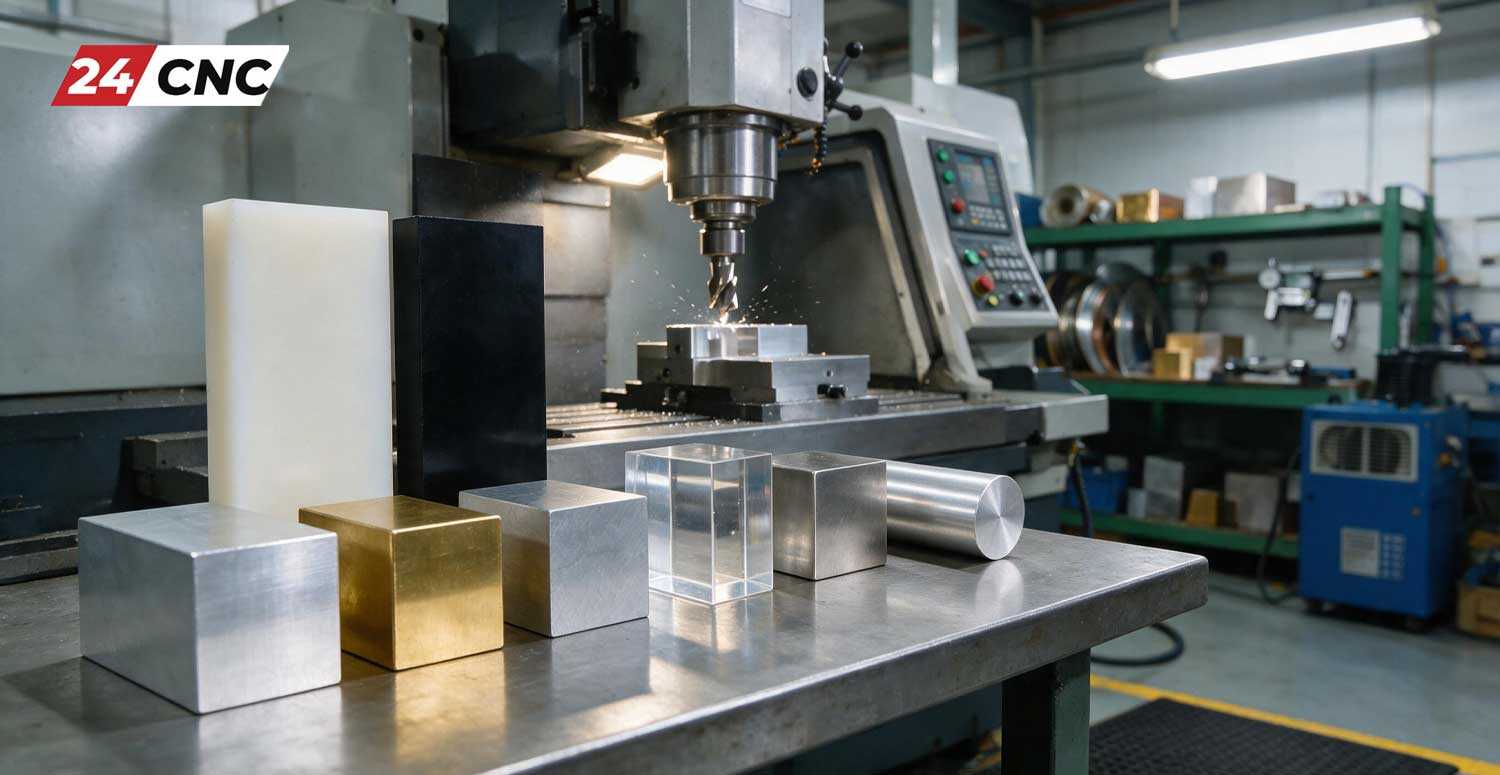
The Top Metals and Alloys in CNC Machining
Metals remain the undisputed backbone of heavy industry and structural engineering. They are prized for their high tensile strength, durability, electrical conductivity, and thermal resilience. The following are the most prevalent metals found in professional machine shops globally.
Aluminum Alloys (6061, 7075, 2024)
Aluminum is the undisputed king of CNC machining. It provides a phenomenal balance of excellent machinability, respectable strength, low weight, and cost-effectiveness. It is non-magnetic, naturally forms a protective oxide layer against corrosion, and takes cosmetic anodizing brilliantly.
- Aluminum 6061-T6: The absolute industry standard for general-purpose machining. It is highly machinable, easy to weld, and relatively inexpensive. It is ubiquitous in automotive components, electronics housings, bicycle frames, and custom prototyping.
- Aluminum 7075-T6: Renowned for its exceptional strength, which is comparable to many low-carbon steels, 7075 is heavily utilized in aerospace, defense, and high-stress structural applications. However, it is slightly more expensive, less weldable, and slightly less corrosion-resistant than 6061.
- Aluminum 2024: Frequently used in aerospace applications where high fatigue resistance is required. It machines very well but has poor corrosion resistance, often requiring a clad finish.
Stainless Steel Alloys (304, 316, 416, 17-4 PH)
Stainless steel is explicitly chosen for applications requiring high structural integrity combined with exceptional resistance to rust, oxidation, and corrosive environments. Machining stainless steel is notably more difficult than aluminum; it tends to work-harden rapidly, requiring highly rigid machine setups, heavy coolant flow, and premium tooling.
- Stainless Steel 304: The most common austenitic stainless steel. It offers excellent corrosion resistance and formability, making it the standard for food processing equipment, kitchenware, and industrial piping.
- Stainless Steel 316: The addition of molybdenum gives 316 superior resistance to chlorides (like saltwater) and harsh industrial chemicals. It is the mandatory choice for marine hardware, pharmaceutical processing, and medical devices.
- Stainless Steel 416: A martensitic, free-machining grade of stainless steel. The addition of sulfur makes it much faster to cut than 304/316, though it sacrifices a degree of corrosion resistance. Ideal for gears, shafts, and threaded fasteners.
- 17-4 PH Stainless Steel: A precipitation-hardening alloy that offers immense strength and hardness alongside excellent corrosion resistance. Heavily used in aerospace and the petrochemical industry.
Titanium (Ti-6Al-4V / Grade 5)
Titanium is highly sought after for its legendary strength-to-weight ratio and superb, naturally occurring corrosion resistance. Furthermore, it is biologically compatible (non-toxic to the human body), making it the premier choice for medical implants (like hip replacements) and premium aerospace components. However, titanium is notoriously difficult to machine. It has very low thermal conductivity, meaning heat does not dissipate into the chip; instead, it concentrates at the cutting edge of the tool. This requires slow cutting speeds, aggressive coolant strategies, and robust machine mechanics, putting high electrical demand on the machine’s power supplies and drive systems.
Brass (C360) and Copper (C101)
Copper alloys are primarily utilized for their electrical and thermal conductivity, as well as cosmetic appeal.
- Brass C360 (Free Machining Brass): Brass is arguably the easiest and fastest metal to machine on a CNC router or lathe. It yields extremely low friction, excellent electrical conductivity, and a beautiful golden finish. Its high machinability means it causes almost zero wear on cutting tools. It is used extensively for plumbing fittings, electrical terminals, and musical instruments.
- Copper C101 (Oxygen-Free Copper): Offers unparalleled electrical and thermal conductivity. It is highly ductile, which can make it “gummy” during machining, requiring specific sharp tooling geometries to prevent chip welding. Used heavily in heat sinks, electrical bus bars, and telecommunications.
Carbon Steels and Alloy Steels (1018, 4140)
When high strength is required without the premium cost of stainless steel or titanium, plain carbon and alloy steels are utilized.
- 1018 Mild Steel: A low-carbon steel that offers good weldability and machinability at a very low cost. It is the go-to metal for basic structural components, jigs, and fixtures where corrosion is not a primary concern.
- 4140 Alloy Steel: A chromium-molybdenum steel known for its exceptional toughness and fatigue strength. It is often machined in its annealed state and subsequently heat-treated to achieve high hardness. Commonly used in automotive axles, crankshafts, and heavy machinery gears.
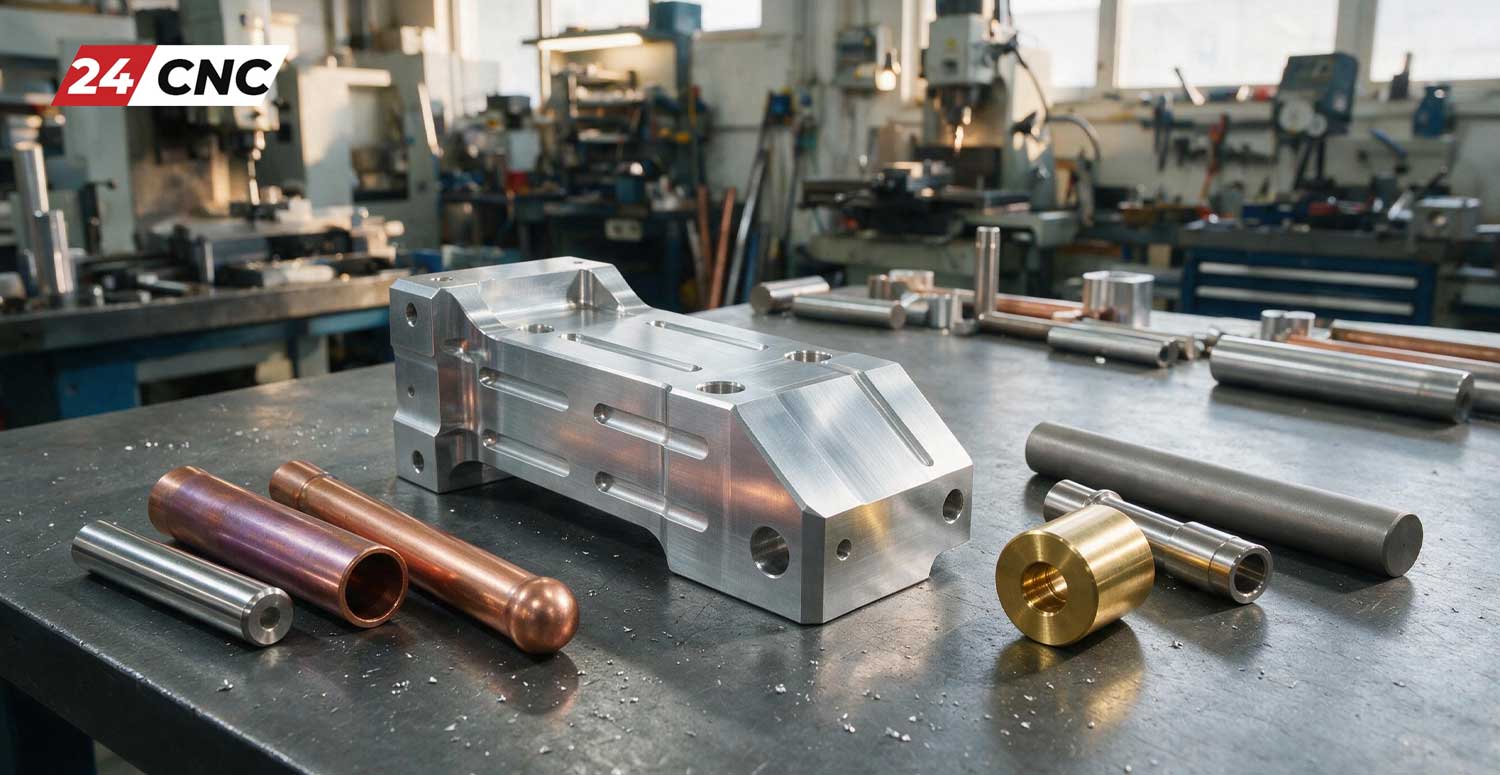
Top Plastics Used in CNC Machining
While heavy industry is dominated by metals, engineering plastics are incredibly vital in CNC machining for producing components that require low weight, electrical insulation, chemical resistance, or RF transparency. Machining plastics requires very sharp tools, aggressive chip evacuation, and careful heat management to prevent the material from melting and smearing along the cutting path.
POM (Delrin / Acetal)
Polyoxymethylene (POM), widely recognized by the DuPont brand name Delrin, is the undisputed king of CNC machined plastics. It perfectly bridges the gap between metal and ordinary plastics, offering remarkable stiffness, low surface friction, and excellent dimensional stability. Because it machines into crisp, clean chips (unlike many stringy plastics), it is highly favored by machinists. It is ideal for mechanical gears, sliding bearings, and structural insulators where metal is too heavy.
PEEK (Polyether ether ketone)
PEEK is a high-performance engineering thermoplastic reserved for the most demanding applications. It retains its mechanical strength and stiffness at extremely high temperatures (withstanding continuous use up to 250^\circ C) and resists a vast array of corrosive organic and aqueous environments. PEEK is frequently utilized as a lightweight substitute for metal in aerospace, medical sterilization equipment, and oil/gas extraction. Be warned: PEEK is one of the most expensive plastics to purchase and machine.
Polycarbonate (PC)
Polycarbonate is renowned for its outstanding impact resistance (virtually unbreakable) and optical transparency. While often injection molded for mass production, it is frequently CNC machined for functional prototypes, optical lenses, automotive light housings, and safety blast shields. Machining PC requires careful feed rate management; excessive heat can cause internal stress cracking, ruining the part’s structural integrity.
Nylon (Polyamide)
Nylon is a highly versatile plastic known for its toughness, impact resistance, and excellent wear properties. Nylon 6/6 is the most common grade machined. It is frequently used for wear pads, custom sprockets, and low-speed bearings. A notable drawback of Nylon is that it absorbs moisture from the environment, which can cause slight dimensional swelling over time.
PTFE (Teflon)
Polytetrafluoroethylene (PTFE), widely known as Teflon, boasts one of the lowest coefficients of friction of any solid material. It is completely chemically inert and can operate at high temperatures. However, PTFE is quite soft and has poor dimensional stability, making it difficult to hold tight tolerances during machining. It is mostly used for specialized chemical gaskets, seals, and non-stick surfaces.
Technical Comparison Table: CNC Material Properties
To assist in rapid decision-making, below is a comprehensive technical matrix comparing the most common CNC materials based on their machinability, relative cost, and defining characteristics.
| Material Classification | Machinability Rating | Relative Cost (Raw) | Primary Strengths | Common Industrial Applications |
|---|---|---|---|---|
| Aluminum 6061-T6 | High | Low | Lightweight, excellent strength-to-weight, anodizes well | General electronics enclosures, robotics, auto parts |
| Stainless Steel 316 | Medium-Low | Medium-High | Exceptional resistance to chlorides, high strength | Surgical tools, marine hardware, chemical tanks |
| Titanium (Grade 5) | Low | Very High | Extreme strength-to-weight, biocompatible, corrosion-proof | Aerospace turbines, orthopedic implants |
| Brass (C360) | Very High | Medium | Low friction, highly machinable, conductive | Fluid fittings, electrical contacts, custom valves |
| POM (Delrin / Acetal) | High | Low | High stiffness, fantastic dimensional stability | Plastic gears, bearings, electrical insulators |
| PEEK | Medium | Very High | Maintains properties up to 250^\circ C, chemically inert | High-heat aerospace insulators, pump wear rings |
The Impact of Material Selection on Machine Hardware
It is imperative for workshop owners to recognize that the materials they choose to process have a direct and measurable impact on the lifespan and maintenance schedule of their CNC machinery. Machining tough, high-tensile materials like Inconel, Titanium, or hardened tool steels generates immense cutting forces. These forces translate into intense vibrations and thermal loads that travel straight through the tool holder and into the machine’s structural castings.
This continuous stress puts severe strain on spindle bearings, ball screws, and the intricate electronic control systems governing the axes. If your shop routinely cuts difficult alloys, you must ensure that components like your amplifiers and inverters are correctly tuned and operating at optimal efficiency to handle the fluctuating torque demands. If your machine begins to stall, fault out, or struggle to maintain rigid tapping cycles in hard metals, it is highly likely that your electronic drives require inspection, maintenance, or an upgrade to handle the heavy-duty material load.
Frequently Asked Questions (FAQ)
What is the most cost-effective material for CNC prototyping?
For the vast majority of projects, Aluminum 6061 and engineered plastics like POM (Delrin) or ABS are the most cost-effective choices. Their high machinability reduces the spindle time required (lowering hourly labor costs) and minimizes wear and tear on expensive carbide cutting tools, thereby keeping total production overhead exceptionally low.
Can standard lightweight CNC routers cut hard metals like Titanium or Stainless Steel?
Generally, no. While the G-code logic remains identical, successfully cutting high-tensile metals requires a highly rigid, heavy cast-iron machine frame to absorb vibration. It also demands high-torque spindles and specialized high-pressure flood cooling systems. Lighter, hobby-grade routers or basic gantry machines lack this rigidity; they will chatter aggressively, instantly shatter cutting tools, and potentially damage their internal drive electronics when attempting to machine materials like Titanium.
Why is PEEK plastic so extraordinarily expensive?
PEEK raw material is inherently expensive due to the highly complex, multi-stage chemical synthesis required to manufacture it. Furthermore, while it cuts cleanly, it requires incredibly precise temperature control, specialized annealing processes to prevent warping, and razor-sharp tooling to avoid inducing internal stresses. This increases both the raw material cost and the overall machining complexity.
Conclusion
Mastering material selection is a fundamental requirement for anyone involved in modern manufacturing. As demonstrated throughout this guide, the choice between an aerospace-grade aluminum, a chemically resistant stainless steel, or a high-performance thermoplastic like PEEK dictates every subsequent step in the manufacturing process. From configuring cutting speeds and feeds to determining the required rigidity of the milling center, material properties govern the physics of machining. By carefully weighing factors such as machinability, thermal resistance, mechanical strength, and economic feasibility, engineers can ensure that their designs are not only functionally superior but also optimized for cost-effective and efficient production.
Maintain Your CNC Machine’s Peak Performance Under Heavy Loads
Machining tough alloys and high-performance plastics can eventually take a toll on your equipment’s electronics and mechanical drives. Keep your production line running flawlessly with high-quality, reliable replacement components for your CNC control systems.
Leave a comment
Your email address will not be published. Required fields are marked *