
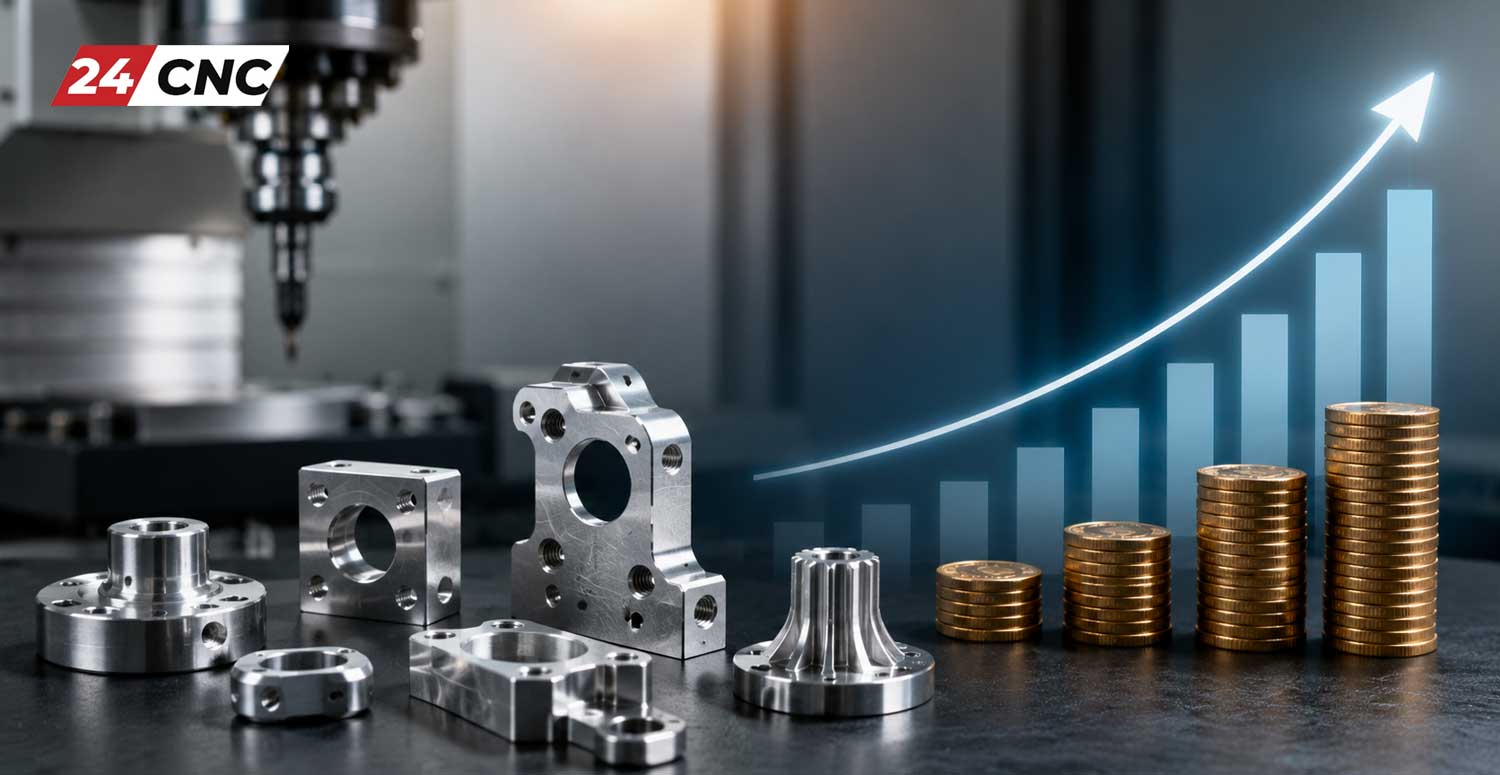
The global manufacturing landscape is undergoing a massive shift towards localized production and rapid prototyping. Because of this, the demand for precision engineering has never been higher. If you own a machine shop, have recently acquired a mill or lathe, or are drafting a business plan, you are likely asking the golden question: how to make money selling CNC machined parts? Whether you are running a lean garage setup with a single 3-axis mill or managing a full-scale industrial facility, turning raw billets of aluminum, steel, or plastic into highly profitable components requires a seamless blend of machining expertise, strategic market positioning, and flawless equipment reliability.
In this comprehensive, deep-dive guide, we will explore the most profitable industry niches, exactly how to calculate the price of your components using mathematical formulas, advanced strategies for scaling your operations, and why proactive maintenance of your machinery’s electronic components is the ultimate secret to protecting your profit margins.
Finding Your Niche: What CNC Parts Are the Most Profitable?
The very first step in building a sustainable and profitable CNC business is deciding exactly what you are going to make. Trying to act as a generalist who caters to everyone often leads to a race to the bottom in terms of pricing. Instead, you must focus your efforts on specialized niches where buyers value precision, material quality, strict tolerances, and rapid turnaround times over sheer cheapness.
Automotive and Motorsports Aftermarket
Car enthusiasts, amateur racers, and professional restoration shops are constantly seeking custom brackets, engine mounts, specialized fluid fittings, and heavy-duty suspension components. Machining these parts from high-grade 6061 or 7075 aluminum, or even titanium, can yield excellent profit margins. Because these performance parts often require high precision and flawless surface finishes, you must ensure your machine’s servo motors and drive systems are calibrated perfectly to avoid chatter marks and out-of-tolerance dimensions.
Aerospace and Defense Contracting
If your shop can achieve ISO 9001 and AS9100 certifications, the aerospace sector offers some of the highest margins in the industry. Aerospace parts demand exotic materials like Inconel and require strict documentation. The barrier to entry is very high, but a single contract for structural brackets or drone components can sustain a small shop for an entire year. Precision is life-or-death here, meaning your machine’s feedback systems must be completely infallible.
Medical and Dental Devices
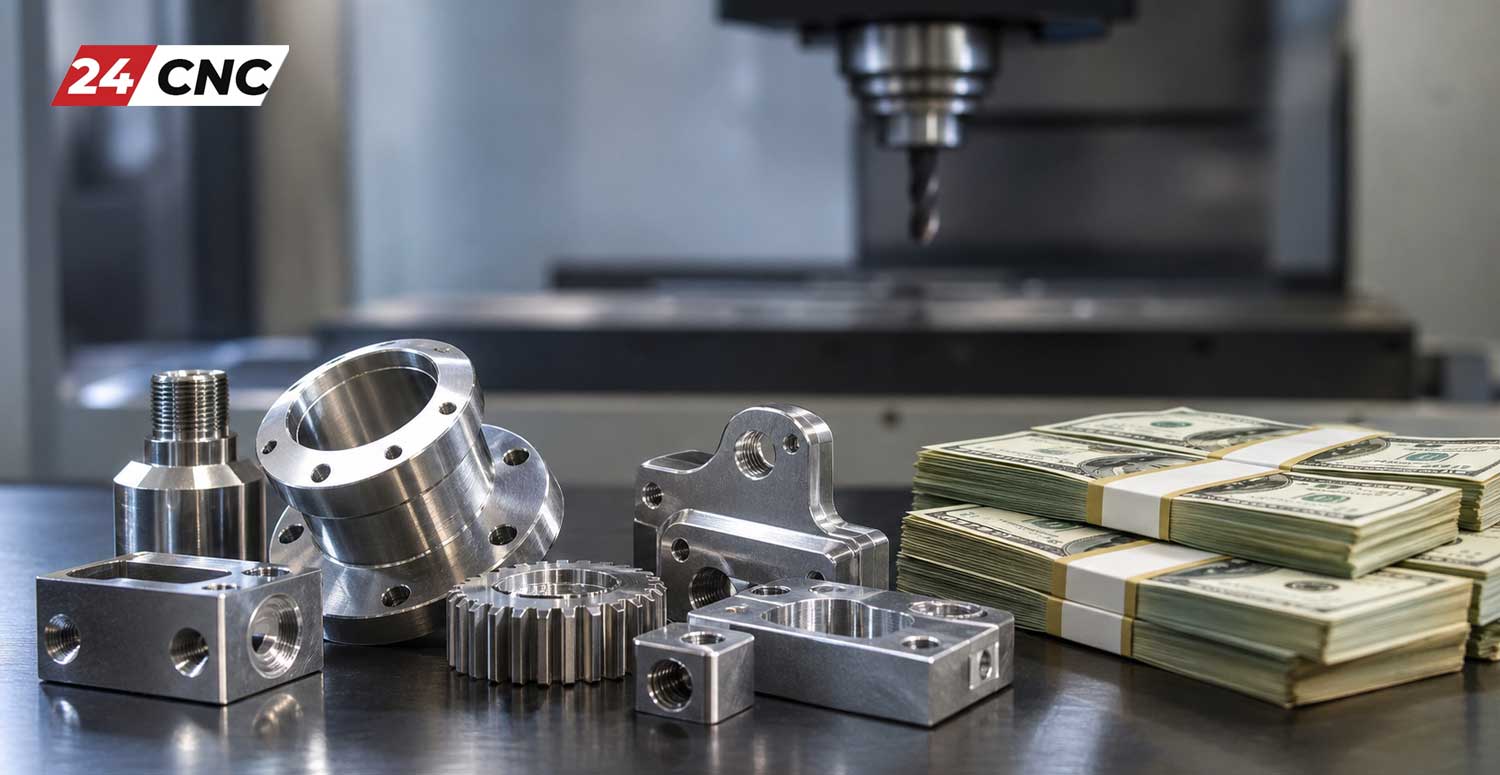
The medical industry requires bone screws, joint replacements, surgical instruments, and dental implants. These are typically high-mix, low-volume jobs machined from medical-grade titanium and stainless steel. The profit margins are phenomenal, but the hygienic and tolerance requirements mean your shop must operate with clinical precision.
Custom Consumer Goods and “EDC”
There is a massive, growing market for high-end, custom consumer goods. This includes heavy mechanical keyboard cases, custom everyday carry (EDC) items like pocket knives, flashlights, multi-tools, and specialized camera rigging equipment. These buyers care deeply about surface finish, aesthetics, and unique anodizing. For this market, your tooling strategies and part design must be exceptionally creative and flawless.
Industrial and Automation Components
Local factories and packaging plants constantly need replacement parts, custom jigs, and specialized fixtures to keep their own lines running. By offering rapid prototyping and reverse engineering services for local manufacturing plants, you can secure lucrative B2B contracts. When their line goes down, they will pay a premium for a 24-hour turnaround on a custom gear or shaft.
Pricing Your CNC Machined Parts for Maximum Profit
Understanding why CNC machined parts are expensive is crucial to successfully pricing your own work. If you underprice, you will quickly burn out, work 80-hour weeks, and operate at a loss. If you overprice without justifying the value through quality and service, you will simply lose bids to competitors.
A standard formula for calculating the price of a CNC job is:
$$Price = (Material Costs + Setup Time Cost + Machining Time Cost + Finishing + Shipping) \times Profit Margin$$
To accurately plug numbers into that formula, you must first calculate your Shop Hourly Rate. You cannot guess this number; it must be grounded in your actual overhead:
$$Hourly Rate = \frac{Monthly Overhead + Labor Costs + Desired Monthly Profit}{Estimated Billable Hours Per Month}$$
- Material Costs: Always account for waste, offcuts, and the cost of having material shipped to your shop. Buy in bulk when it makes sense, but track your inventory carefully.
- Machining Time: This must cover your machine depreciation, electricity, tooling wear (end mills, inserts), coolant, and labor. A common shop rate ranges from $60 to $150 per hour depending on the complexity of the machine (e.g., a basic 3-axis mill vs. a complex 5-axis trunnion).
- Setup Time: Never underestimate setup time. CAM programming, tool touch-offs, loading stock, and creating custom soft jaws take significant time. If a customer orders exactly one part, the entire setup time is absorbed by that single part. If they order 1,000 parts, the setup time is distributed, drastically lowering the per-part cost.
Maximizing Machine Uptime: The Hidden Profit Killer
You only make money when chips are actively flying. Machine downtime is the absolute biggest threat to your shop’s profitability. A broken controller, a faulty spindle encoder, or a simple blown fuse can halt production for days, costing you thousands of dollars in lost revenue, idle labor, and missed delivery deadlines.
Invest in Reliable Control Systems
The “brain” of your CNC machine dictates its efficiency and reliability. Upgrading or properly maintaining your control system ensures smooth toolpaths, faster block processing speeds, and reduced cycle times. Whether your shop relies on an industry-standard Fanuc controller or you prefer the advanced conversational programming of Siemens controllers, keeping these systems in pristine condition is non-negotiable. Dust, coolant mist, and voltage spikes can damage sensitive electronics. If you are running older, legacy machines, it is highly recommended to keep spare main boards on hand to swap out instantly in the event of a failure.
Precision Measurement and Encoder Feedback
Scrapped parts eat directly into your profit margin. If you machine a $500 block of titanium incorrectly, you lose both the material cost and the hours of machine time. To ensure absolute accuracy, your machine relies heavily on closed-loop feedback from rotary and linear encoders. If an encoder starts failing, your machine will lose its precise physical position, resulting in ruined stock and broken cutting tools. Shop owners must learn how to troubleshoot inaccurate readings and replace faulty units with high-quality rotary encoders immediately before catastrophic crashes occur.
Keep Spares of Consumable Electronics
Do not wait for a $5 component to shut down a machine that generates $1,000 a day. Smart shop owners treat electronic components like they treat end mills—as consumables that need backup inventory. This includes keeping a stocked cabinet of fuses, communication cables, and clean power supplies. Knowing exactly where to buy high-quality CNC parts online ensures you can minimize downtime and get back to profitable production quickly.
Marketing and Selling Your CNC Parts
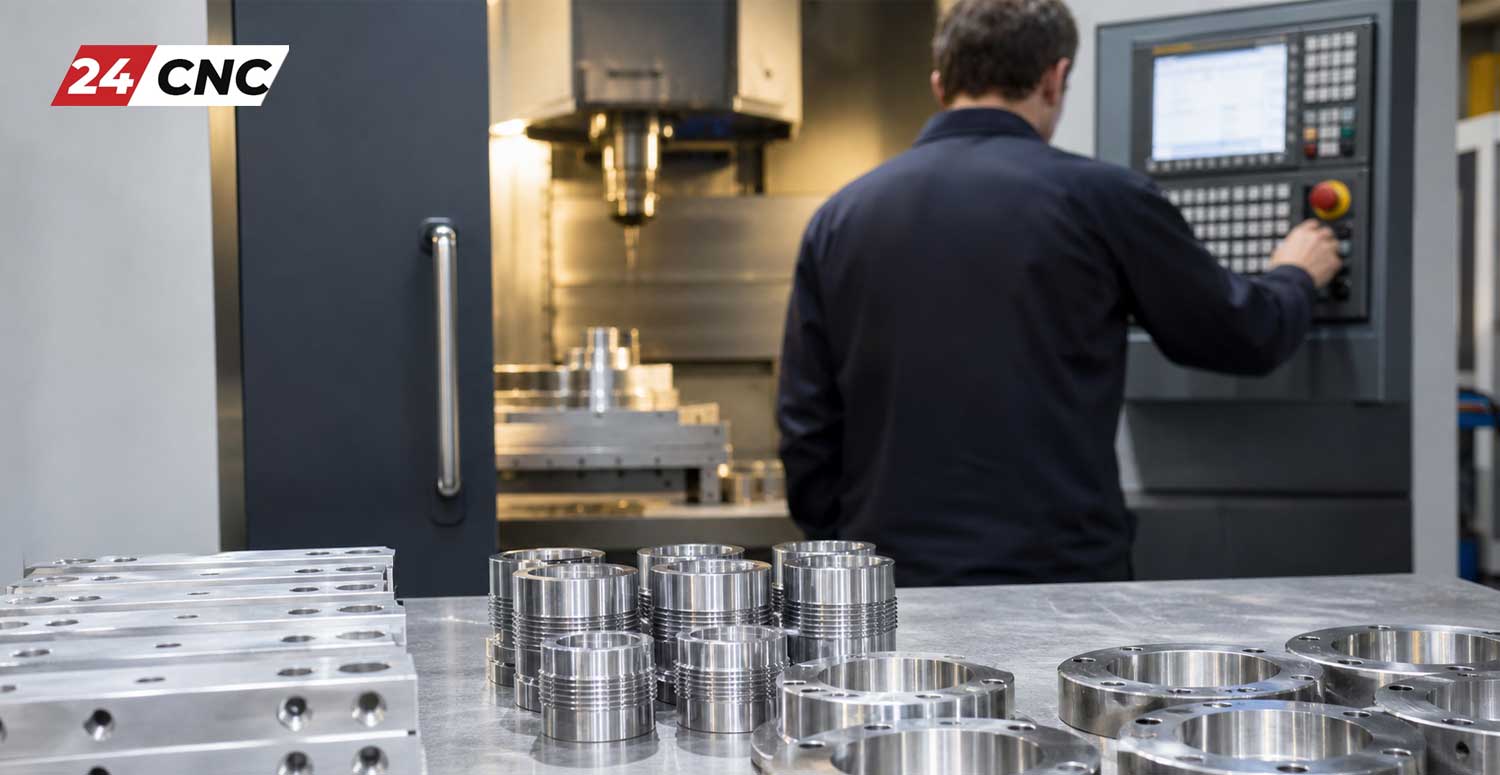
Once you have your production dialed in and your scrap rate near zero, you need to find buyers. Relying purely on word-of-mouth is a slow path to growth. To truly scale a machining business, you need a proactive, multi-channel sales strategy.
Online Marketplaces and Direct E-commerce
If you are creating proprietary products (like the EDC gear, mechanical keyboards, or car parts mentioned earlier), set up a direct-to-consumer e-commerce store using platforms like WooCommerce. Invest in high-quality, professional photography. Highlight the tight tolerances, premium materials, and the fact that they are precision-machined. Content marketing works incredibly well here; posting satisfying “ASMR” machining videos on Instagram, YouTube Shorts, or TikTok can drive massive organic traffic to your storefront.
B2B Networking and Local Outreach
For custom job shop work, your best clients are other businesses. Reach out systematically to local engineering firms, robotics startups, automation integrators, and assembly plants. Offer to machine a small test batch at a discount to prove your quality and lead times. B2B clients value absolute reliability, tight communication, and quality control just as much as they value competitive pricing.
Utilize Manufacturing Networks
Platforms like Xometry, Protolabs Network (formerly Hubs), and Fractory allow independent machine shops to take on overflow work from a global network. While the margins might be slightly lower due to platform fees, these networks are excellent for filling spindle time during slow periods and ensuring your overhead is always covered.
Technical Comparison: Low-Volume vs. High-Volume Production
To understand exactly where your machine shop fits in the broader market, it helps to compare the economics of different production volume strategies. Below is a detailed breakdown of how different approaches impact your operational setup and overall profitability.
| Production Strategy | Target Market / Niche | Setup Cost per Part | Profit Margin | Key Hardware Requirements |
|---|---|---|---|---|
| Prototyping (1-5 units) | R&D firms, Inventors, Aerospace | Very High | Very High | Fast CAM programming, versatile modular tooling, high-end 5-axis machines |
| Low-Volume (50-500 units) | Boutique brands, specialized industrial machinery, Medical | Moderate | Medium-High | Excellent workholding (vises/fixtures), highly reliable amplifiers and inverters to prevent mid-run failures |
| High-Volume (1000+ units) | Automotive OEM, Consumer Electronics, Fasteners | Very Low | Low (Strictly Volume dependent) | Automation (Robotic tending, Pallet pools), absolute zero downtime, robust limit sensors |
| Micro-Machining | Watches, Electronics, Optics | High | High | High-RPM spindles (40k+), specialized metrology equipment, strict thermal control |
Expanding Your Capabilities and Quality Control
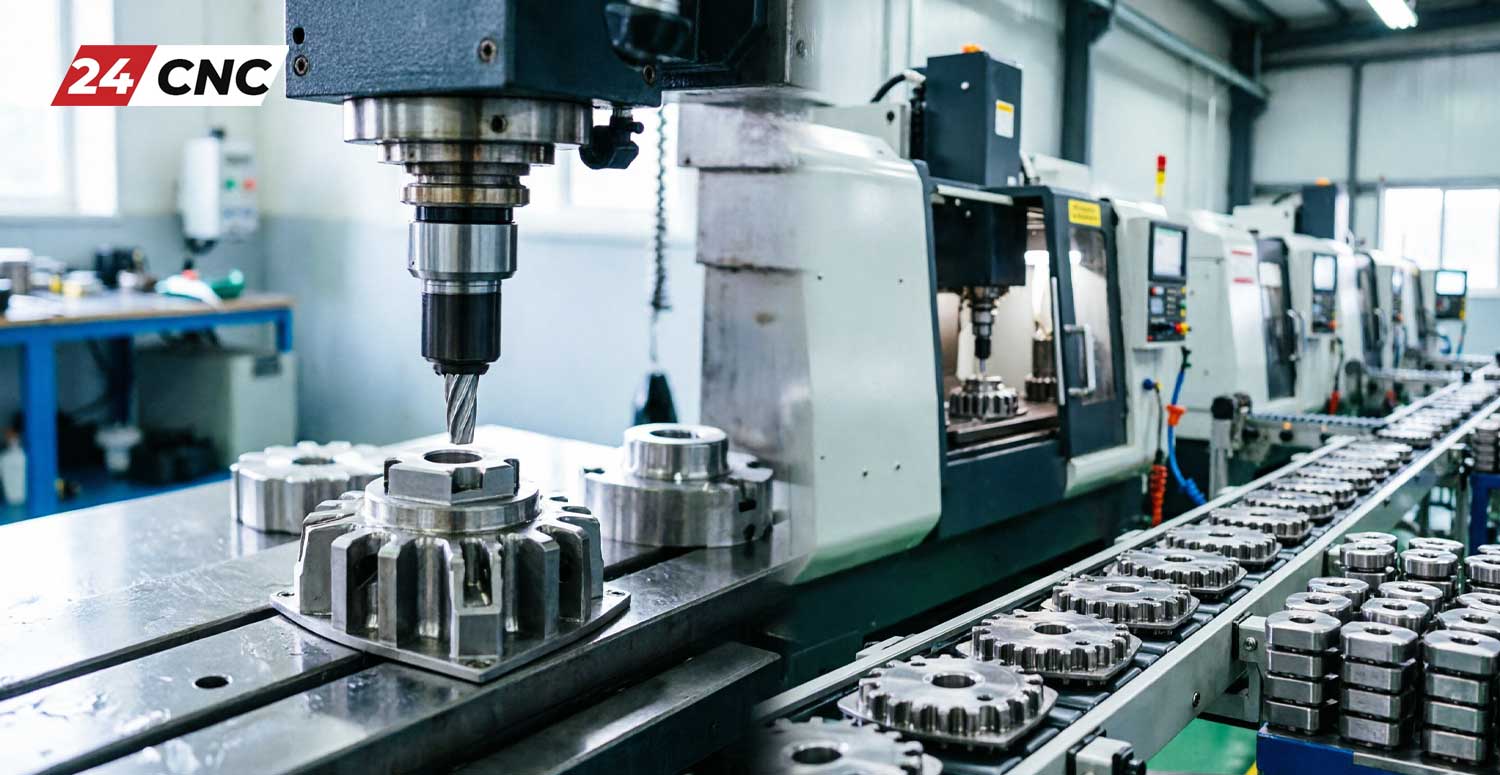
As your profits grow, you must continually reinvest in your business to take on more complex, tighter-tolerance, and highly lucrative work. Moving from a standard 3-axis VMC (Vertical Machining Center) to a 4-axis rotary setup, or a full 5-axis machine, allows you to machine highly complex geometries without requiring the operator to manually reposition the part for multiple setups. This drastically reduces cycle times and eliminates setup errors.
Additionally, optimizing your machinist’s workflow pays off daily. Installing a high-quality Manual Pulse Generator (MPG) allows for much faster, safer tool touch-offs and fixture zeroing. Upgrading dim, failing screens to crisp, modern LCD displays ensures operators can easily read G-code, monitor spindle loads, and catch typographical errors in the code before a costly crash happens.
Finally, do not ignore Quality Control (QC). Investing in CMMs (Coordinate Measuring Machines), optical comparators, and high-end micrometers allows you to provide formal inspection reports to your clients. Being able to mathematically prove that your part is within a $0.0005″$ tolerance allows you to charge premium prices and win contracts over cheaper, less professional competitors.
Conclusion
Figuring out how to make money selling CNC machined parts is not a get-rich-quick scheme; it is a journey of continuous operational improvement. It requires finding the exact right niche for your equipment, pricing your time accurately to ensure growth, aggressively marketing your capabilities, and above all, keeping your machinery running flawlessly. By sourcing reliable industrial electronic components, adhering to strict preventive maintenance schedules, and minimizing downtime, you build an unshakeable foundation for a highly profitable, scalable manufacturing business.
Frequently Asked Questions (FAQ)
How much money can you make with a CNC machine?
Profitability varies wildly based on your selected niche, machine capabilities, and shop hourly rate. A solo operator working out of a garage in a specialized niche (like custom motorcycle parts or prototyping) can net anywhere from $50,000 to over $150,000 annually. Meanwhile, a scaled operation running automated cells with multiple machines can generate millions in yearly revenue.
Is it hard to find customers for CNC machining?
It can be highly challenging initially, as the market is competitive. Success relies on active B2B marketing, building a stunning physical and digital portfolio of high-quality work, and relentless networking. Utilizing online manufacturing platforms and offering competitive initial lead times are excellent strategies to acquire your first loyal customers.
Why is machine electronic maintenance critical to profitability?
If your machine is down, your cash flow is zero, yet your overhead costs (rent, insurance, software) remain. Regularly replacing worn components like cabinet cooling fans, inspecting servo drives, and cleaning circuit boards prevents catastrophic thermal failures that cause extensive, multi-day downtime and require incredibly expensive emergency service calls.
Should I start with a CNC Mill or a CNC Lathe?
This entirely depends on the parts you want to make. If you plan to make round parts (shafts, spacers, pins, threaded fittings), a CNC lathe (turning center) is required. If you want to make prismatic, blocky parts (brackets, enclosures, molds), a 3-axis CNC mill is the industry standard starting point. Many profitable shops eventually require both.
Can I make money using a hobbyist desktop CNC router?
Yes, but typically in different markets. Desktop routers are excellent for woodworking, signage, plastics, and engraving. While they lack the rigidity for high-speed steel or titanium machining, you can absolutely build a highly profitable business selling custom signs, furniture parts, or acrylic templates on platforms like Etsy.
Keep Your Spindles Turning and Your Profits Growing
Do not let a simple electronic failure halt your entire production schedule and eat into your profit margins. Stock up on essential OEM and high-quality aftermarket CNC electronic parts to ensure your shop never misses a delivery deadline.
Leave a comment
Your email address will not be published. Required fields are marked *