
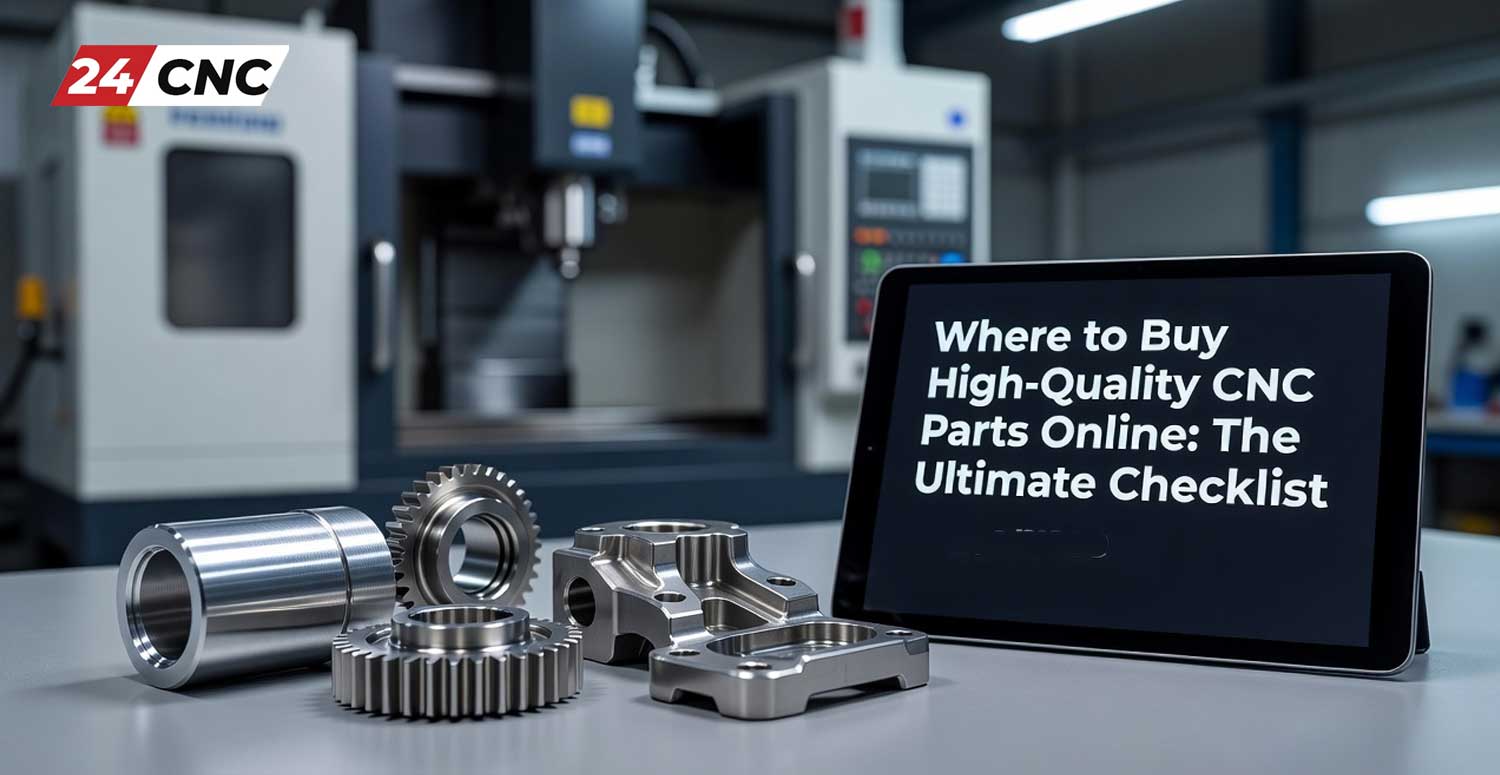
For modern manufacturing facilities, machine shops, and industrial automation lines, CNC machine downtime is one of the most expensive operational bottlenecks. Industry statistics show that unexpected machinery downtime can cost manufacturing facilities anywhere from $250 to over $1,000 per hour. When a critical component fails—whether it is a main system processor, a servo drive, or a feedback sensor—getting your machine back online quickly requires finding a reliable supplier who can deliver genuine, functional parts without delay.
Sourcing replacement components online has become the industry standard, offering speed and access to international stock. However, the online marketplace is also filled with counterfeit items, poorly refurbished units, incorrect hardware revisions, and dropshippers with zero technical expertise. To safeguard your operations, you need a systematic approach. This ultimate checklist guides you through identifying, evaluating, and purchasing high-quality CNC parts online with absolute confidence.
To quantify the true impact of selecting a reliable parts vendor with fast shipping, use the following cost model:
$$Total\ Downtime\ Cost\ (TDC) = (L_H \times T_D) + P_L + C_R$$
Where $L_H$ is the hourly labor and overhead rate, $T_D$ is the duration of the delay in hours, $P_L$ is the value of lost production capacity, and $C_R$ is the actual cost of the replacement component. Choosing a cheap but unreliable parts supplier can exponentially inflate $T_D$, far outweighing any initial savings on the part itself.
1. Understand the Anatomy of Your CNC Machine’s Electronics
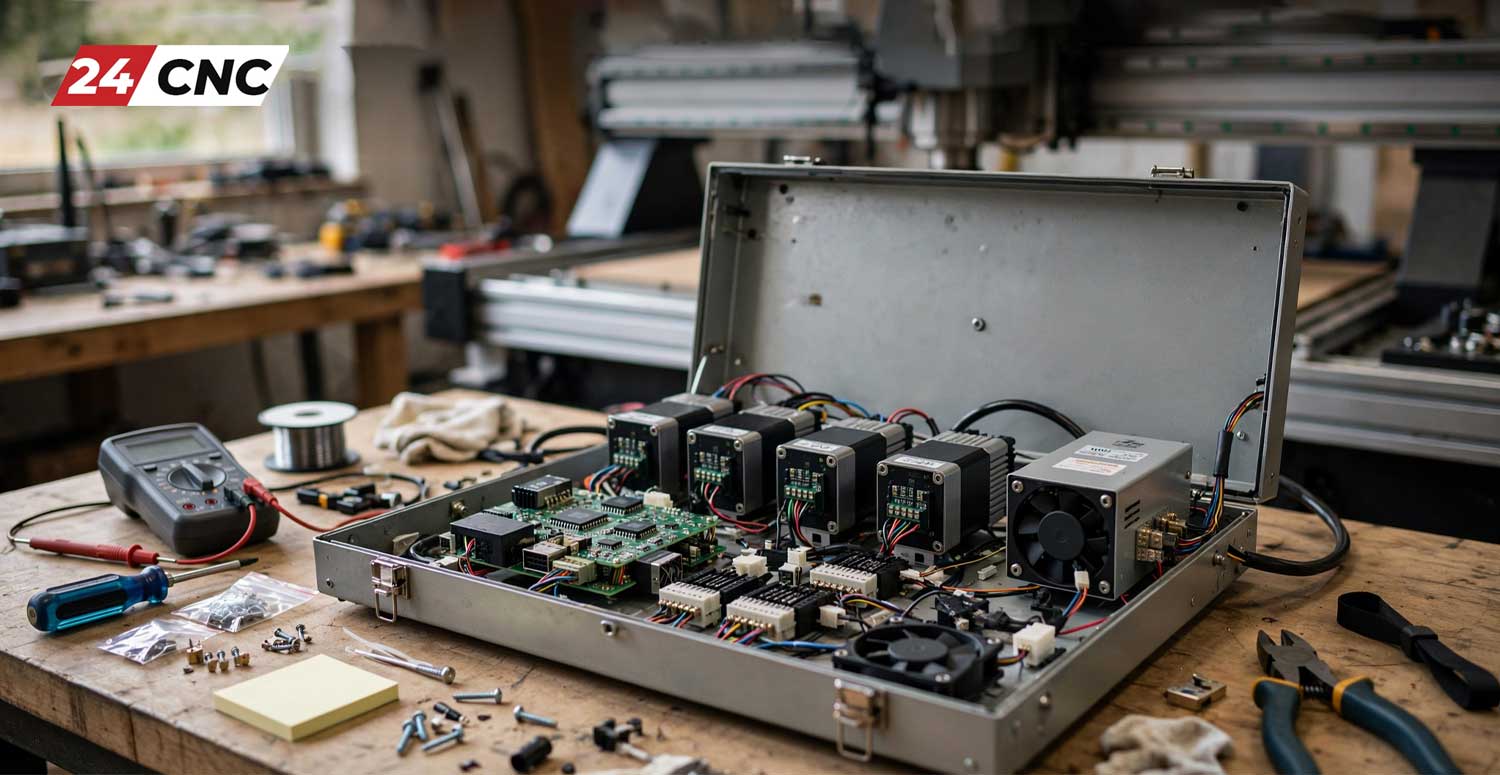
Before beginning your online search, you must clearly identify the category of the failed component. CNC systems are highly integrated ecosystems where components from different brands must communicate via proprietary protocols. The electronics in a typical industrial CNC machine can be categorized into four primary zones:
A. CNC Control Systems and Main Boards
The control system acts as the brain of your machine tool. It interprets G-code programs, executes interpolation calculations, and manages auxiliary functions. When replacing parts of your main hardware, you are typically dealing with complete CNC control systems, sub-boards, CPU cards, and input/output modules.
Because these systems run proprietary firmware, matching the precise manufacturer is mandatory. CNC systems built around dedicated Fanuc controllers or Siemens controllers require absolute software and hardware compatibility. Swapping a main board with a slightly different suffix code can result in system integration errors or boot failures.
B. Motion Control: Servo Motors and Drives
The transition from digital commands to physical motion occurs via the drive train. High-performance CNC machines rely on brushless servo motors and matched drive units. These drives, often referred to as amplifiers and drive inverters, modulate the electrical current supplied to the motor to control speed, torque, and position with sub-micron accuracy. When buying these parts online, remember that the drive firmware must match the motor’s winding characteristics and encoder type.
C. Feedback Devices: Rotary Encoders
To operate in a closed-loop system, the CNC controller must continuously know the exact position of the machine axes. This feedback loop is maintained by high-resolution rotary encoders. These sensors are highly sensitive optoelectronic or magnetic devices.
Understanding the differences between these feedback components is critical before purchasing. For a comprehensive overview of how they transmit signal data, review our article explaining the function of an encoder in industrial automation. Additionally, operating environments dictate the type of encoder technology needed; for example, heavy-duty applications might benefit from analyzing a magnetic vs optical encoders comparison to choose the most resilient sensor for oil-mist or high-vibration conditions.
D. Infrastructure: Power Supplies, Cables, and Fuses
The stability of a CNC machine is only as good as its underlying electrical infrastructure. Unstable voltage rails can cause processors to lock up, while failing insulation in industrial cables leads to intermittent axis communication dropouts. Furthermore, high-frequency switching circuits inside power supplies must be shielded to prevent electromagnetic interference (EMI). Lastly, protecting these sensitive boards requires placing high-speed, semiconductor-grade electrical fuses along the power lines to prevent catastrophic damage during overcurrent events.
2. The Ultimate Checklist for Sourcing CNC Parts Online
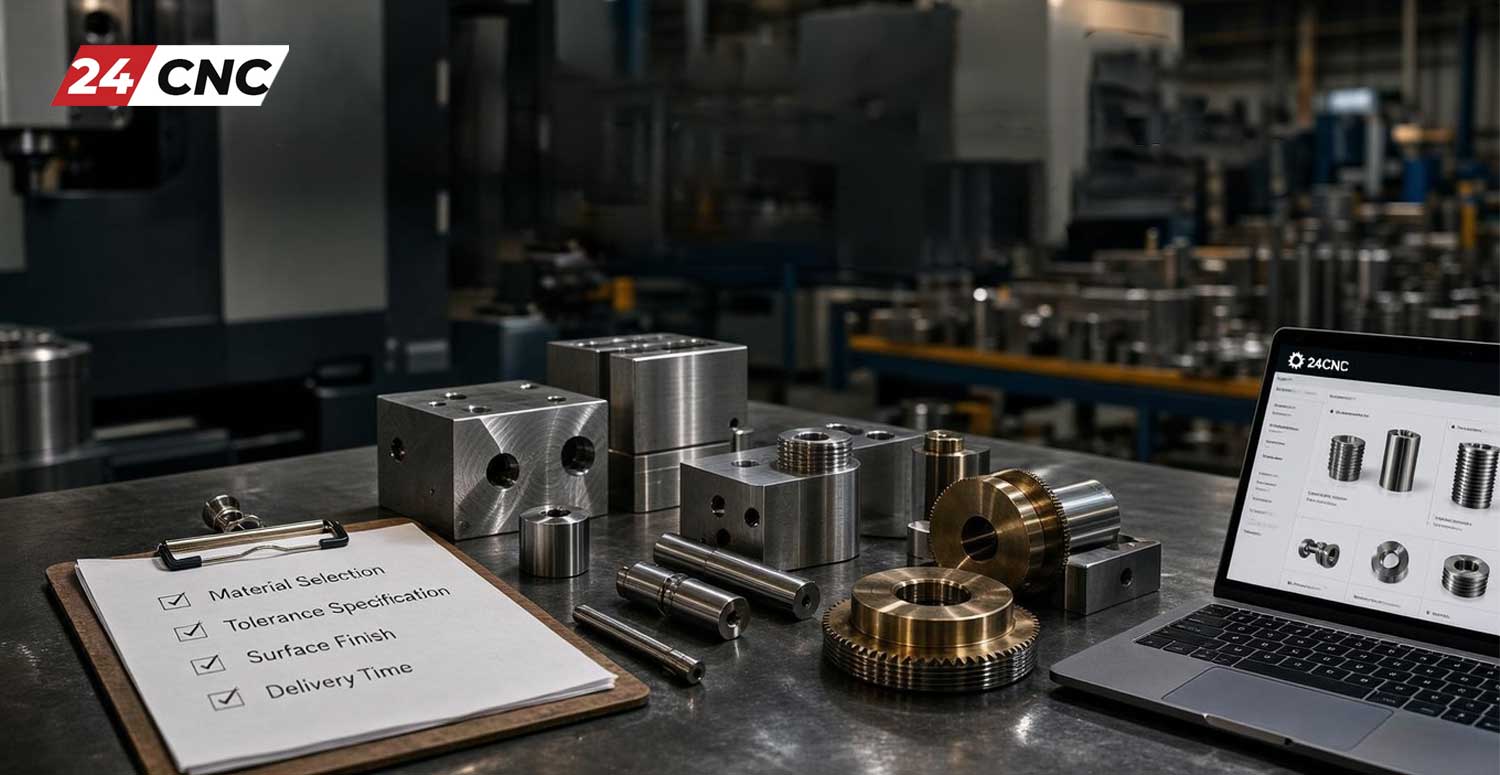
To minimize the risk of buying incompatible, dead-on-arrival (DOA), or counterfeit CNC parts, run every online store and product listing through this operational checklist:
✔ Double-Check Manufacturer Part Numbers
Industrial brands like Fanuc, Siemens, and Mitsubishi use highly structured alphanumeric part numbers. For instance, a Fanuc servo amplifier module part number might look like A06B-6079-H106. Every character in this sequence holds significance:
- The prefix denotes the product category.
- The middle segment identifies the specific frame size and generation.
- The suffix (e.g.,
H106) specifies the interface type, power rating, and internal software compatibility.
Never buy a part based solely on the visual appearance of the listing photo. Always contact the vendor to confirm that the physical label matches your original machine part number exactly.
✔ Assess Testing Practices
A high-quality online supplier does not simply pull a part off a dusty shelf and ship it. Look for vendors who explicitly detail their quality control (QC) procedures. For instance, servo drives should be tested on dedicated motor test rigs where they run under load for several hours. Feedback boards should have their pulses checked using an oscilloscope. If a seller cannot explain their testing protocol, treat the part as untested surplus, regardless of how clean it looks.
✔ Insist on Proper ESD Packaging
Integrated circuits, microcontrollers, and logic boards are highly vulnerable to static electricity. Safe shipping requires placing parts in sealed pink or metallic anti-static bags. Additionally, heavy metal parts like servo motors must be securely anchored inside double-walled corrugated boxes with molded foam-in-place inserts. Loose packaging can ruin a heavy encoder shaft or crack a drive housing during transit.
3. Key Differences: OEM vs. Refurbished vs. Aftermarket Parts
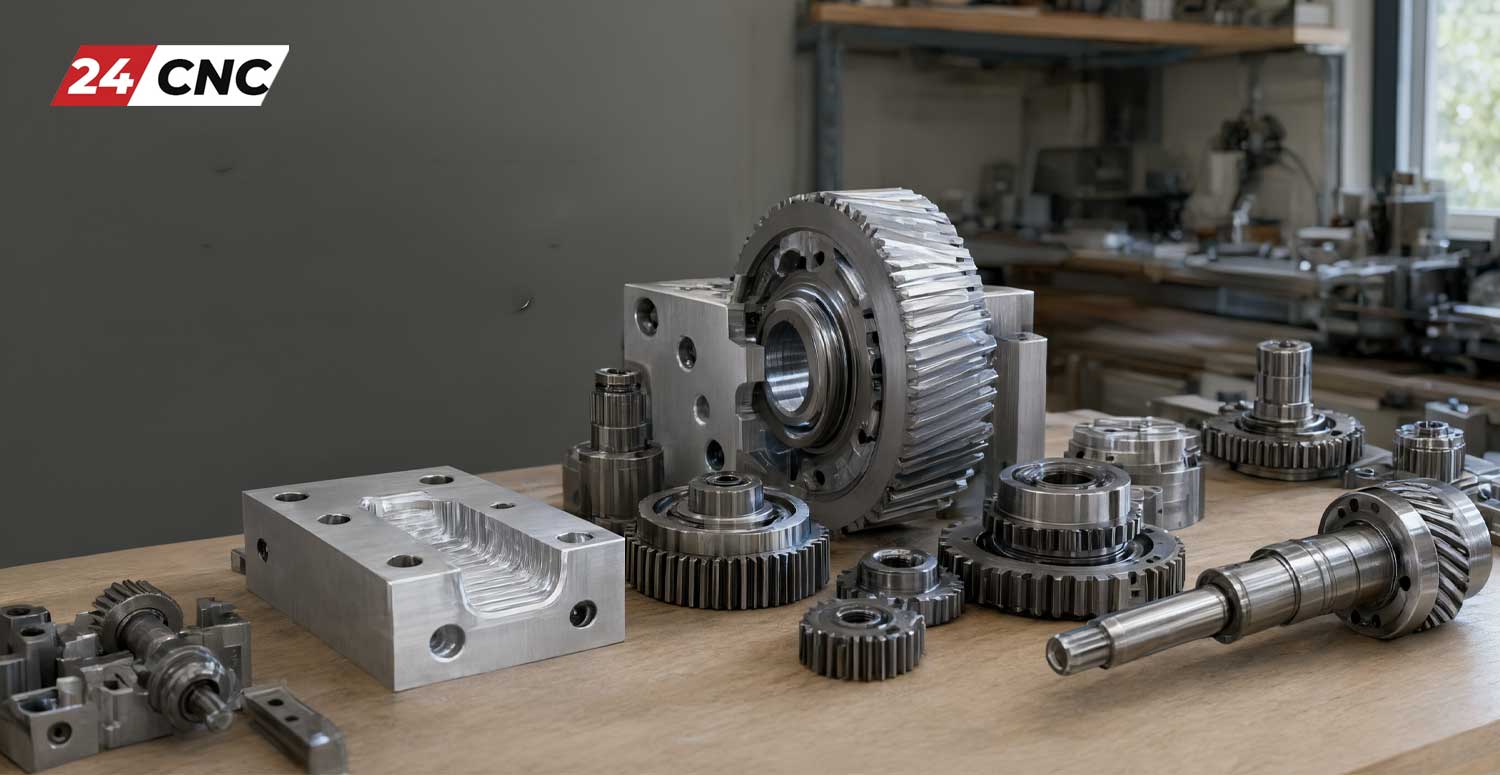
When searching for parts online, you will run into different condition types. Selecting the right class of product depends on your budget, machine age, and the criticality of the line.
- New OEM (Original Equipment Manufacturer): These are brand new components manufactured by the original brand (e.g., Fanuc, Siemens). They offer the highest reliability but come with premium pricing and, in many cases, long lead times from official distributors.
- Refurbished / Certified Surplus OEM: Excellent for keeping legacy CNC machines operational. These are original parts that have had their high-wear components (such as electrolytic capacitors, cooling fans, and relays) replaced. They are then fully tested. This is often the best value option, offering high reliability at a fraction of the cost of new parts.
- Aftermarket Alternatives: These are built by third-party manufacturers to replace OEM parts. While highly cost-effective for simple consumables like mechanical handwheels (such as Manual Pulse Generators (MPG)), caution is advised when using aftermarket alternatives for complex electronic control boards or drive systems due to compatibility issues with OEM diagnostic protocols.
Frequently Asked Questions (FAQ)
Q1: Why is my CNC machine throwing an encoder feedback error after installing a new sensor?
Feedback errors after installation are usually caused by three factors: incorrect encoder alignment (especially with high-resolution magnetic scales), using the wrong communication protocol (such as absolute SSI vs. incremental signals), or utilizing a cable that is not properly shielded against electromagnetic interference. Ensure your cables are industrial-grade and routed away from high-voltage motor power lines.
Q2: Can I mix-and-match a Fanuc motor with a Siemens drive?
Generally, this is highly discouraged. Modern servo systems use proprietary communication algorithms (such as Fanuc’s serial interface or Siemens’ DRIVE-CLiQ) to transmit motor position, temperature, and diagnostics. Mixing brands requires complex, expensive signal converters and manual motor tuning, which reduces overall system reliability. Always pair motors and drives from the same manufacturer.
Q3: What are the telltale signs of a counterfeit CNC part online?
Watch out for spelling mistakes on the manufacturer’s nameplates, labels that look peelable or poorly printed, prices that are dramatically lower than the market average, and lack of serial numbers. True OEM industrial components have engraved or high-quality serialized labels for traceability.
Q4: How long do refurbished CNC power supplies typically last?
A properly refurbished power supply that has been rebuilt with high-temperature, long-life capacitors and fresh cooling fans can easily last 5 to 10 years in a climate-controlled enclosure. The lifespan depends heavily on maintaining clean air filters and preventing overheating within the electrical cabinet.
Summary: Minimizing Production Downtime
When a CNC machine breaks down, the pressure to get it running again can lead to rushed buying decisions. By sticking to this systematic checklist—verifying part numbers down to the last digit, confirming physical stock status, ensuring proper packaging, and choosing vendors who stand behind their inventory with real warranties—you protect your machinery, your budget, and your delivery schedules. Sourcing parts online does not have to be a gamble when you buy from established industrial automation specialists.
Looking for Reliable, Field-Tested CNC Parts?
Don’t let machine downtime stall your workshop. Explore our extensive inventory of genuine, fully tested CNC control systems, servo motors, drives, and encoders.
Leave a comment
Your email address will not be published. Required fields are marked *